



How to Cut Aluminum Sheets and Plates: Tools, Methods, and Tips
Aluminum sheets and plates are widely used in automotive manufacturing, aerospace, construction, and precision machining. Although aluminum is relatively easy to machine, achieving clean, accurate cuts requires the right cutting method, suitable equipment, and proper process control.
Aluminum sheets and plates can be cut using metal shears, saws, CNC milling machines, laser cutters, plasma cutters, or abrasive waterjet systems. The best method depends on material thickness, cutting accuracy, edge quality, production volume, and whether heat-affected zones are acceptable.
For thin sheets and simple cuts, hand tools or suitable saws may be sufficient. Industrial applications involving complex contours, thicker plates, or demanding tolerances often require laser cutting, plasma cutting, waterjet cutting, or CNC machining.
This guide compares the most common aluminum cutting methods and explains how to choose the right equipment, improve cut quality, and avoid common problems.
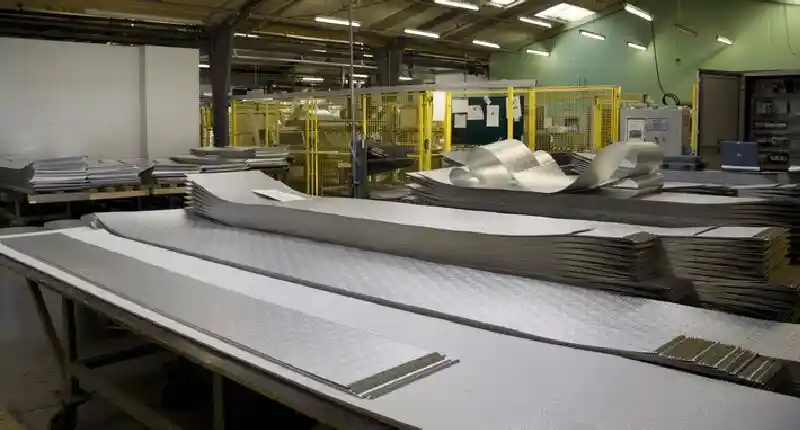
1. How to Choose the Right Aluminum Cutting Method
Before cutting aluminum, consider the material thickness, required geometry, dimensional tolerance, and production conditions.
Aluminum Thickness
Thin aluminum sheets can often be cut using shears, jigsaws, or suitable circular saws.
As thickness increases, more powerful equipment may be required. Industrial saws, plasma cutters, waterjet systems, and appropriate laser cutting machines can process thicker aluminum materials within their rated capacities.
However, thickness limits vary significantly between equipment models. Always verify the manufacturer's cutting capacity for the specific aluminum alloy and thickness.
Cutting Accuracy and Shape
Straight cuts generally require simpler equipment than intricate profiles.
For detailed two-dimensional contours, laser cutting and abrasive waterjet cutting are common industrial options.
If a component also requires precision holes, pockets, slots, or accurately machined edges, CNC milling may be more appropriate or may be used after the initial blank-cutting operation.
Edge Quality and Heat Sensitivity
Different cutting processes produce different edge characteristics.
Mechanical cutting can generate burrs or localized deformation.
Laser and plasma cutting introduce heat and may create a heat-affected zone (HAZ).
Abrasive waterjet cutting removes material without thermal cutting, making it useful when avoiding a heat-affected zone is important.
Production Volume and Cost
For occasional cuts, simple tools may be more economical.
For repetitive industrial production, automated equipment can improve cutting consistency and reduce manual handling.
The most economical method is not necessarily the one with the fastest cutting speed. Tooling expenses, consumables, setup time, secondary finishing, and material waste should also be considered.
2. Best Tools and Methods for Cutting Aluminum Sheets and Plates
Several cutting methods are suitable for aluminum, but each has different strengths and limitations.
2.1 Metal Shears
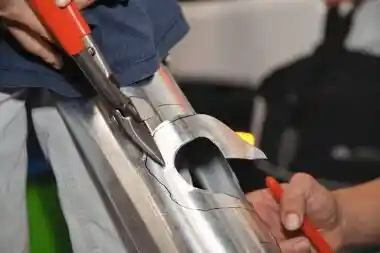
Metal shears, including hand-operated tin snips and suitable powered shears, are commonly used for cutting thin aluminum sheets.
They are useful for straight cuts, trimming, and relatively simple shapes.
Advantages:
- Simple operation
- Low equipment cost for manual tools
- No heat-affected zone
- Suitable for small-scale sheet cutting
Limitations:
- Limited material thickness capacity
- Possible edge curling or deformation
- Less suitable for thick plates or complex precision profiles
Metal shears are a practical choice for thin aluminum sheets when extremely tight tolerances are not required.
2.2 Circular Saws, Jigsaws, and Hacksaws
Sawing is a versatile mechanical cutting method for aluminum sheets, plates, and smaller workpieces.
Circular Saw
A circular saw equipped with a suitable non-ferrous metal-cutting blade can produce straight cuts in aluminum.
Carbide-tipped blades specifically designed for aluminum can provide good cutting performance when used with compatible equipment and appropriate operating conditions.
Jigsaw
A jigsaw fitted with a suitable metal-cutting blade can cut curves and irregular profiles in aluminum sheets.
However, blade deflection and vibration may affect accuracy, particularly in thicker materials.
Hacksaw
A hacksaw can be used for small cutting tasks where powered equipment is unnecessary or unavailable.
It is generally less productive than powered saws and is not ideal for large-scale sheet or plate cutting.
Industrial metal-cutting saws may also be appropriate for straight cuts in thicker aluminum sections.
Best Applications: Straight cuts, small batches, trimming, and workshop fabrication.
2.3 CNC Milling and Routing
CNC milling and routing use computer-controlled cutting tools to remove aluminum material and create specified geometries.
Unlike laser, plasma, or waterjet cutting, CNC milling can perform additional machining operations beyond cutting a profile.
These may include:
- Precision holes
- Slots and pockets
- Contoured edges
- Machined mating surfaces
- Complex three-dimensional features
Advantages:
- Precise control of machined geometry
- Good repeatability under suitable conditions
- Ability to combine cutting and additional machining operations
- Suitable for parts requiring dimensional accuracy and secondary features
Limitations:
- Requires suitable workholding and cutting tools
- Tool wear and chip evacuation must be managed
- May be less productive than dedicated sheet-cutting processes for simple two-dimensional blanking
- Thin sheets require appropriate support to prevent vibration or deformation
CNC milling is particularly useful when aluminum components require precision machining after the initial material is cut.
For industrial applications, choose equipment according to workpiece dimensions, cutting requirements, machine rigidity, and available tooling.
2.4 Laser Cutting
Laser cutting uses a focused laser beam to melt material along a programmed cutting path. Assist gas helps remove molten material from the cutting zone.
Modern industrial fiber laser systems can cut aluminum sheets and plates within their rated thickness range.
Advantages:
- Suitable for complex two-dimensional profiles
- High repeatability in automated production
- Narrow cutting kerfs under suitable conditions
- Efficient processing of many sheet-metal components
- Limited mechanical force on the workpiece
Limitations:
- Produces a heat-affected zone
- Cut quality depends on material thickness, laser power, and process settings
- Reflective aluminum requires equipment designed for the application
- Some parts may need additional edge finishing
Assist gas selection affects cutting performance and edge quality.
For example, nitrogen is commonly used in fusion cutting where minimizing edge oxidation is important. The appropriate gas and settings depend on the material, equipment, and required finish.
Laser cutting is often a strong option for precision sheet-metal parts with detailed contours and repeated production requirements.
2.5 Plasma Cutting
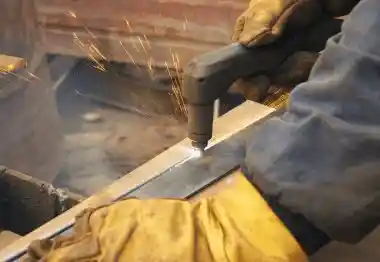
Plasma cutting uses a high-temperature, electrically conductive gas jet to melt and remove metal along the cutting path.
It is widely used for industrial metal fabrication, including aluminum plate cutting.
Advantages:
- Suitable for industrial production
- Can cut a broad range of aluminum thicknesses with appropriately rated equipment
- Good productivity for many structural and fabrication applications
- Compatible with CNC cutting tables
Limitations:
- Produces a heat-affected zone
- May create dross along the cut edge
- Excessive heat input can cause distortion
- Edge quality depends on cutting speed, current, gas selection, and torch height
Plasma cutting can be effective for structural components or aluminum plates where some thermal influence and secondary edge finishing are acceptable.
According to Hypertherm's aluminum plasma cutting guide, appropriate cutting parameters and gas selection are important for controlling dross, edge quality, and thermal distortion.
Plasma cutting should not be selected solely because it is a non-contact process. It still generates substantial heat.
2.6 Abrasive Waterjet Cutting
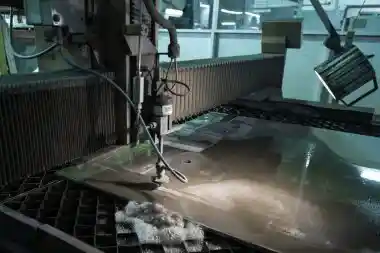
Abrasive waterjet cutting uses a high-pressure stream of water mixed with abrasive particles to remove material.
Unlike laser and plasma cutting, the process does not rely on melting the aluminum.
Advantages:
- No heat-affected zone
- Suitable for a wide range of aluminum thicknesses
- Can produce complex profiles
- Avoids thermal distortion caused by the cutting process
- Useful for heat-sensitive components
Limitations:
- Abrasive and water consumption increase operating costs
- Cutting speed may be lower than some thermal methods
- Cut taper and edge quality depend on process settings
- Thick plates require suitable cutting capacity and process control
Abrasive waterjet cutting is particularly useful when cutting thick aluminum plates or components that must avoid thermal changes near the cut edge.
As explained by OMAX, abrasive waterjet systems can cut aluminum without creating a heat-affected zone.
However, proper material support and cutting parameters remain important for dimensional accuracy.
3. Aluminum Cutting Methods Compared
Choosing the right cutting method becomes easier when the main advantages and limitations are considered together.
| Cutting Method | Best Applications | Main Advantages | Main Limitations |
|---|---|---|---|
| Metal Shears | Thin sheets and simple cuts | Low cost, no thermal effects | Limited thickness, possible edge deformation |
| Circular Saw | Straight cuts in sheets and plates | Versatile, relatively economical | Blade selection, burrs, and workholding requirements |
| Jigsaw | Curved or irregular cuts | Flexible for small projects | Limited speed and precision |
| CNC Milling | Precision features and machined edges | Accurate geometry, multiple machining operations | Tooling, setup, and chip management |
| Laser Cutting | Detailed sheet-metal profiles | High repeatability, efficient contour cutting | Heat-affected zone, equipment-dependent thickness limits |
| Plasma Cutting | Industrial plate fabrication | Productive cutting across suitable thickness ranges | Dross, heat input, possible distortion |
| Abrasive Waterjet | Thick or heat-sensitive plates | No heat-affected zone, material versatility | Abrasive cost, cutting time, possible taper |
Which Method Should You Choose?
For thin aluminum sheets: Consider metal shears, suitable saws, or laser cutting, depending on the required shape and production volume.
For straight cuts in thicker aluminum: An appropriately rated industrial saw may be a practical option.
For intricate sheet-metal profiles: Laser cutting is often suitable when dimensional accuracy and production efficiency are important.
For industrial plate cutting: Plasma cutting may be economical when the application can tolerate thermal effects and the resulting edge condition.
For thick or heat-sensitive aluminum: Abrasive waterjet cutting is particularly useful when avoiding a heat-affected zone is a priority.
For precision-machined components: CNC milling is suitable when the part requires accurately machined features, holes, or finished edges.
The final decision should be based on machine capability, aluminum alloy, thickness, required tolerances, and total production cost.
4. Tips for Clean and Accurate Aluminum Cuts
Regardless of the method, several practical measures can help improve cutting consistency and reduce defects.
4.1 Use the Correct Cutting Tool and Parameters
For mechanical cutting, choose blades and cutting tools designed for aluminum or other suitable non-ferrous metals.
Use cutting speeds, feed rates, and tooling configurations recommended by the equipment and tool manufacturers.
For laser and plasma cutting, begin with validated cutting parameters for the specific material thickness and machine.
There is no universal cutting speed suitable for every aluminum cutting process.
4.2 Secure and Support the Workpiece
Improper workholding can cause movement, vibration, inaccurate cuts, and potential safety hazards.
Support the aluminum sheet or plate according to its size, thickness, and cutting method.
For mechanical cutting, prevent unwanted movement and ensure adequate clearance for the blade or tool.
For automated cutting, follow the equipment manufacturer's requirements for material placement and support.
4.3 Control Heat and Material Distortion
Heat management is particularly important during laser and plasma cutting.
Excessive thermal input can contribute to distortion, wider kerfs, or poor edge quality.
For mechanical machining, suitable cutting fluids or lubrication may help reduce friction and improve tool performance when recommended for the equipment.
Do not apply mechanical cutting-fluid practices indiscriminately to laser or plasma cutting systems.
If thermal influence is unacceptable, consider abrasive waterjet cutting.
4.4 Remove Burrs and Inspect the Edges
Depending on the cutting method, aluminum edges may contain burrs, dross, or other irregularities.
Suitable deburring and finishing operations can improve edge safety and functional quality.
After cutting, inspect:
- Dimensional accuracy
- Edge roughness
- Burrs or dross
- Straightness and flatness
- Cut taper where relevant
- Signs of thermal damage where applicable
The level of inspection should match the intended application.
4.5 Follow Appropriate Safety Procedures
Aluminum cutting can involve sharp edges, moving tools, airborne particles, noise, and process-specific hazards.
Use appropriate machine guarding, eye protection, and other protective equipment required for the cutting process.
Provide suitable ventilation or extraction for operations generating fumes or dust.
Fine aluminum dust can present a combustible dust hazard under certain conditions, so dust collection and housekeeping systems must be appropriate for the material and process.
Always follow the equipment manufacturer's instructions and applicable workplace safety requirements.
5. Common Aluminum Cutting Problems and Solutions
Cutting problems are often caused by unsuitable tools, incorrect parameters, poor workholding, or mismatched cutting methods.
| Problem | Possible Causes | Recommended Action |
|---|---|---|
| Excessive burrs | Worn blade, unsuitable tool geometry, incorrect cutting conditions | Inspect tooling and optimize process parameters |
| Rough cut edges | Vibration, blade deflection, unstable cutting conditions | Improve workholding and verify tool condition |
| Thermal distortion | Excessive heat input during laser or plasma cutting | Review cutting parameters or consider a non-thermal method |
| Plasma dross | Incorrect cutting speed, torch height, or process settings | Check consumables and manufacturer cut charts |
| Inaccurate dimensions | Material movement, incorrect offsets, or machine setup errors | Verify support, positioning, and program settings |
| Waterjet edge taper | Jet behavior, traverse speed, or process limitations | Optimize waterjet settings and verify cut geometry |
How to Prevent Poor Cut Quality
A practical approach is to identify the main defect before changing cutting parameters.
For example, if plasma-cut aluminum has excessive dross, check the recommended cut chart, torch condition, and cutting speed.
If saw-cut edges are rough, inspect blade suitability, workpiece stability, and feed conditions.
For precision components, measure the finished dimensions rather than relying only on visual appearance.
Selecting the appropriate cutting method at the beginning is often more effective than correcting poor edge quality through additional finishing operations.
Conclusion
Cutting aluminum sheets and plates requires selecting the right method for the material thickness, required accuracy, edge quality, and production volume.
Manual shears and suitable saws are practical for simple cutting tasks. Laser cutting offers an effective solution for detailed sheet-metal profiles, while plasma cutting is useful for many industrial plate-fabrication applications.
Abrasive waterjet cutting is particularly valuable when a heat-affected zone must be avoided. CNC milling is an appropriate choice when aluminum components require precision-machined edges, holes, slots, or other features.
To achieve consistent results, manufacturers should use suitable tooling, maintain stable workholding, select validated cutting parameters, and inspect finished edges.
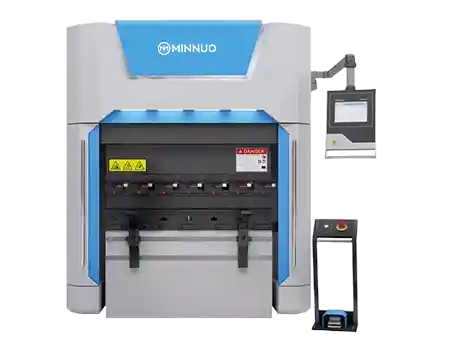
For manufacturers requiring additional machining after aluminum blank cutting, MINNUO provides CNC machining equipment solutions for a range of industrial manufacturing applications.
The best aluminum cutting method is not simply the fastest or most precise—it is the one that meets the part's functional requirements at an appropriate manufacturing cost.
Frequently Asked Questions (FAQ)
Q1. What is the best tool for cutting thin aluminum sheets?
A:Metal shears, suitable jigsaws, and circular saws can be practical for thin aluminum sheets.
For industrial production involving complex shapes, laser cutting may provide better repeatability and productivity.
Q2. What is the best way to cut thick aluminum plates?
A:The best method depends on the required thickness, tolerance, edge quality, and heat sensitivity.
Industrial saws, plasma cutting, abrasive waterjet cutting, and appropriately rated laser cutting systems are possible options.
Abrasive waterjet is particularly useful when the application requires cutting without a heat-affected zone.
Q3. Can a CNC machine cut aluminum sheets and plates?
A:Yes. CNC milling machines and routers can cut aluminum using suitable tools, workholding, and machining parameters.
CNC milling is especially useful when the component also requires accurate holes, slots, pockets, or finished surfaces.
Q4. Is laser cutting suitable for aluminum?
A:Yes. Modern laser cutting systems designed for aluminum can produce detailed profiles with good repeatability.
However, performance depends on material thickness, laser capability, assist gas, and process settings.
Laser cutting may also create a heat-affected zone.
Q5. Is plasma cutting better than waterjet cutting for aluminum?
A:Neither method is universally better.
Plasma cutting can offer high productivity for suitable fabrication applications, but it introduces heat and may produce dross.
Abrasive waterjet cutting avoids a heat-affected zone and can be preferable for thick or heat-sensitive aluminum components, although operating costs and cutting speed must be considered.
 Email
 sales1: +86 15312799623