



CNC Milling Machine Spindle Technology: Full Analysis (Electric vs Mechanical Spindle + Selection Guide)
As a process engineer or equipment maintenance professional, you know that the CNC milling machine spindle is the "heart" of the entire equipment. Its performance directly determines machining accuracy, efficiency, and equipment service life—whether it’s high-speed precision engraving of 3C parts or heavy-duty cutting of aerospace components, choosing the right spindle and mastering its core technology can reduce production costs by 30% and extend spindle service life by 50%.
This article will comprehensively analyze CNC milling machine spindle technology, focus on the advantages and disadvantages of electric spindle technology vs mechanical spindles, interpret the key logic of speed-torque matching, and provide practicalspindle selection guidelines for different machining scenarios. It is tailored for process engineers and equipment maintenance personnel, with practical data, case studies, and actionable tips to help you avoid pitfalls and make optimal decisions.
1. Core Overview: What Is a CNC Milling Machine Spindle?
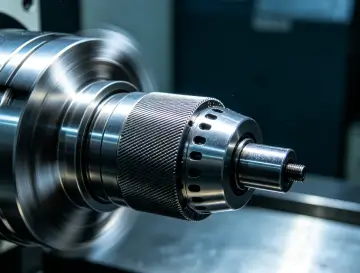
The CNC milling machine spindle is the core component that drives the tool to rotate and complete cutting operations. It bears the cutting force during machining, controls the rotation speed and precision, and directly affects the surface quality of the workpiece, processing efficiency, and tool life. Currently, the mainstream spindle types in the market are two categories: electric spindles and mechanical spindles. Understanding their differences is the first step in scientific selection.
For process engineers, the spindle’s precision and stability determine whether the process requirements can be met; for equipment maintenance personnel, the spindle’s structure and maintenance difficulty directly affect the daily operation and maintenance cost of the equipment. Therefore, mastering spindle technology is a necessary skill for both roles.
2. Electric Spindle vs Mechanical Spindle: Detailed Comparison of Advantages and Disadvantages
Choosing between electric spindles and mechanical spindles is the most critical decision in spindle selection. The two have significant differences in structure, performance, cost, and maintenance. Below is a comprehensive comparison based on actual application scenarios and technical parameters, helping you quickly distinguish their applicability.
2.1 Electric Spindle: High-Speed, High-Precision, Suitable for Precision Machining
The electric spindle adopts an integrated design, directly integrating the motor and the spindle without the need for belts or gears for transmission, which fundamentally reduces energy loss and transmission errors. It is the core choice for high-speed and high-precision machining scenarios.
Advantages of Electric Spindles:
- Super high precision: No transmission chain errors, radial runout can be controlled within 0.001mm, suitable for mirror finishing and precision engraving.
- High efficiency: Fast acceleration and deceleration, suitable for small cutting volume and high feed rate processing (such as 5-axis linkage), which can improve processing efficiency by 40% compared with mechanical spindles.
- Low vibration: Excellent dynamic balance performance, effectively reducing tool wear and improving workpiece surface quality, especially suitable for processing thin-walled parts and high-hardness materials.
- Compact structure: The integrated design saves installation space, making it suitable for small and medium-sized CNC milling machines and 5-axis precision equipment.
Disadvantages of Electric Spindles:
- High cost: The purchase price is 2~5 times that of mechanical spindles, and the maintenance is complex—once the motor or bearing is damaged, professional maintenance is required, and the maintenance cost is high.
- Heat dissipation challenge: High-speed operation will generate a lot of heat, which requires forced cooling (oil cooling or water cooling) to avoid spindle deformation affecting precision. The cooling system needs regular maintenance to prevent failures.
- Insufficient high torque: Weak torque output at low speeds, not suitable for heavy-duty cutting scenarios such as large cutting volume of cast iron parts.
Typical Applications: Precision molds, aerospace parts, 3C product processing, high-hardness material (titanium alloy) processing, and other scenarios requiring high precision and high speed.
2.2 Mechanical Spindle: Durable, Economical, Suitable for Heavy-Duty Cutting
The mechanical spindle adopts a traditional transmission structure, transmitting power through belts, gears, or couplings. It has a simple structure, strong durability, and outstanding low-speed high-torque performance, which is widely used in economical and heavy-duty processing scenarios.
Advantages of Mechanical Spindles:
- Low cost: Simple structure, the purchase and maintenance cost is only 1/3~1/2 of that of electric spindles, and the maintenance threshold is low, which can be completed by ordinary maintenance personnel.
- High rigidity: Excellent low-speed high-torque performance, suitable for heavy-duty cutting scenarios such as turning, boring, and large cutting volume of cast iron parts, which can stably maintain high feed rate processing.
- Easy maintenance: Bearings and transmission components can be replaced independently, and the maintenance cycle is long. Even if a failure occurs, it can be quickly repaired to reduce equipment downtime.
- Strong adaptability: It can adapt to harsh working environments (such as high dust and high temperature) and is suitable for long-term continuous mass production scenarios.
Disadvantages of Mechanical Spindles:
- Limited precision: Cumulative errors of the transmission chain lead to radial runout usually ≥0.005mm, which cannot meet the requirements of ultra-high precision processing.
- Vibration risk: After long-term use, wear of belts or gears is easy to cause vibration, which affects the surface quality of workpieces and accelerates tool wear.
- Speed bottleneck: The maximum speed is usually 1,000~8,000 rpm (lower for heavy-duty machine tools), which cannot meet the needs of ultra-high-speed processing such as 3C product precision engraving.
Typical Applications: Ordinary mechanical parts processing, heavy-duty component processing, mass production scenarios with limited budget, and processing of cast iron, stainless steel and other materials requiring large cutting volume.
2.3 Quick Comparison Table: Electric Spindle vs Mechanical Spindle
| Comparison Item | Electric Spindle | Mechanical Spindle |
| Speed Range | Ultra-high (10,000~100,000 rpm) | Medium and low (1,000~8,000 rpm) |
| Precision (Radial Runout) | ≤0.001mm | ≥0.005mm |
| Torque Performance | Weak torque at low speeds | Strong torque at low speeds |
| Purchase Cost | High (2~5 times that of mechanical spindles) | Low |
| Maintenance Difficulty | High, requiring professional operation | Low, easy to maintain |
| Suitable Scenarios | Precision, high-speed, small cutting volume | Heavy-duty cutting, economical production |
3. Key Technology: Speed-Torque Matching, the Core of Spindle Performance
For process engineers, many people have a misunderstanding: "The higher the power, the better the cutting performance." In fact, the core of spindle performance is not power, but the matching degree of speed and torque. The correct speed-torque matching can maximize the spindle’s performance, avoid tool damage and spindle failure, and improve processing efficiency.
3.1 Core Formula: The Relationship Between Power, Speed, and Torque
The relationship between spindle power (P), torque (T), and speed (n) can be expressed by the following formula:
Among them: P is power (unit: kW), T is torque (unit: N·m), n is speed (unit: rpm).
Key insight: Power is a comprehensive indicator reflecting the continuous work capacity of the spindle, while torque is a rigid indicator determining the cutting force output by the spindle at a specific speed. A high-power spindle with insufficient torque cannot complete heavy-duty cutting, and a high-torque spindle with too low speed cannot meet high-speed processing needs.
3.2 Practical Matching Principles for Different Scenarios
The speed-torque matching needs to be adjusted according to the processing material, tool type, and cutting parameters. Below are the matching principles for common scenarios, which can be directly applied in actual work:
- High-speed precision processing (aluminum alloy thin-walled parts, 3C products): Prioritize high speed, and the torque can meet the small cutting volume demand. For example, when processing aluminum alloy with a Φ10mm diamond-coated end mill and a cutting speed of 3000m/min, a spindle with a speed of 18000rpm and a torque of 120N·m is sufficient, and choosing a high-power, small-torque electric spindle is more economical.
- Heavy-duty cutting (cast iron, 40CrMo steel): Prioritize high torque, and the speed is moderate. For example, when processing 45# steel forgings with a Φ32mm carbide end mill and a cutting depth of 8mm, a spindle with a speed of 1500rpm and a maximum torque of 490N·m can stably maintain a feed rate of 0.3mm/r, while a spindle with low torque will experience stalling.
- High-hardness material processing (titanium alloy, high-speed steel): High torque and moderate speed are required. The material has high strength and poor thermal conductivity, requiring continuous torque output ≥800N·m. It is recommended to choose a spindle with a flat low-speed torque curve to avoid vibration caused by insufficient torque.
3.3 Common Matching Mistakes to Avoid
- Mistake 1: "High power = deep cutting" — The cutting depth is determined by torque rigidity. Forcing deep cutting with a high-power, low-torque spindle will lead to spindle overload, tool breakage, and reduced processing accuracy.
- Mistake 2: "High speed = advanced performance" — A 12000rpm spindle with only 80N·m torque may have lower actual processing efficiency than an 8000rpm spindle with 150N·m torque.
- Mistake 3: Ignoring torque loss — The torque loss of the transmission chain of mechanical spindles is often 15-20%, so the measured torque at the spindle end needs to be verified when selecting, and the safety margin should be reserved.
4. Practical Guide: Spindle Selection for Different Machining Scenarios
The core of spindle selection is "matching needs, not pursuing high configuration". For process engineers and equipment maintenance personnel, the selection should be based on 5 key factors: processing materials, workpiece precision requirements, production capacity, budget, and maintenance conditions. Below is a targeted selection guide for common scenarios.
4.1 Selection Based on Processing Materials
- Lightweight materials (aluminum alloy, plastic): Prioritize electric spindles. High speed can improve processing efficiency, and the low cutting force demand can make up for the insufficient low-speed torque of electric spindles. It is recommended to choose a spindle with a speed of 15000~20000rpm and a power of 15~22kW.
- Heavy materials (cast iron, stainless steel): Prioritize mechanical spindles. The low-speed high-torque performance can meet the needs of large cutting volume, and the low cost and easy maintenance are more suitable for long-term mass production. It is recommended to choose a spindle with a speed of 3000~8000rpm and a torque of ≥100N·m.
- High-hardness materials (titanium alloy, aerospace materials): Choose high-performance electric spindles or hybrid spindles (electric spindle + mechanical torque increasing mechanism). It is recommended to choose a spindle with a speed of 10000~15000rpm, a torque of ≥800N·m, and a ceramic bearing to improve heat resistance and precision.
4.2 Selection Based on Precision Requirements
- Ordinary precision processing (tolerance ±0.05mm): Mechanical spindles can meet the requirements. Choose a spindle with radial runout ≤0.008mm and good stability to ensure batch processing consistency.
- High precision processing (tolerance ±0.005mm): Must choose electric spindles. Focus on parameters such as radial runout ≤0.001mm, thermal stability (temperature rise ≤15℃ after continuous operation for 1 hour), and dynamic balance grade ≥G2.5.
4.3 Selection Based on Production Capacity and Maintenance Conditions
- Small-batch multi-variety production: Choose electric spindles with strong versatility. They can adapt to different processing needs by adjusting speed and torque, and the compact structure is suitable for small and medium-sized equipment. It is recommended to choose brands with perfect after-sales service to reduce maintenance risks.
- Large-batch continuous production: Choose mechanical spindles or high-reliability electric spindles. Mechanical spindles are easy to maintain and have a long service life, which can reduce downtime; if high precision is required, choose electric spindles with imported bearings and a mature cooling system, and confirm that the supplier has a local spare parts library to shorten maintenance time.
- Limited maintenance resources: Prioritize mechanical spindles. The simple structure can be maintained by ordinary maintenance personnel, and the maintenance cost is low, which is suitable for workshops with insufficient professional maintenance capabilities.
4.4 Selection Golden Rule
1. Calculate the actual torque demand: Use the formula
(Kc: specific cutting force coefficient, ae: cutting width, ap: cutting depth, fz: feed per tooth) to calculate the required torque, and reserve a 50% safety margin (actual required torque ×1.5 ≤ maximum spindle torque).
2. Verify power matching: Use the formula
to verify that the spindle power meets the processing needs, and it is recommended that the actual power does not exceed 80% of the rated power to avoid spindle overload.
3. Consider future expandability: The service life of the spindle is 8~12 years. When selecting, reserve the installation interface for the fourth/fifth axis and support DNC remote programming to adapt to future product iteration and capacity expansion needs.
5. Market Trend & Maintenance Tips (For Equipment Maintenance Personnel)
5.1 2026 Spindle Market Trend
With the growth of high-speed and precision processing demand, hybrid spindles (electric spindle + mechanical torque increasing mechanism) and intelligent spindles (integrated sensors for real-time monitoring) have become the development direction. In terms of market competition, European and American Japanese enterprises still dominate—Swiss IBAG, German Kessler, and Japanese NTN occupy the top three global market shares, while Chinese enterprises such as Luoyang Bearing Research Institute and Zhejiang Wuzhou Xinchun are rapidly rising, and their global market share is expected to reach 22-25% in 2026.
5.2 Daily Maintenance Tips for Spindles
- Electric spindle maintenance: Regularly clean the cooling system to ensure smooth oil/water circulation; check the bearing temperature and vibration regularly, and replace the lubricating oil every 6 months; avoid overloading operation, and shut down the spindle to cool down when the temperature is too high.
- Mechanical spindle maintenance: Regularly check the wear of belts and gears, and replace them in time when wear is found; adjust the spindle clearance regularly (radial ≤0.005mm, axial ≤0.01mm); clean the spindle taper hole regularly to avoid tool clamping deviation caused by dust accumulation.
Conclusion
The CNC milling machine spindle is the core of equipment performance, and the choice between electric spindle technology and mechanical spindle depends on the actual processing scenario. For high-speed and high-precision scenarios, electric spindles are the first choice; for heavy-duty and economical scenarios, mechanical spindles are more suitable. The key to maximizing spindle performance is mastering the speed-torque matching principle and following the "demand-oriented" spindle selection logic.
For process engineers, a reasonable spindle selection can optimize the process and improve production efficiency; for equipment maintenance personnel, mastering spindle maintenance skills can extend the service life of the equipment and reduce maintenance costs. If you have specific processing scenarios (such as material type, precision requirements, or budget), you can leave a message to get a more targeted spindle selection plan.
 Email
Email sales1: +86 15312799623