



Used vs New CNC Milling Machines: 2026 Investment ROI, Pros, Cons & Risk Analysis
For start-up machining enterprises and factory capacity expansion businesses, CNC milling machine procurement serves as a core fixed asset investment, directly affecting production accuracy, manufacturing costs, cash flow turnover, and long-term profitability. Most manufacturing decision-makers face a common dilemma: brand-new CNC milling machines deliver stable performance but require high upfront investment, while used CNC milling machines offer outstanding cost performance yet come with potential risks such as malfunctions and precision deviations.
The core logic of equipment investment is never “the more expensive, the better” or “the cheaper, the more cost-effective”. Instead, it lies inmatching production capacity demands, controlling overall costs, and shortening the return on investment cycle. This article comprehensively analyzes the investment trade-offs between new and used CNC milling machines from four critical dimensions: technical advantages of new machines, inspection key points for used equipment, investment return comparison, and risk control strategies, providing actionable references for corporate financial decision-making and equipment procurement.
I. Core Performance Advantages of New CNC Milling Machines: Ideal for Long-Term Large-Scale Production
The core value of brand-new CNC milling machines lies in iterative technological upgrades, operational stability, and long-term low maintenance costs, making them the top choice for capacity-expanding enterprises and mid-to-high-end processing factories pursuing high precision, automated mass production, and long-term stable operation. Compared with old used machines, new models boast prominent technical advantages in four key aspects:
1. Superior Precision Stability and Higher Product Yield Rate
New machines adopt brand-new original core wearing parts including lead screws, guide rails, spindles, and bearings. Each unit undergoes strict factory precision calibration and load testing, complying with the latest industry standards for positioning accuracy and repeated positioning accuracy. Free from natural wear, deformation, and excessive clearance issues, new machines stably support high-tolerance processing orders for precision parts and molds. They effectively reduce dimensional deviations, scrap and rework risks from the source, and significantly improve product yield rates. In contrast, used equipment generally suffers from implicit wear on core components, and its continuous precision stability can never reach the level of new machines even after refurbishment and commissioning.
2. Updated Intelligent Technology for Modernized Production
2026 new-generation CNC milling machines feature comprehensive technical iterations, equipped with upgraded CNC systems that support IoT device networking, intelligent adaptive machining, high-speed high-precision cutting, and automatic error compensation. They are fully compatible with the latest CAD/CAM programming software and can be integrated into factory digital management systems. Additionally, new machines adopt optimized energy-saving designs, achieving remarkable power consumption reduction compared with outdated used models. This lowers long-term operational energy costs and adapts to modern intelligent manufacturing and automated mass production. Old used machines run on outdated system versions, incompatible with new software and intelligent production modes, resulting in limited production capacity ceilings.
3. Original Manufacturer Warranty with Minimal Operational Risks
Purchasing a new CNC milling machine entitles enterprises to complete original manufacturer warranty, free installation and commissioning, technical training, and after-sales maintenance services. New equipment has an extremely low initial failure rate with almost no hidden maintenance costs. Complete factory documents and parameter archives provide official technical support for subsequent maintenance, part replacement, and system upgrades, minimizing equipment downtime and ensuring continuous production. For enterprises with tight order schedules and stable production demands, the low-failure and low-downtime advantages of new machines effectively avoid production interruption losses.
4. Stable Residual Value and Strong Asset Attributes
New CNC milling machines feature standardized depreciation cycles and transparent residual values with complete equipment files, delivering higher asset value for secondary resale, equipment mortgage, and corporate asset evaluation. In comparison, used equipment has irregular depreciation, volatile residual value, and far lower market asset recognition.
II. Core Cost-Performance Advantages of Used CNC Milling Machines: Perfect for Start-Up Lightweight Production
Used CNC milling machines offer unparalleled cost performance in equipment investment, making them the preferred option for most start-up enterprises, small-batch processing factories, and temporary capacity expansion projects. Their core strengths of low cost and rapid production launch perfectly fit the needs of cash-strapped enterprises focusing on general processing businesses.
1. Lower Procurement Cost to Alleviate Cash Flow Pressure
Used CNC milling machines of the same brand and specification are generally 30%-60% cheaper than new units, and well-maintained imported used models can cost less than half the price of new ones. For start-ups, this eliminates the need for large-scale fixed asset investment, freeing up cash flow for raw material procurement, market expansion, and personnel operation. It effectively reduces financial pressure in the initial stage and enhances corporate risk resistance.
2. No Run-In Period for Rapid Production and Quick ROI
New equipment requires a lengthy process of installation, commissioning, staff training, parameter running-in, and trial production before formal operation. In contrast, high-quality used CNC milling machines have completed mass production running-in with stable operating conditions and mature parameters. They can be put into formal production after simple on-site commissioning, enabling fast capacity launch, quick order acceptance, and shortened payback period for enterprises in urgent need of production and market occupancy.
3. Ideal for General Processing Scenarios with High Resource Utilization
For conventional hardware processing, general part milling, and non-standard roughing with low tolerance requirements, the advanced technical advantages of high-precision new machines are redundant and cause resource waste. Well-maintained used CNC milling machines fully meet the demands of basic processing scenarios, achieving maximum cost performance with minimal capacity investment.
III. Key Inspection Checklist for Used CNC Milling Machine Procurement: Avoid 90% of Investment Pitfalls
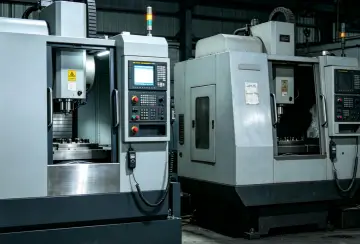
While cost-effective, used CNC milling machines carry major risks including hidden equipment faults and fraudulent refurbishment. Low-priced used units often suffer from cosmetic refurbishment, aging core components, precision failure, and major overhaul hidden troubles. Blind procurement leads to soaring subsequent maintenance costs, frequent downtime, and substandard production capacity, resulting in losses instead of profits. The following core inspections are mandatory before purchasing:
1. Verify Basic Equipment Information to Prevent Refurbishment Fraud
Check the equipment nameplate, factory serial number, and production year to confirm actual service life, and avoid refurbished units with altered production dates or spliced assembled machines. Prioritize equipment idled by regular factories with no heavy-load operation, collision, water damage, or major maintenance records. Steer clear of overworked engineering machines, overhauled units, and fault-refurbished equipment.
2. Inspect Precision and Operating Condition of Core Components
Core components determine equipment service life and processing quality, making them the top inspection priority. First, test the spindle: run it idle to check for abnormal noise and vibration, verify speed stability and runout accuracy, and eliminate spindle bearing wear and looseness. Second, inspect lead screws and guide rails for wear, scratches, and excessive clearance, and test the smoothness of three-axis movement to avoid jitter and positioning deviation. Third, check servo motors and encoders for accurate transmission, zero delay, and no fault alarms.
3. Test System and Circuit Integrity
Verify the operating status of the CNC system, including the integrity of the operation panel, buttons, and display screen, and check for frequent system errors, crashes, and normal programming and operation functions. Inspect circuits for aging, short circuits, and electric leakage, and confirm the normal operation of hydraulic, lubrication, and cooling systems to eliminate hidden risks such as circuit faults and oil line blockages.
4. On-Site Trial Cutting to Verify Processing Precision
On-site trial cutting testing is mandatory for all used CNC milling machine purchases. Process standard test samples to detect dimensional accuracy, surface finish, and repeated positioning accuracy, verifying actual processing capabilities and avoiding equipment with intact appearance but failed precision. Meanwhile, test full-load operation to check for overheating, abnormal noise, and sudden shutdown faults.
5. Confirm After-Sales Support and Spare Parts Compatibility
Prioritize mainstream models with sufficient market inventory, universal spare parts, and adequate maintenance resources. Avoid niche and outdated models that face difficult spare part procurement and high maintenance costs. Whenever possible, secure short-term warranty and after-sales commissioning services from suppliers to prevent irresponsible "sold-as-is" transactions.
IV. Investment Return Comparison: New vs. Used CNC Milling Machines for Targeted Procurement
The core of equipment investment decision-making is comprehensive Return on Investment (ROI), calculated based on upfront costs, operation and maintenance expenses, production efficiency, service life, and residual value. Different enterprise scales and production demands correspond to optimal procurement solutions:
1. New CNC Milling Machines: Low Long-Term Risk for Large-Scale Precision Processing Enterprises
Initial Investment Cost: High upfront expenditure covering equipment, installation, commissioning, and training, resulting in short-term capital pressure.
Operation & Maintenance Cost: Almost zero maintenance fees within the original warranty period, with extremely low failure rates and minimal downtime losses. Optimized energy consumption ensures stable and controllable long-term operational costs.
Production Return: High precision, superior stability, and high automation enable the undertaking of high-value precision orders, with low rework rates, high yield rates, and a high production capacity ceiling, suitable for long-term mass production.
Applicable Scenarios: Ideal for capacity expansion enterprises, precision mold processing, high-end parts manufacturing, and businesses pursuing long-term stable orders and low operational risks with superior long-term investment returns.
2. Used CNC Milling Machines: High Short-Term Cost Performance for Start-Up Lightweight Production
Initial Investment Cost: Greatly reduced upfront investment relieves cash flow pressure and enables rapid production launch for quick revenue generation.
Operation & Maintenance Cost: No original manufacturer warranty, with hidden aging risks for core components. Subsequent replacement and maintenance costs are uncertain, with higher failure probabilities and downtime losses.
Production Return: Meets general processing and basic order demands but cannot support ultra-high-precision machining, with slightly lower production stability and shorter service life than new machines.
Applicable Scenarios: Perfect for micro and small start-up enterprises, small-batch general processing, temporary capacity expansion, budget-limited projects, and businesses pursuing short-term quick returns.
V. Investment Risk Control Strategies for New & Used CNC Milling Machines
Strict risk management is essential for both new and used CNC milling machine procurement. Enterprises must make targeted decisions based on their actual production capacity, capital status, and order conditions to avoid blind investment and capital waste:
1. Risk Control for New Machine Procurement
Avoid over-specification and blindly high-end models; select equipment matching actual order precision, processing categories, and capacity demands to prevent idle capital caused by redundant functions. Choose formal brand manufacturers, and clearly specify warranty terms, after-sales scope, and spare parts supply timeliness in procurement contracts. Adopt flexible payment plans based on cash flow to balance investment expenditure and operational capital.
2. Risk Control for Used Machine Procurement
Avoid unreasonably low-priced equipment, as below-market-price units usually have hidden faults and refurbishment problems. Adhere to the principle of inspection before payment, and complete core component testing, trial cutting verification, and information confirmation before transaction. Cooperate with reputable suppliers that support on-site testing and provide short-term after-sales guarantees. Reserve 10%-15% of the total budget as maintenance contingency funds to cope with equipment aging losses.
3. Universal Investment Risk Control Principles
Select equipment based on actual order demands: Do not purchase new machines blindly without stable precision orders, nor invest in used machines without regular general production demands. Establish standardized daily maintenance plans: strictly follow manufacturer guidelines for new machine upkeep, and conduct regular core component inspections for used machines to extend service life and reduce failure risks. Regularly evaluate equipment capacity utilization to adjust production plans and avoid equipment idling waste.
VI. Conclusion: How to Choose Between New and Used CNC Milling Machines?
Brand-new CNC milling machines excel in stable performance, advanced technology, ultra-low risks, and favorable long-term returns. They are the optimal solution for large-scale, precision, and long-term production, suitable for capital-sufficient expanding enterprises with stable high-end orders and a focus on production stability.
Used CNC milling machines stand out for ultra-high cost performance, low upfront investment, and rapid production launch. They are the top choice for start-ups and lightweight temporary capacity expansion. With strict equipment inspection and risk control, enterprises can achieve rapid capacity deployment and capital recovery at low costs.
The ultimate logic of equipment investment is not a simple new-or-used choice, but matching equipment with enterprise development stages and balancing input costs, production returns, and investment risks. Targeted model selection maximizes the value of enterprise equipment assets.
 Email
Email sales1: +86 15312799623