



Avoiding Pitfalls in Horizontal Machining Center Selection for SMEs: Spindle Power / CNC System / Modular Configuration Decision Guide
In the process of purchasing horizontal machining centers, SMEs often encounter three problems: mismatched spindle power, incorrect CNC system selection, and blind modular configuration, which can lead to a 20% waste of investment. This article focuses on these three core decision points, providing corresponding selection formulas and scenario-specific matching templates to help accurately match production needs, satisfying current machining scenarios while avoiding unnecessary budget expenditures.
Are you struggling with these dilemmas: Choosing too high a spindle power might cost too much, while choosing too low might not be enough? Choosing a high-end CNC system might leave functions idle, while choosing a basic one might not be sufficient later? Following the trend of modular configuration might cost extra money, leading to idleness, while not buying it might cause trouble for future upgrades? The root cause of these pitfalls is the failure to match selection to actual production needs. Instead of relying on "spending more money on high-end components" to avoid these problems, the decision-making method in this article helps you find a balance between "sufficient" and "reasonable expansion," avoiding wasted budget while covering current and short-term production requirements.
More importantly, the article not only includes spindle power selection tables for light-load/general-purpose/heavy-load scenarios and CNC system compatibility lists, but also a real-world case study of a small and medium-sized enterprise saving 190,000 yuan in investment using this method. At the end, a downloadable "Selection Pitfall Avoidance Checklist" and "Spindle Power Calculation Template" are provided. Continue reading, and you can directly apply these tools to accurately allocate your selection budget, completely avoiding the pitfall of "spending money on idle components."
I. First, identify the 3 core pain points for SMEs in selecting equipment (with data on investment waste)
1. Spindle power mismatch: Wasting 15%-20% of procurement and operating costs
Problem manifestation: Blindly pursuing "high power" (e.g., selecting a 37kW spindle for machining aluminum parts when only 15kW is actually needed), or insufficient power (selecting an 11kW spindle for machining 45# steel, resulting in jamming under heavy loads);
Impact data: Excessive power → additional procurement cost of 80,000-150,000 RMB per unit, and additional annual electricity costs of 12,000 RMB; Insufficient power → 30% loss in production capacity, requiring additional equipment and repeated investment;
Typical scenario: A hardware factory selected a 22kW spindle for machining small aluminum parts (compatible with 15kW), incurring an additional procurement cost of 100,000 RMB and an additional annual electricity cost of 13,000 RMB, resulting in an investment waste of 18%.
2. CNC System "Mismatch": Redundancy or Insufficiency
Common Misconceptions: SMEs producing multiple varieties in small batches often choose high-end systems (such as FANUC 31i), resulting in 80% of their functions being unused; or they choose niche systems to save money, leading to difficulties in programming and lack of maintenance support later on.
Cost Losses: High-end systems incur an additional 50,000-80,000 RMB in procurement costs and 30% higher maintenance costs; niche systems result in 40% lower programming efficiency, longer wait times for repairs exceeding 72 hours, and a production capacity loss exceeding 20,000 RMB per incident.
Industry Pain Point: 60% of SMEs need to invest an additional 30,000-50,000 RMB in upgrades or replacements later due to improper system selection.
3. Blind Modular Configuration: Difficult Upgrades and Wasted Investment
Problem Manifestations: Ignoring production expansion needs and failing to reserve modular interfaces (such as fourth axes or automation interfaces), requiring disassembly and modification for later functional additions (costing over 50,000 RMB); or blindly adding useless modules (such as multi-station tool magazines or high-precision detection modules), resulting in utilization rates of less than 20%;
Data Evidence: A certain auto parts factory did not reserve a fourth-axis interface when selecting a model. Later, to process polyhedral parts, the modification cost 60,000 RMB, and there was a 15-day downtime, resulting in a 30,000 RMB loss in production capacity; blindly adding 40 tool magazines (when only 24 were actually needed) resulted in an extra 30,000 RMB in procurement costs.
II. Core Solution 1: Spindle Power Selection – Precise Matching Based on Production Needs
1. Core Selection Logic: Dual Calculation of Machining Load + Capacity Requirements
Key Formula: Spindle Power (kW) = Cutting Power (kW) ÷ Machine Tool Efficiency (60%-70%);
Core Principle: Prioritize "Sufficient Power" for SMEs, avoid "redundant high power," and select based on machining materials and processes.
2.Spindle Power Selection Templates for 3 Scenarios
| Production Scenarios | Processing Materials / Operations | Spindle Power Range (kW) | Model Selection Recommendations | Investment Savings |
| Light-duty Machining | Aluminum Parts / Plastics / Small Precision Components (Milling / Drilling) | 11-15 | Select 15kW (Balances efficiency and energy savings) | Saves ¥80,000 in procurement costs compared to 22kW, with annual electricity savings of ¥10,000 |
| General Machining | 45# Steel / HT200 Cast Iron / Small-to-Medium Batch Multi-Variety Parts (Rough Milling + Finish Milling) | 15-22 | Select 18.5kW (Suitable for 80% of SME scenarios) | Saves ¥50,000 compared to 22kW, while offering 20% more production capacity than 15kW |
| Heavy-duty Machining | Castings / Forgings / Large Enclosures (Heavy Cutting / Deep Cavity Machining) | 22-37 | Select 22kW (Only when daily heavy cutting exceeds 6 hours) | Saves ¥150,000 compared to 37kW, with annual electricity savings of ¥18,000 |
3. Selection Pitfalls: 2 Key Checkpoints
Check 1: Calculate the average daily maximum cutting load (e.g., if heavy cutting ≤ 3 hours per day, 18.5kW is sufficient, no need for 22kW);
Check 2: Reserve 10%-15% power redundancy (to avoid overload during occasional heavy machining), but not exceeding 20% (otherwise it's wasteful).
III. Core Solution 2: CNC System Selection – Balancing "Practicality + Expandability"
1. 3 System Types Adapted to SME Scenarios
| System Type | Representative Brands / Models | Suitable Scenarios | Procurement Cost (RMB 10,000) | Core Advantages |
| Entry-Level Practical | FANUC 0i-MF, Siemens 808D | Single-process / Batch production (e.g., milling or drilling of individual parts) | 8-12 | Simple operation, low maintenance costs, failure rate <1% |
| Universal Expandable | FANUC 0i-MF Plus, Siemens 828D | High-mix low-volume / Multi-process machining (e.g., box-type or housing components) | 12-18 | Supports macro programs, multi-axis coordination, and expandable tool compensation functionality |
| High-End Streamlined | FANUC 31i-Lite, Siemens 840D sl Lite Edition | High-precision / Complex part machining (e.g., molds or aerospace components) | 18-25 | Recommended only for SMEs with high-end requirements to avoid redundant features |
2. Three-Step Selection Decision
Step 1: Determine the processing complexity (Single process → Entry-level, Multi-process/Complex surface → General-purpose, High precision → High-end simplified);
Step 2: Assess future expansion needs (Will you process complex parts in the next 1-3 years? If so, choose the general-purpose type; otherwise, choose the entry-level type);
Step 3: Verify supplier service (Prioritize brands with local service networks to avoid unreliable repairs with niche systems).
3. Key Pitfalls to Avoid: Reject Two Extremes
Extreme 1: Choosing a high-end system for "prestige" (e.g., choosing FANUC 31i for simple parts), costing an extra 100,000 RMB with 80% of functions unused;
Extreme 2: Choosing a niche system (e.g., an unbranded system) to save money, resulting in incompatible programming software, repair delays exceeding 3 days, and lost production capacity far exceeding the savings on procurement costs.
IV. Core Solution 3: Modular Configuration – “Essential + Optional” – Match as Needed
1. Essential Modular Configuration for SMEs (You'll Regret Not Buying This!)
Essential 1: ATC Tool Magazine (24-30 tool positions) – Adapts to multi-process machining, avoiding time wasted on manual tool changes (40% more efficient than without a tool magazine);
Essential 2: Cooling System (Emulsion Cooling + Spindle Cooling) – Prevents tool wear and workpiece deformation, reducing scrap rate;
Essential 3: Basic Inspection Functions (Tool Length Inspection, Workpiece Origin Inspection) – Reduces manual calibration time and improves machining accuracy.
2.Optional Modular Configuration (Add as Needed, Avoid Blindly Following Trends)
| Optional Modules | Suitable Applications | Investment Cost (RMB 10,000) | Cost-Effectiveness Assessment (Is It Worth Buying?) |
| Fourth Axis (B-Axis) | Machining of multi-faceted parts (e.g., housings, impellers) | 5-8 | Daily polyhedral part processing ≥ 3 hours → Worth it; otherwise, hold off (can be retrofitted later) |
| Chip Conveyor (Scraper Type) | Steel/cast iron machining (high chip volume) | 1.5-3 | Daily processing ≥ 8 hours → Worth it; otherwise, manual cleaning suffices |
| Automation Interface | Future plans include robot integration/pallet storage | 2-4 | Automation plans within 3 years → Worth it; otherwise, no need to reserve space (retrofit costs are comparable) |
| High-Precision Inspection Module | Precision machining of parts with tolerances ≤±0.005mm | 8-12 | High-precision requirements only → Worth it; standard processing doesn't require it (wasted investment) |
3. Key to Modular Selection: Reserve Upgrade Space
Core Principle: Avoid blindly adding modules that are not currently needed, but confirm whether the machine tool supports future additions (e.g., fourth axis, automation interface);
Pitfalls to Avoid: Require suppliers to clearly define "cost of future module additions + downtime" when purchasing (e.g., fourth axis addition cost ≤ 60,000 RMB, downtime ≤ 3 days).
V. Case Study: A Small and Medium-Sized Enterprise Avoids Pitfalls in Selection, Saving 22% of Investment
1. Original Problem
Company Size: 15-person small factory, processing automotive parts (45# steel housing, multiple processes but no high-precision requirements);
Selection Mistakes: Planned purchase of a 37kW spindle + FANUC 31i system + 40 tool magazines + fourth axis, total investment 850,000 RMB;
Risks: Spindle power redundancy (actually 18.5kW required), system function redundancy, fourth axis not currently needed, estimated waste of 20% of investment (170,000 RMB).
2. Optimized Solution
Spindle Power: Replaced to 18.5kW (suitable for machining 45# steel housings, with 15% redundancy);
CNC System: Replaced with FANUC 0i-MF Plus (supports multi-process machining, saving 100,000 RMB compared to the 31i);
Modular Configuration: 24 tool magazines (sufficient) + essential cooling/detection functions, no fourth axis added for now (to be added later if needed, saving 50,000 RMB).
3. Optimization Results
Investment Savings: Total investment reduced from 850,000 RMB to 660,000 RMB, a 22% saving (190,000 RMB);
Production Capacity Matching: Machining efficiency remains consistent with the original plan, with no power shortage issues;
Later Flexibility: A fourth axis installation interface is reserved; when machining polyhedral parts is required after 3 years, only 60,000 RMB will be spent on installation (saving 20,000 RMB compared to purchasing it directly initially).
VI. Common Selection Misconceptions and Avoidance Guidelines
1. Misconception 1: "High Power = High Performance," Blindly Pursuing Larger Spindle Power
Problem: Believing that the higher the spindle power, the better, choosing a 37kW spindle for machining aluminum parts results in an extra 18,000 RMB in annual electricity costs, and the increased machine weight leads to higher installation costs.
Avoidance: Select a model based on "machining load calculation," rather than blindly pursuing larger power. For small and medium-sized enterprises, a 15-18.5kW spindle is suitable for 80% of scenarios.
2. Misconception 2: Ignoring "After-Sales Service," Focusing Only on Price
Problem: Choosing a low-priced, small-brand machine tool with no service leads to a 7-day wait for repairs, resulting in a 50,000 RMB loss in production capacity, far exceeding the 30,000 RMB saved on purchase costs.
Avoidance: Prioritize brands with local service networks (such as FANUC and Siemens authorized manufacturers), requiring "on-site repair within 24 hours," and including this in the contract.
3. Misconception 3: Modular Configuration – “The More the Better”
Problem: Believing that “more modules = more functions,” adding high-precision detection, automatic chip removal, fourth axes, etc., results in an actual utilization rate of less than 20%, costing an extra 120,000 yuan.
Avoidance: Select modules based on “current needs + 1-3 year planning.” Add unnecessary modules later (lower cost, avoids idleness).
4. Misconception 4: Ignoring “Machine Tool Rigidity,” Focusing Only on Parameters
Problem: Comparing only spindle power and systems, ignoring machine bed rigidity (e.g., cast iron bed vs. welded bed), leading to chatter during machining and an 8% increase in scrap rate.
Avoidance: Request a “bed rigidity test report” from the supplier during selection. Small and medium-sized enterprises (SMEs) should prioritize cast iron beds (better rigidity, suitable for multi-process machining).
FAQ: Common Issues in Horizontal Machining Center Selection for SMEs
Q: Limited budget (500,000-600,000 yuan), should I choose a 15kW or 18.5kW spindle? A: Prioritize the 15kW model (if processing materials are mainly aluminum parts and small steel parts), or the 18.5kW model (if occasional heavy cutting is also possible). The 18.5kW model only costs 30,000 RMB more than the 15kW model, but it allows for more capacity redundancy, making it more cost-effective.
Q: For multi-variety, small-batch production, should I choose the FANUC 0i-MF or the Siemens 828D? A: Both are acceptable. The key is your programming habits (choose 0i-MF if familiar with the FANUC system, and 828D if familiar with Siemens). It's crucial to confirm whether the supplier provides free programming training (to reduce later learning costs).
Q: If I want to add automation later, is it necessary to reserve interfaces when selecting a model? A: It's recommended to reserve interfaces (an extra 20,000-40,000 RMB). When adding robots/pallet storage later, downtime is reduced from 7 days to 3 days, saving 30% on modification costs. If there are no automation plans within 3 years, you don't need to reserve interfaces for now (the later modification costs are not significantly different).
Q: What should small and medium-sized enterprises pay attention to when choosing a used horizontal machining center? A: Focus on checking spindle wear (runout ≤0.005mm), CNC system version (whether it supports future upgrades), and the integrity of modular interfaces; prioritize equipment with a service life of ≤3 years and complete maintenance records to avoid maintenance costs exceeding purchase costs.
Conclusion
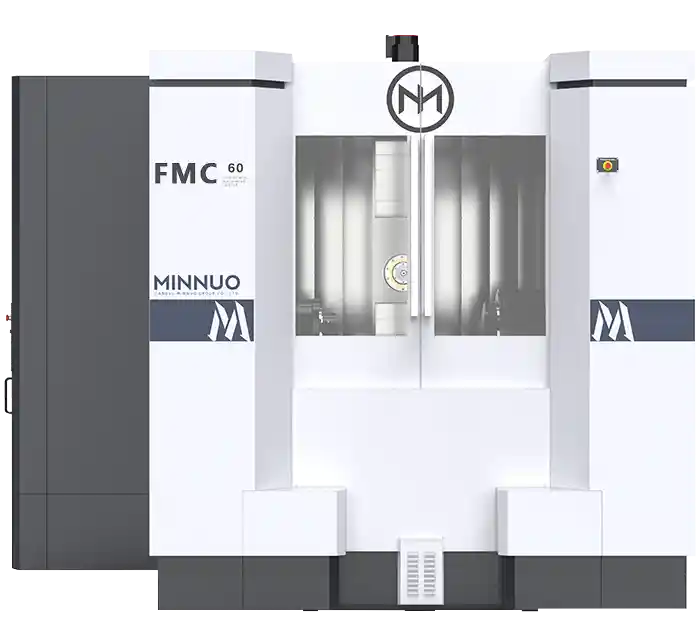
The core logic for selecting horizontal machining centers for SMEs is "precise matching + avoiding redundancy": spindle power is calculated based on machining load, the CNC system considers both practicality and expandability, and modular configuration prioritizes essential components while allowing optional components to be added as needed. Combining these three aspects can avoid 20% of investment waste. MINNUO horizontal machining centers perfectly meet this need—their spindle power is precisely graded according to light load/general/heavy load scenarios at 15kW/18.5kW/22kW (covering 80% of SME machining loads), the CNC system is equipped by default with practical solutions such as FANUC 0i-MF Plus (accommodating multi-process expansion without functional redundancy), and the modular configuration reserves essential interfaces and supports later on-demand additions, helping SMEs avoid the risk of investment waste from the design stage.
Our compiled tools, such as the "Spindle Power Calculation Template" and "Selection Pitfall Avoidance Checklist," can assist in rapid model selection. MINNUO customers can also receive an additional brand-specific "Small and Medium-sized Enterprise Model Selection and Adaptation Manual." This manual is customized based on the actual parameters of MINNUO machine tools (such as spindle load thresholds and system expansion capabilities), precisely aligning the selection logic in the toolkit with the equipment's operating conditions. It allows for direct matching to machining scenarios without additional calculations, further reducing trial-and-error costs in model selection and ensuring more accurate budget allocation.
If you are currently selecting a horizontal machining center, you can begin reviewing your core requirements, such as machining materials and processes, starting today, and begin initial brand selection this week. During this process, MINNUO's professional selection team can provide free needs diagnosis services to assist you in completing accurate model selection within one month. After-sales and subsequent installation terms will be clearly defined in the contract—MINNUO will serve as a reliable partner for small and medium-sized enterprises' production equipment investment, helping you match efficient production needs with a reasonable budget and completely avoid investment waste.
 Email
Email sales1: +86 15312799623