



Climb Milling or Conventional Milling: Which One Should You Use?
In CNC machining, the choice of milling method may seem subtle, yet it can have a significant impact on machining accuracy, tool life, surface quality, and even the overall stability of the machine. The decision between Climb Milling and Conventional Milling is not merely a theoretical debate, but a critical process selection point that engineers must thoroughly understand and apply correctly.
Climb milling refers to the situation where the direction of the cutter rotation is the same as the feed direction, with the cutting edge engaging the material at its thickest point. In contrast, conventional milling means the cutter rotates against the feed direction, starting the cut at the thinnest section.There is no absolute answer as to which method is better—only a rational decision based on which is more suitable under specific conditions.
For most modern CNC milling operations, climb milling is generally preferred. However, conventional milling remains useful when machine backlash or specific workpiece conditions make climb milling less suitable.
This article will take an engineering-oriented approach to systematically analyze the mechanical differences and influencing factors of the two milling methods, and provide clear and practical selection criteria.
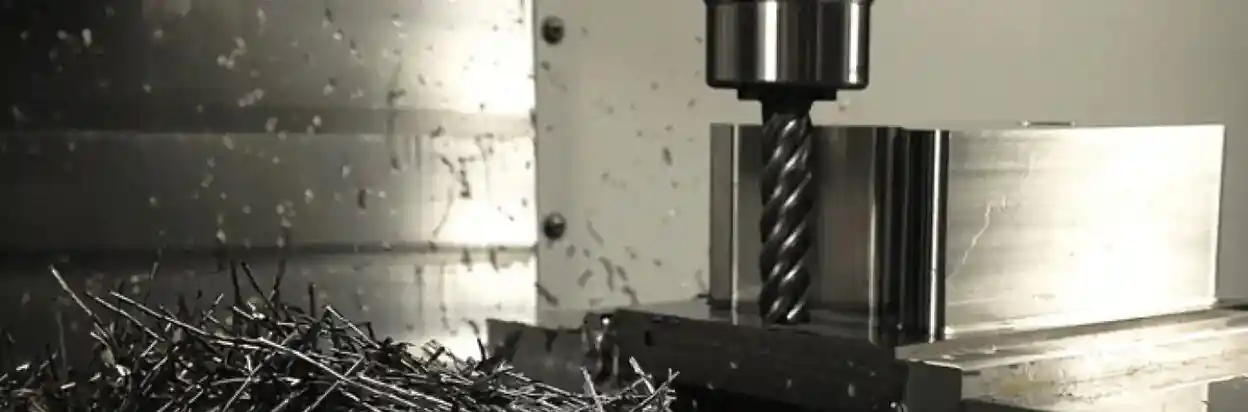
1. Climb Milling:
Climb milling refers to a cutting method in which the cutter rotates in the same direction as the feed of the workpiece. The cutting edge engages the material at its thickest point and gradually cuts thinner. It is one of the most common milling methods in modern CNC precision machining.
Technical Essentials:
•In typical peripheral milling, the cutting force tends to press the workpiece toward its support, although the actual force direction depends on cutter engagement and machining conditions.
•The tool bears the highest load at the entry point, making it more prone to instantaneous impact;
•Chips are expelled away from the machined surface, minimizing secondary cutting and surface damage.
Advantages:
- Often produces a better surface finish, making it suitable for finishing and final contour milling.
- Reduced rubbing at tool entry can lower cutting temperatures and improve tool life under suitable machining conditions.
- Smoother chip evacuation, which aids cooling and chip removal.
⚠️ Risks & Limitations:
- The cutting force can pull the machine table into the cut on machines with significant backlash, making a rigid feed system and effective backlash control essential.
- If the fixturing is insufficient, the cutting force may cause workpiece movement.
- When machining thin-walled parts or low-rigidity workpieces, cutting direction and tool engagement must be evaluated to minimize deflection and vibration.
Climb milling is commonly used for aluminum, copper, and suitable plastics on modern 3-axis and 5-axis CNC machines. With adequate machine rigidity, secure fixturing, and appropriate toolpaths, it can provide a good balance between machining efficiency and surface quality.
2. Conventional Milling:
Conventional milling is where the cutter rotates opposite to the feed direction of the workpiece, starting from the thinnest part of the material and cutting deeper. This method is more suitable for traditional vertical and horizontal milling machines, as well as older CNC machines with significant backlash.
Technical Essentials
- In typical peripheral milling, cutting forces may tend to lift the workpiece, making secure clamping particularly important.
- The initial chip thickness is close to zero, resulting in gradual tool engagement but potentially increased rubbing before the cutting edge fully engages.
- Chips may flow in front of the cutter, increasing the possibility of secondary cutting.
Advantages
- Gradual chip formation at tool entry may be useful when machining certain castings, forgings, or workpieces with hard surface layers.
- High tolerance to machine backlash, making it more suitable for some older or manually operated milling machines.
- Can provide better control in certain machining conditions where climb milling causes excessive vibration or unstable engagement.
Limitations
- Surface finish may be less consistent due to increased friction and possible chip recutting.
- Greater rubbing at tool entry can increase cutting temperatures and accelerate tool wear.
- Chip accumulation and insufficient chip evacuation may contribute to surface damage or built-up edge (BUE), depending on the workpiece material.
3. Climb vs. Conventional Milling: Key Differences
The main difference is how chip thickness changes during cutting. In peripheral milling, climb milling starts with a thick chip and ends with a thin chip, while conventional milling follows the opposite pattern. This affects cutting forces, tool wear, surface quality, and machine stability.
| Comparison Aspect | Climb Milling | Conventional Milling |
|---|---|---|
| Cutting Force Direction | Often tends to press the workpiece toward its support in peripheral milling | May tend to lift the workpiece in peripheral milling |
| Tool Load at Entry | Heavy → Higher initial engagement load | Light → Gradual chip formation |
| Tool Wear & Life | Often less rubbing and longer tool life | More rubbing, potentially higher tool wear |
| Surface Finish | Generally better → Suitable for finishing | May be less consistent due to rubbing and chip recutting |
| Sensitivity to Backlash | High → Requires effective backlash control | Low → More suitable for machines with significant backlash |
| Cooling and Chip Removal | Chips generally move away from the machined surface | Greater risk of chip recutting; effective chip evacuation is important |
These comparisons describe typical peripheral milling conditions. Actual performance also depends on tool geometry, cutter engagement, material properties, and machine rigidity.
4. How to Make the Right Choice? These Four Key Factors Must Be Considered
The choice between climb milling and conventional milling is not simply about machine age, but should be based on the overall process system. The following four variables are critical in making the correct decision:
As a general rule, climb milling is the first choice for most operations on modern, rigid CNC machines. Conventional milling should be considered when specific machine or workpiece conditions justify it.
① Workpiece Fixturing and Support Rigidity
- Firm clamping and solid machine support → Climb milling generally recommended.
- Weak fixtures or insufficient workpiece support → Improve the setup before machining; conventional milling is not a substitute for secure clamping.
- Machines with significant feed-system backlash → Conventional milling may be the safer option.
② Material Characteristics
- Soft metals (aluminum, copper) and suitable plastics → Climb milling is generally preferred.
- Hardened steel and other hard materials → Select the milling direction according to cutting conditions and tooling, rather than material hardness alone.
- Castings, forgings, or workpieces with hard surface layers → Conventional milling may be beneficial for certain initial roughing passes.
③ Tool Selection and Cooling Conditions
- High-rigidity tools and stable machining conditions → Climb milling generally performs well.
- Tool geometry, coating, cutting parameters, and chip evacuation should be optimized for either milling method.
- Limited cooling alone is not a sufficient reason to select conventional milling.
④ Machining Objective
- For high surface quality and accuracy → Climb milling is generally preferred.
- For high material removal rates and roughing on modern CNC machines → Climb milling is also commonly preferred when the setup is stable.
- For machining certain hard surface layers or operating machines with significant backlash → Conventional milling may be more suitable.
In practice, the best approach is to start with the method recommended for the machine and tooling, then verify cutting stability, surface finish, and tool wear under actual operating conditions.
5. Conclusion: The Right Milling Method Is the Result of System Matching
Climb milling is not inherently superior in every situation, and conventional milling is not outdated. Each serves different goals based on the machining environment, material, and tool setup. The choice of milling strategy is essentially about system-level coordination among machine, fixture, tooling, and process objectives.
For most modern CNC machines with rigid construction and effective backlash control, climb milling is generally the preferred choice for both finishing and many roughing operations. Conventional milling remains valuable for machines with significant backlash and certain workpieces with hard or irregular surface layers.
At MINNUO, we emphasize the importance of evaluating machine rigidity, workpiece fixturing, and machining requirements when selecting CNC milling strategies. The final choice should reflect actual cutting conditions rather than a fixed preference for either method.
Choosing the right process is the first step toward successful manufacturing.
 Email
 sales1: +86 15312799623