



CNC Machining of Hydrogen Energy Equipment Components
As hydrogen technologies develop across transportation, energy storage, and industrial applications, manufacturers face increasing demands for precision, material compatibility, and reliable component production. Fuel cells, hydrogen storage systems, compressors, and refueling equipment all contain mechanical components that require controlled manufacturing processes.
CNC machining plays an important role in manufacturing hydrogen energy equipment components, including fuel cell bipolar plates, valve bodies, manifolds, storage-system fittings, and precision connectors. CNC turning, milling, drilling, and grinding help manufacturers achieve the dimensional accuracy, surface quality, and repeatability required for these components.
However, hydrogen equipment manufacturing presents specific challenges. Materials must be selected for their intended operating conditions, while machined components may require tight dimensional control, reliable sealing interfaces, and complex internal passages.
This article examines the machining requirements, key CNC technologies, and practical applications involved in manufacturing hydrogen energy equipment components.

1. Material and Machining Requirements for Hydrogen Energy Equipment Components
Hydrogen energy equipment includes components with different mechanical, environmental, and dimensional requirements. Understanding these conditions is essential for selecting suitable materials and machining processes.
Material Performance and Machinability
High-Strength and Corrosion-Resistant Metal Alloys
Stainless steels, aluminum alloys, and selected specialty alloys are used in different hydrogen-related equipment applications.
For components exposed to hydrogen, material selection must account for operating pressure, temperature, hydrogen compatibility, and mechanical performance.
These materials also present different machining challenges:
- Stainless Steel: May generate significant cutting heat and work hardening, requiring appropriate tooling and cutting parameters.
- Aluminum Alloys: Offer good machinability in many applications but may experience built-up edge formation or deformation in thin-walled structures.
- Titanium Alloys: Can be difficult to machine because of their thermal characteristics and tendency toward accelerated tool wear under unsuitable cutting conditions.
The material best suited to a component must be determined by its design and operating requirements, not machining performance alone.
Composite Materials in Hydrogen Storage Equipment
Carbon fiber-reinforced polymer composites are used in certain high-pressure hydrogen storage vessels because they provide high specific strength.
However, the manufacturing methods vary according to vessel construction.
For example, Type IV composite pressure vessels typically contain a polymer liner, a fiber-reinforced outer structure, and metallic connection components.
CNC machining is especially relevant to associated metal bosses, valve interfaces, connectors, and tooling, rather than manufacturing the entire composite vessel through conventional metal-cutting operations.
These components require careful dimensional control to support the intended assembly and sealing design.
Hydrogen Compatibility and Sealing Requirements
Hydrogen exposure can influence the performance of certain materials through mechanisms such as hydrogen-assisted cracking and permeation.
Consequently, material compatibility is an important consideration when manufacturing pressure-containing components and hydrogen-contacting parts.
Machining requirements may include:
- Controlled dimensions at sealing interfaces
- Appropriate surface finish on mating surfaces
- Accurate threads and connection geometries
- Consistent hole positioning and alignment
- Avoidance of machining damage that may compromise component integrity
CNC machining helps achieve the specified geometries, but sealing performance and pressure resistance must also be verified through suitable material selection, component design, assembly, and testing.
Structural Design and Precision Requirements
Hydrogen equipment components may include complex internal flow passages, precision holes, sealing surfaces, and thin-walled structures.
Complex Flow Channels
Fuel cell bipolar plates and certain manifolds require carefully designed flow passages to distribute gases or coolant.
CNC machining can produce suitable flow-channel geometries, particularly in graphite bipolar plates, prototypes, and selected custom components.
Thin-Walled and Deep-Cavity Components
Valve bodies, housings, and manifolds may contain thin walls or deep internal features.
Machining these structures requires control of cutting forces, workholding, tool deflection, and material deformation.
High Assembly Accuracy
Hydrogen storage connectors, compressor components, and refueling equipment often require accurate mating surfaces and positional relationships.
The required tolerances depend on component design, manufacturing specifications, and the relevant equipment requirements.
2. Key Advantages of CNC Machining for Hydrogen Energy Components
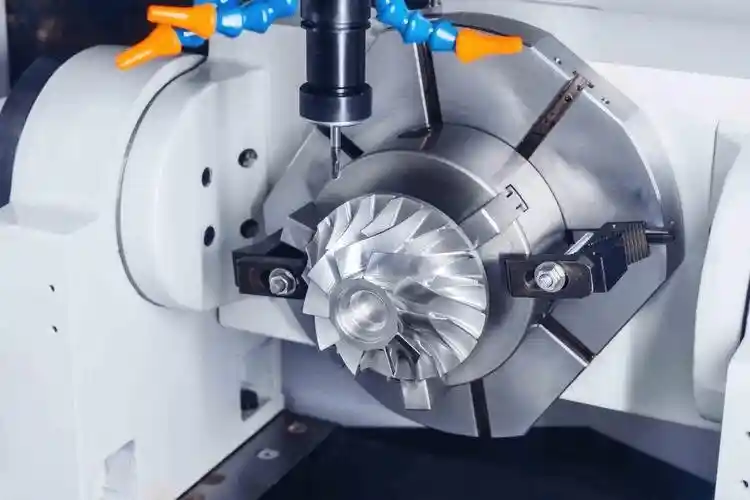
CNC machining provides several advantages when manufacturing precision mechanical components for hydrogen energy equipment.
High-Precision Machining Capability
CNC machine tools can produce components with controlled dimensions, geometric tolerances, and surface characteristics.
For example, valve bodies and sealing components may require accurately machined bores, threads, and mating surfaces.
Fuel cell stack components may also require controlled flatness, hole positioning, and dimensional consistency.
Achievable accuracy depends on the machine, tooling, workpiece material, machining process, and inspection method.
Machining Complex Profiles and Flow Channels
Hydrogen equipment can contain internal passages and complex mechanical structures that are difficult to manufacture using conventional manual machining.
CNC milling, drilling, and multi-axis machining can help produce manifolds, valve housings, and other components with multiple intersecting features.
For suitable applications, CNC machining also supports the development and testing of new flow-channel designs.
Efficient and Repeatable Production
Once machining programs and setup procedures are validated, CNC equipment can reproduce components with consistent geometry.
Automatic tool changing, optimized toolpaths, and appropriate fixtures may reduce unnecessary manual operations.
For repeat production of valve bodies, fittings, and mechanical components, this can support more predictable manufacturing processes.
Flexible Customization
Hydrogen equipment manufacturers may require specialized components for prototypes, engineering validation, or small-batch production.
CNC machining allows manufacturers to modify programs and tooling arrangements to accommodate different component designs.
This flexibility makes it suitable for applications where designs change frequently or production quantities do not justify dedicated high-volume tooling.
Consistent Quality Control
CNC machining can support repeatable manufacturing when combined with suitable setup procedures and inspection.
Critical dimensions, surface finish, and geometric relationships can be checked using appropriate measuring equipment.
Process monitoring and dimensional inspection help identify manufacturing variation, but final component quality must still be verified against the required specifications.
3. CNC Machining Technologies for Hydrogen Equipment Components
Different hydrogen energy components require different machining methods. Selecting the appropriate technology depends on the workpiece geometry, material, required accuracy, and production volume.
Multi-Axis CNC Machining
Multi-axis machining allows cutting tools to access several surfaces of a component with fewer repositioning operations.
Three-axis machining centers are suitable for many standard milling and drilling tasks, while four-axis and five-axis systems may provide additional flexibility for complex geometries.
In hydrogen equipment manufacturing, multi-axis machining can be useful for:
- Valve bodies with multiple connection ports
- Manifolds containing intersecting passages
- Complex compressor housings
- Precision components requiring machining from several directions
Reducing repeated setups can help maintain positional relationships between machined features, provided the fixturing and machining process are properly controlled.
High-Speed Milling
High-speed milling can be suitable for machining selected aluminum components, graphite parts, and complex surfaces.
The appropriate cutting speed depends on material properties, cutter design, machine capability, and process conditions.
For example, carefully selected milling strategies may improve efficiency when machining aluminum housings or graphite bipolar plate flow channels.
Tool wear, chip evacuation, and surface integrity must still be monitored.
CNC Turning and Precision Grinding
CNC Turning
CNC lathes are particularly useful for manufacturing rotational components, including:
- Hydrogen system connectors
- Valve stems and threaded fittings
- Shaft-type compressor components
- Precision sleeves and bushings
Turning operations can control diameters, threads, concentricity, and other rotational features.
Precision Grinding
Grinding may be used when components require surface characteristics or geometric tolerances that are difficult to obtain through conventional turning or milling alone.
Potential applications include selected metallic sealing components, shafts, and precision mating surfaces.
The process must be chosen according to the material and surface requirements.
Specialized Machining Technologies
Electrical Discharge Machining (EDM) may be used for suitable electrically conductive materials and complex features that are difficult to machine with conventional cutting tools.
Laser processing may also be useful for certain components and manufacturing operations.
However, these processes are not interchangeable with conventional CNC milling or drilling. Their suitability depends on material, geometry, surface integrity, and production requirements.
Machining Simulation and Process Optimization
CAM programming and machining simulation can help manufacturers evaluate toolpaths, machining sequences, and potential tool collisions before production.
For complex valve bodies or manifolds, appropriate process planning can reduce unnecessary repositioning and improve machining efficiency.
Finite element analysis may also be useful when evaluating component deformation or fixture-related stresses in demanding applications.
Combining process planning with actual machining verification is essential for maintaining reliable production results.
4. CNC Machining Applications in Hydrogen Energy Equipment
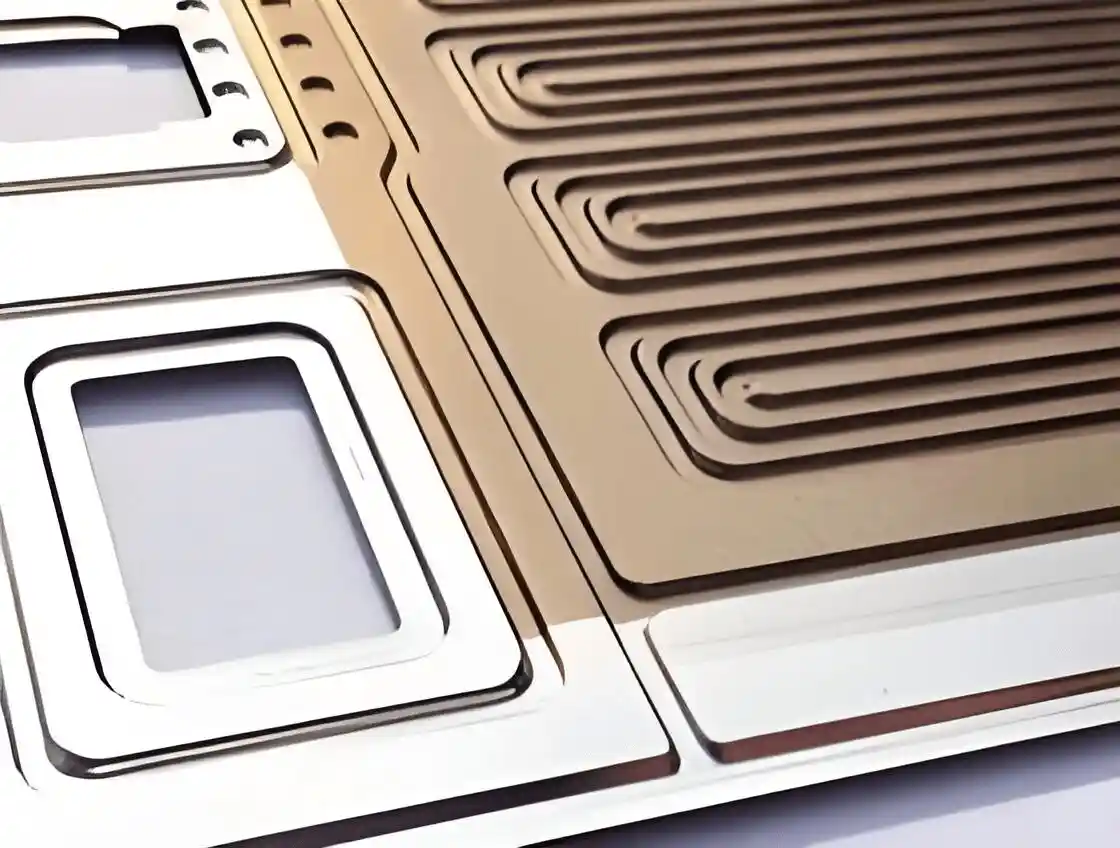
CNC machining supports the manufacturing of several important hydrogen energy equipment components.
The following applications illustrate how different machining methods address specific manufacturing requirements.
Fuel Cell Component Machining
Fuel cell systems contain bipolar plates, end plates, manifolds, and various structural components.
Bipolar Plates
Bipolar plates contain flow channels used to distribute reactant gases and, in some designs, coolant.
Graphite bipolar plates can be manufactured using precision CNC machining, particularly for prototypes and selected production requirements.
Metallic bipolar plates may instead be manufactured using stamping or other forming processes, especially in higher-volume production.
CNC machining can also support the manufacture of related tooling and prototype components.
End Plates and Manifolds
Fuel cell end plates and manifolds may require milling, drilling, and precision machining to achieve the specified geometry and assembly fit.
Accurate hole positioning, flatness, and surface quality can be important for stack assembly.
The membrane electrode assembly (MEA), by contrast, is generally produced using specialized membrane, catalyst, and electrode manufacturing processes rather than conventional CNC cutting.
Hydrogen Storage Equipment Component Manufacturing
Hydrogen storage systems include pressure vessels, valves, connectors, and other mechanical components.
CNC machining is particularly relevant to metallic parts requiring precise threads, sealing interfaces, and dimensional control.
Hydrogen Storage Fittings and Metal Bosses
Composite pressure vessels may incorporate metallic bosses that connect the vessel to valves and external systems.
CNC turning and milling can be used to manufacture suitable metal connection features according to approved component designs.
Valve Bodies and Connection Components
Storage system valves and fittings may require precision bores, threaded ports, and carefully machined mating surfaces.
The material and process must be appropriate for the hydrogen service conditions.
CNC machining contributes to dimensional accuracy, while pressure integrity and leak-tightness depend on the complete design, materials, assembly, and qualification process.
Hydrogen Refueling Station Equipment
Hydrogen refueling stations use a range of precision mechanical components, including valve bodies, manifolds, fittings, and dispenser connection components.
These parts may contain complex passages and closely controlled connection geometries.
CNC machining can support their production through:
- Precision turning of threaded connections
- CNC milling of valve bodies and manifolds
- Drilling of internal passages
- Finishing of specified sealing surfaces
- Dimensional inspection of critical features
For equipment exposed to high-pressure hydrogen, manufacturing must follow the applicable design requirements and qualification procedures.
Machining quality is an important part of the production process, but it does not replace required material verification, pressure testing, or leak testing.
5. MINNUO CNC Machine Tool Solutions for Hydrogen Energy Component Manufacturing
As hydrogen equipment manufacturers develop more demanding components, selecting suitable CNC machinery becomes an important part of production planning.
The machine tool should be chosen according to the workpiece material, geometry, required tolerances, and expected production volume.
CNC Equipment for Precision Component Manufacturing
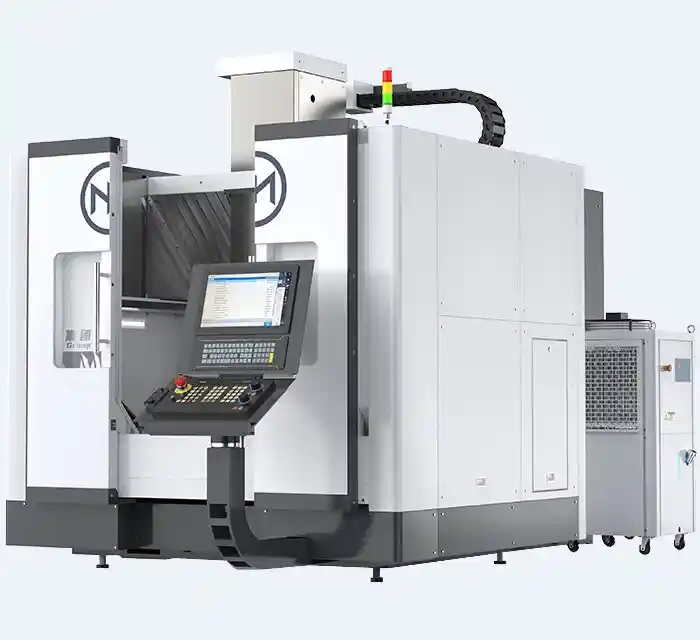
Different machining applications call for different machine configurations.
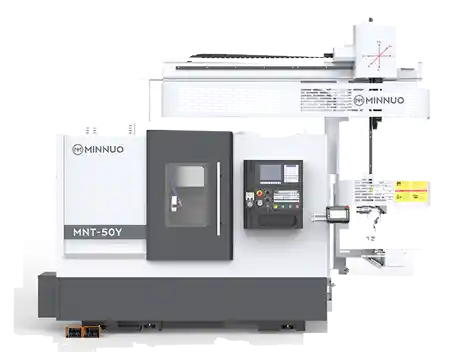
CNC Turning Machines
Suitable for many rotational components, including connectors, shafts, threaded fittings, and precision sleeves.
Important selection factors include turning capacity, spindle characteristics, machine rigidity, and the required accuracy.
Vertical and Multi-Axis Machining Centers
Suitable for valve bodies, manifolds, structural components, and parts requiring multiple milling and drilling operations.
For more complex geometries, additional rotary axes may improve tool access and reduce repeated workpiece setups.
Precision Grinding Equipment
May be considered for components requiring controlled surface finish or demanding geometric accuracy.
The appropriate grinding process depends on the component material, dimensions, and required surface characteristics.
Selecting the Right Machining Process
Before investing in equipment for hydrogen component manufacturing, manufacturers should evaluate:
- Material Compatibility: Select materials suitable for the intended hydrogen service conditions.
- Component Geometry: Identify requirements for deep holes, internal passages, threads, and mating surfaces.
- Machining Accuracy: Define dimensional and surface specifications before selecting equipment.
- Production Volume: Determine whether flexible CNC machining or dedicated production tooling is more economical.
- Inspection Requirements: Establish suitable measurement and quality-control procedures.
For complex components, machining trials and process verification may be necessary before full production.
Process Optimization and Manufacturing Support
Machine rigidity, tooling selection, fixture design, and machining parameters all influence production quality.
For example, machining a valve body with multiple intersecting ports may benefit from optimized fixturing and multi-axis toolpath planning.
Similarly, producing precision sealing components may require additional inspection or finishing operations.
MINNUO's CNC machine tool offerings can be evaluated against these manufacturing requirements when selecting equipment for hydrogen-related component production. Specific machine configurations, achievable tolerances, and application capabilities should be confirmed using the relevant technical specifications.
Conclusion
CNC machining plays an important role in manufacturing precision components for hydrogen energy equipment, including fuel cell hardware, hydrogen storage fittings, valve bodies, manifolds, and refueling system connectors.
Different components require different machining approaches. CNC turning is suitable for many rotational parts, while milling and multi-axis machining support complex housings, flow passages, and multi-sided components. Grinding and other specialized processes may be used where additional surface or geometric control is required.
The key to successful hydrogen component machining is matching the material, component design, machine capability, and quality-control process. Accurate machining helps manufacturers meet specified dimensional requirements, but safe hydrogen service also depends on appropriate materials, engineering design, assembly, and testing.
For manufacturers considering new production equipment, MINNUO provides a starting point for evaluating CNC machine tool options according to component geometry, machining requirements, and production needs.
By selecting appropriate machining technologies and maintaining consistent process control, manufacturers can support the reliable production of precision components for hydrogen energy applications.
 Email
 sales1: +86 15312799623