



Grinding Burn: What to Do and How to Prevent It
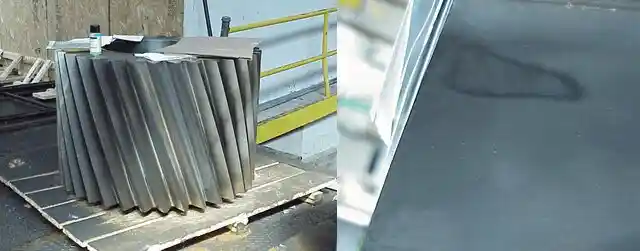
Grinding burn is a common surface integrity problem in precision grinding. It occurs when excessive grinding heat causes thermal damage to the surface or subsurface of a workpiece.
In applications involving hardened steel components, grinding burn can cause changes in hardness, microstructure, and residual stress. Severe damage may reduce fatigue performance or lead to surface cracking.
If grinding burn occurs, stop the affected operation, inspect the workpiece, check the grinding wheel and coolant system, and review the grinding parameters before restarting production. The damaged part should be evaluated against its quality requirements before being accepted, reworked, or rejected.
This guide explains what causes grinding burn, how to detect it, and the practical steps you can take to prevent it during CNC grinding operations.
1. What to Do When Grinding Burn Occurs
When grinding burn is suspected, the priority is to determine whether the workpiece has been damaged and identify the process condition responsible.
Step 1: Stop Grinding and Isolate Affected Parts
Safely stop the affected grinding operation and inspect the workpiece.
If multiple parts have been produced under the same conditions, identify and isolate potentially affected parts produced since the last verified acceptable result.
Look for visible warning signs such as:
- Blue, brown, or dark discoloration
- Localized surface marks
- Grinding cracks
- Unusual surface appearance
However, the absence of discoloration does not guarantee that a workpiece is free from grinding burn. Some forms of thermal damage cannot be identified through visual inspection alone.
Step 2: Check the Grinding Wheel
Inspect the grinding wheel for glazing, loading, or abnormal wear.
A glazed wheel has dull abrasive cutting edges, while a loaded wheel contains workpiece material trapped in the wheel surface.
Both conditions can reduce cutting efficiency and increase friction.
If necessary, dress the wheel using the appropriate procedure to restore its cutting condition.
Step 3: Inspect the Coolant System
Check whether the grinding fluid reaches the wheel-workpiece contact zone effectively.
Inspect the coolant nozzle position, flow rate, filtration condition, and fluid concentration.
Poor coolant delivery can allow excessive heat to build up even when other grinding parameters appear reasonable.
Step 4: Review Grinding Parameters
Check the programmed depth of cut, feed rate, wheel speed, and workpiece speed.
Determine whether the grinding operation is generating excessive heat or whether the wheel is rubbing rather than cutting efficiently.
Adjust parameters according to the material, grinding method, and wheel manufacturer's recommendations.
Step 5: Verify the Process Before Restarting
After correcting the suspected causes, perform a controlled trial using an appropriate test workpiece or approved production validation procedure.
Confirm that the process meets the required dimensional, surface finish, and surface integrity specifications.
Do not assume that removing visible discoloration is sufficient to repair a burned part. If subsurface damage is suspected, further inspection and quality approval may be necessary.
2. What Causes Grinding Burn?
Grinding burn occurs when heat generated in the grinding contact zone causes undesirable changes in the workpiece material.
In hardened steels, thermal damage may include tempering-related softening, localized rehardening, residual tensile stresses, or cracking.
The severity depends on the grinding temperature, exposure time, material properties, and previous heat treatment.
2.1 Excessive Grinding Heat
Grinding generates heat as abrasive grains remove material from the workpiece.
When heat generation exceeds the cooling and heat dissipation capacity of the process, the workpiece may experience thermal damage.
Contributing factors include:
- Excessive material removal rate
- Improper depth of cut
- Inefficient abrasive cutting
- Excessive rubbing or friction
- Unfavorable combinations of wheel speed and feed rate
Grinding parameters must be evaluated together because changing one parameter can affect cutting efficiency, contact time, and heat generation.
2.2 Inadequate Coolant Delivery
Grinding fluids help control temperature, provide lubrication, and remove grinding debris.
Grinding burn may occur when coolant flow is insufficient or the fluid fails to reach the actual grinding contact zone.
Common problems include:
- Incorrect nozzle positioning
- Restricted coolant flow
- Inadequate fluid supply
- Contaminated grinding fluid
- Poor filtration or clogged delivery components
Effective coolant delivery is often more important than simply increasing pump pressure.
2.3 Grinding Wheel Glazing or Loading
A grinding wheel must maintain exposed, effective abrasive cutting edges.
As the wheel becomes dull or loaded, more energy may be consumed through friction and rubbing rather than material removal.
This can increase grinding forces and thermal damage risk.
Wheel condition is influenced by abrasive grain type, wheel grade, bond, structure, dressing conditions, and the workpiece material.
2.4 Workpiece Material and Heat Treatment
Some materials are particularly sensitive to grinding heat.
Hardened steels, including certain bearing steels and tool steels, may experience changes in surface hardness or microstructure when overheated.
A thermally damaged layer may affect the functional performance of a part even if its dimensions remain within tolerance.
For this reason, surface integrity requirements should be considered alongside dimensional accuracy and surface roughness.
2.5 Machine Vibration and Setup Problems
Grinding burn can also be associated with unstable machining conditions.
Potential contributors include:
- Poor grinding wheel balance
- Worn spindle bearings
- Inadequate workpiece clamping
- Wheel runout
- Unstable grinding forces
These conditions may create uneven contact or localized increases in grinding force and heat.
3. How to Detect Grinding Burn
Grinding burn is not always visible. The appropriate inspection method depends on the material, component requirements, and suspected type of thermal damage.
3.1 Visual Inspection
Visual inspection is the simplest initial method.
Blue, brown, or dark surface discoloration may indicate excessive heating.
However, discoloration is not a reliable measure of damage depth or severity.
Some parts can experience subsurface metallurgical changes without obvious color changes.
Best Use: Initial screening and identification of suspicious surface areas.
3.2 Nital Etching and Surface Temper Etch Inspection
Chemical etching can reveal certain metallurgical changes caused by grinding heat.
For suitable steel components, controlled surface temper etch inspection can help identify areas affected by overtempering or rehardening.
For example, ISO 14104:2017 specifies chemical surface temper etch inspection methods for applicable steel components, including gears, shafts, splines, and bearings.
The standard is not intended for every material or surface treatment.
Chemical etching should be performed by qualified personnel using an approved procedure, as it involves controlled chemical treatment of the workpiece surface.
Best Use: Assessing applicable steel parts where metallurgical thermal damage must be identified.
3.3 Microhardness Testing
Microhardness testing can help evaluate changes in hardness caused by excessive grinding temperatures.
For hardened steel, unexpected softening may indicate tempering-related damage, while localized hardening may indicate more severe thermal transformation.
Cross-sectional testing can also help investigate the depth of an affected layer.
However, section preparation and some hardness measurement procedures are destructive or leave an indentation.
Best Use: Metallurgical investigation and confirmation of suspected hardness changes.
3.4 Magnetic Barkhausen Noise Testing
Magnetic Barkhausen Noise (MBN) testing is a non-destructive method used to evaluate changes in the magnetic response of suitable ferromagnetic materials.
It can be useful for detecting grinding-related changes associated with residual stress and microstructure.
The method requires appropriate equipment, calibration, and interpretation for the specific material and inspection application.
SAE ARP4462C provides guidance for Barkhausen noise inspection of applicable steel components.
Best Use: Qualified non-destructive inspection of grinding burn in suitable ferromagnetic steel parts.
3.5 Crack Inspection and Process Monitoring
Magnetic particle inspection can help identify surface and near-surface cracks in suitable ferromagnetic materials.
However, it is primarily a discontinuity inspection method and does not directly confirm all forms of grinding burn.
Machine monitoring systems may also use spindle power, grinding force, acoustic emission, or other signals to identify abnormal process conditions.
Such monitoring can support early intervention, but its effectiveness depends on appropriate sensing, calibration, and process validation.
Comparison of Grinding Burn Detection Methods
| Method | Main Purpose | Important Limitation |
|---|---|---|
| Visual inspection | Identify visible discoloration or defects | Cannot reliably exclude hidden damage |
| Surface temper etching | Reveal certain metallurgical changes in applicable steels | Material-specific chemical procedure |
| Microhardness testing | Investigate hardness changes | May require destructive sectioning |
| Barkhausen noise testing | Evaluate relevant material and stress changes in ferromagnetic steel | Requires calibration and qualified interpretation |
| Magnetic particle inspection | Detect suitable surface or near-surface cracks | Not a direct test for all thermal damage |
| Process monitoring | Identify abnormal grinding conditions | Does not independently establish finished-part acceptance |
For critical components, select inspection methods according to the material, drawing requirements, and applicable quality standards.
4. How to Prevent Grinding Burn
Preventing grinding burn requires controlling heat generation while maintaining efficient abrasive cutting and effective cooling.
The most practical approach is to examine grinding parameters, coolant delivery, wheel condition, and machine setup together.
4.1 Optimize Grinding Parameters
Grinding parameters affect material removal rate, grinding forces, contact time, and heat generation.
When troubleshooting grinding burn:
- Review the depth of cut and material removal rate.
- Adjust feed rates to avoid excessive thermal loading.
- Verify that grinding wheel speed is appropriate for the wheel and application.
- Avoid prolonged rubbing or unnecessary contact time.
- Confirm the process using test grinding and inspection.
Reducing the depth of cut may help in some conditions, but it is not a universal solution.
If the wheel is dull or cutting inefficiently, very light grinding passes may still produce significant friction.
The objective is to achieve efficient cutting with controlled heat generation, not simply to use the lowest possible feed rate.
4.2 Improve Coolant Delivery
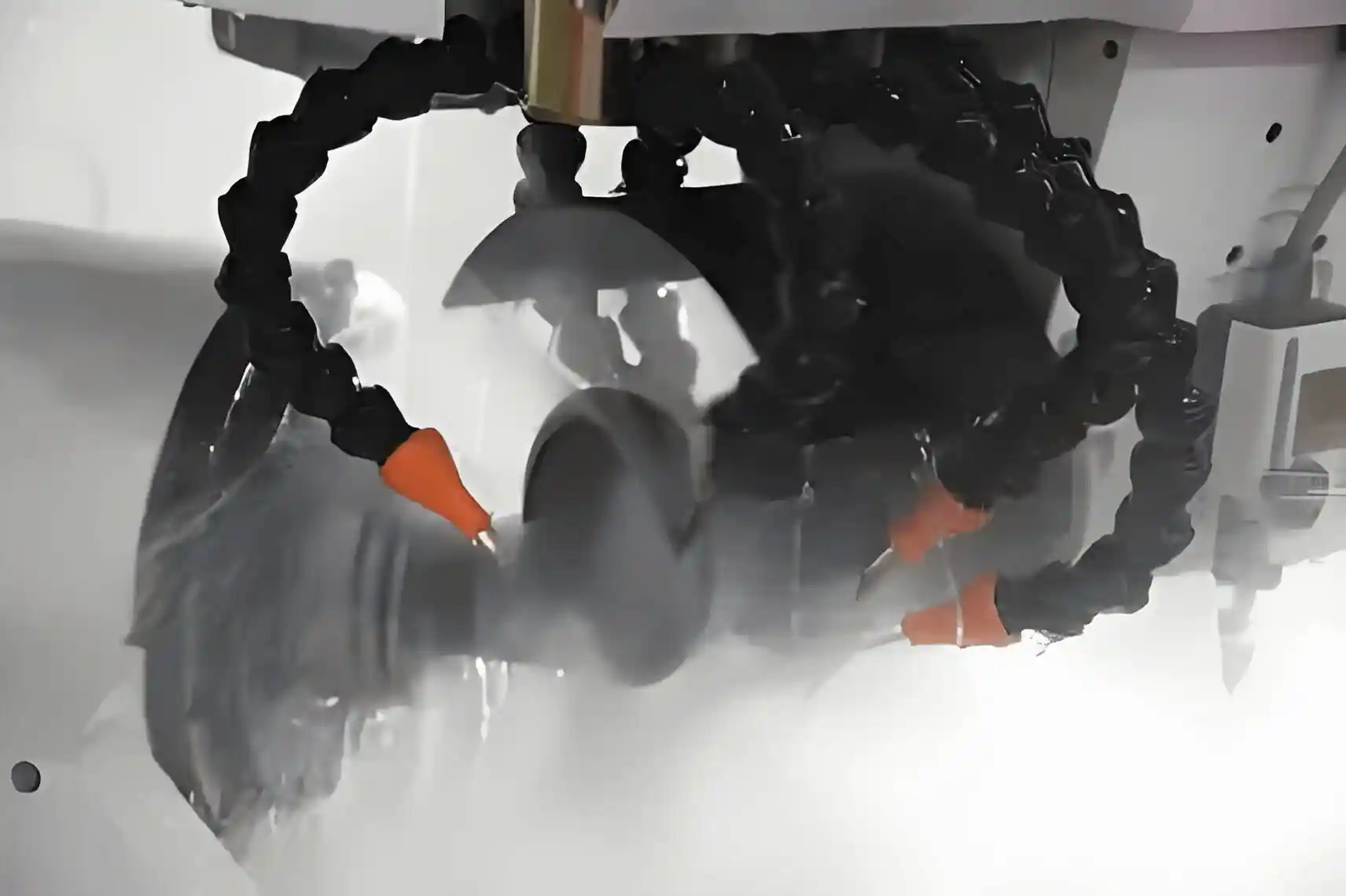
Effective cooling is one of the most important factors in grinding burn prevention.
The coolant should be delivered consistently to the grinding contact zone.
Recommended Checks:
- Position the nozzle to direct coolant into the contact area.
- Verify adequate coolant flow and appropriate delivery conditions.
- Maintain the recommended fluid concentration.
- Inspect filtration and remove accumulated grinding debris.
- Check for blocked nozzles, leaks, or irregular flow.
In high-speed grinding, coolant delivery must also account for the rotating wheel's air barrier and the process requirements.
Higher coolant pressure alone does not guarantee better cooling. Nozzle geometry, flow, fluid type, and access to the contact zone must be considered together.
4.3 Maintain and Dress the Grinding Wheel
A properly conditioned grinding wheel cuts more efficiently and can reduce excessive heat generation.
Two related maintenance operations are important:
Dressing: Restores the cutting condition of the wheel by exposing effective abrasive grains and providing suitable chip clearance.
Truing: Restores the wheel's required shape, profile, or concentricity.
Regular wheel inspection should include:
- Abrasive sharpness
- Wheel glazing and loading
- Dressing condition
- Wheel profile and runout
- Balance and vibration
Select the wheel's abrasive type, grit size, grade, bond, and structure according to the workpiece material and grinding application.
For example, an excessively hard or closed wheel structure may increase glazing or loading in certain applications.
A more open wheel structure or an appropriate dressing strategy may improve cutting performance and reduce burn risk.
4.4 Check Fixtures and Machine Setup
Stable workholding and proper machine condition help maintain consistent grinding contact.
Important checks include:
- Secure and repeatable workpiece clamping
- Grinding wheel balance
- Spindle bearing condition
- Machine vibration
- Dressing tool condition
- Grinding wheel alignment
If grinding burn appears only in specific workpiece areas, investigate whether uneven contact, workpiece deflection, or localized grinding conditions are contributing to the problem.
Practical Grinding Burn Troubleshooting Guide
| Problem Observed | Possible Cause | Recommended Action |
|---|---|---|
| Burn appears after repeated grinding passes | Wheel glazing or loading | Inspect and dress the wheel |
| Burn appears with poor coolant coverage | Incorrect nozzle position or insufficient flow | Check coolant delivery and filtration |
| Burn occurs during heavy stock removal | Excessive thermal load | Review depth of cut and material removal rate |
| Burn occurs despite light passes | Inefficient abrasive cutting or rubbing | Check wheel sharpness and dressing |
| Burn occurs in isolated areas | Uneven contact, workpiece distortion, or fixturing issues | Inspect setup and local contact conditions |
| Burn is accompanied by chatter | Wheel imbalance, spindle issues, or machine vibration | Check wheel balance, bearings, and rigidity |
When troubleshooting, change process parameters systematically and verify the results before normal production resumes.
5. When Grinding Machine Conditions Contribute to Burn
Grinding burn is not always caused by incorrect cutting parameters.
The grinding machine's mechanical condition, coolant delivery capability, and process stability may also influence thermal damage risk.
Spindle Stability
Spindle runout, bearing wear, or vibration can affect wheel contact and grinding forces.
Regular spindle inspection and appropriate machine maintenance help support stable cutting conditions.
Grinding Load Monitoring
Some grinding machines can monitor spindle power, grinding forces, or related process signals.
These measurements may help identify changes in wheel condition, grinding load, or other abnormalities.
However, load monitoring does not automatically confirm the presence or absence of grinding burn. Effective detection requires suitable limits and validation for the specific process.
Machine Rigidity and Vibration Control
A stable machine structure and properly maintained guideways, spindle assemblies, and workholding systems help reduce unwanted vibration and inconsistent grinding contact.
This supports more predictable grinding behavior.
Coolant System Capability
A grinding machine should provide coolant delivery suitable for the intended operation.
Nozzle adjustability, adequate flow, filtration, and system maintenance can all influence cooling performance.
Equipment selection should focus on the actual grinding application. Features such as thermal compensation, spindle cooling, or process monitoring may be useful, but they should not be treated as guaranteed grinding burn prevention systems.
If grinding burn persists after correcting wheel condition, coolant delivery, and process parameters, a more detailed machine-condition assessment may be necessary.
Conclusion
Grinding burn is a surface integrity problem that can affect the quality and performance of precision-ground components.
When grinding burn occurs, the first steps are to stop the affected operation, inspect the workpiece, assess potential thermal damage, and identify the cause before restarting production.
The most important preventive actions include:
- Maintaining a sharp, properly dressed grinding wheel
- Delivering coolant effectively to the grinding contact zone
- Optimizing grinding parameters for the material and wheel
- Ensuring stable workholding and machine operation
- Using appropriate inspection methods to verify surface integrity
Not every burned workpiece can be repaired. Rework or acceptance decisions should follow the part's material, dimensional, and quality requirements.
For manufacturers experiencing recurring grinding burn, a systematic evaluation of the grinding process is usually more effective than adjusting individual parameters without verification.
If you are evaluating grinding equipment or looking to improve process stability, contact MINNUO to discuss your machining requirements and suitable equipment configurations.
Frequently Asked Questions (FAQ)
Q1. Can grinding burn occur without visible discoloration?
A:Yes. Grinding burn may cause changes in microstructure, hardness, or residual stress without producing obvious surface discoloration. Critical components may require additional inspection.
Q2. Can a workpiece with grinding burn be repaired?
A:It depends on the material, damage depth, remaining machining allowance, and applicable quality requirements.
Additional grinding may be possible only when the affected layer can be removed without violating dimensional or surface integrity specifications. Rework must be verified and approved. Some damaged parts may require rejection.
Q3. What is the most common cause of grinding burn?
A:Grinding burn is commonly associated with excessive heat generated by inefficient abrasive cutting, poor wheel condition, inadequate coolant delivery, or unsuitable grinding parameters.
Several factors may occur together.
Q4. Does reducing the grinding depth always prevent burn?
A:No. Reducing grinding depth may decrease thermal loading in some situations, but a dull or improperly dressed wheel can still generate excessive friction.
Wheel condition, feed rate, wheel speed, and cooling should be evaluated together.
Q5. How can grinding burn be prevented during CNC grinding?
A:Maintain the grinding wheel, optimize the machining parameters, deliver coolant effectively, inspect machine condition, and use appropriate process monitoring and workpiece inspection procedures.
 Email
 sales1: +86 15312799623