



Hydraulic vs Servo Turrets for Automotive Drive Shaft Machining
Automotive drive shaft machining demands stable cutting performance, consistent dimensional accuracy, and efficient tool changes. For manufacturers producing shaft components in high volumes, CNC turret performance can influence machining quality, cycle time, and long-term equipment reliability.
Hydraulic and servo turrets are two configurations commonly considered when selecting CNC turning equipment. However, these terms require clarification. A hydraulic-indexing turret uses a hydraulic motor or hydraulic mechanism to rotate between tool stations, while a servo-indexing turret uses a servo motor. Both designs may use hydraulic clamping to secure the turret during machining.
Which turret is better for automotive drive shaft machining? Servo-indexing turrets are worth prioritizing when frequent tool changes and consistent indexing control are important. Hydraulic-indexing turrets can also meet production requirements when their cutting-load capacity, positioning repeatability, and indexing performance are sufficient. Neither indexing method inherently guarantees greater cutting rigidity or higher machining accuracy.
This guide explains how both systems perform in automotive shaft turning and what equipment buyers should evaluate before making a decision.
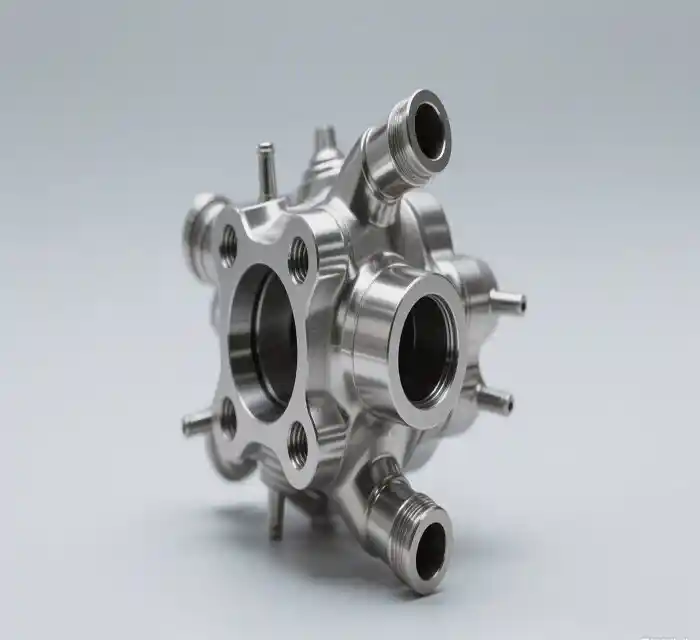
Hydraulic vs Servo CNC Turrets: How Do They Work?
A CNC turret holds multiple cutting tools and positions the required tool for each machining operation. It must index accurately between tool stations and lock securely before cutting begins.
Although hydraulic and servo turrets use different indexing drives, their final machining performance depends on the complete mechanical assembly.
Hydraulic-Indexing Turrets
A hydraulic-indexing turret uses a hydraulic motor or hydraulic mechanism to rotate the turret to the selected tool station.
Depending on its design, hydraulic pressure may also operate the clamping and unclamping mechanisms.
The indexing sequence relies on hydraulic pressure, oil flow, control valves, mechanical transmission components, and position-confirmation devices.
Its operating performance depends on the hydraulic circuit, turret structure, tooling inertia, and locking mechanism.
Servo-Indexing Turrets
A servo-indexing turret uses a servo motor to control rotation between tool stations.
The servo drive provides controlled acceleration, deceleration, and positioning. This allows manufacturers to optimize indexing motion for the turret's mechanical characteristics and operating requirements.
However, servo indexing does not necessarily mean servo clamping.
Many servo-indexing turrets use hydraulic actuators and precision mechanical couplings to lock the turret after rotation.
For example, GOODWAY's GLS-1500 turret architecture combines servo-driven indexing with hydraulic clamping and Curvic couplings. PRAGATI's STP series also uses a servo motor for indexing and hydraulic power for clamping.
These configurations demonstrate that servo indexing and hydraulic locking can operate together.
Key Differences in Indexing, Clamping, and Control
| Feature | Hydraulic-indexing turret | Servo-indexing turret |
|---|---|---|
| Indexing drive | Hydraulic motor or hydraulic mechanism | Servo motor |
| Motion control | Hydraulic and mechanical control arrangement | Servo drive control |
| Acceleration and deceleration | Determined by hydraulic circuit and mechanical design | Controlled through servo-drive parameters |
| Clamping mechanism | Commonly hydraulic | May also be hydraulic |
| Indexing time | Depends on model and operating conditions | Depends on model and operating conditions |
| Positioning repeatability | Depends on coupling and mechanical structure | Depends on coupling and mechanical structure |
| Cutting rigidity | Depends on locked mechanical assembly | Depends on locked mechanical assembly |
| Maintenance requirements | Hydraulic motor, valves, seals, oil quality | Servo motor, drive, transmission, and applicable clamping system |
The indexing drive determines how the turret rotates. The mechanical coupling and locking arrangement determine how securely it holds its position during cutting.
For equipment procurement, these functions should be evaluated separately.
CNC Turret Requirements for Automotive Drive Shaft Turning
Automotive drive shafts transmit torque between drivetrain components. Their construction varies according to vehicle design, drivetrain arrangement, and operating conditions.
Some shaft components require CNC turning to produce bearing seats, stepped diameters, grooves, threaded ends, and other rotational features.
Other manufacturing processes may include spline rolling, milling, grinding, welding, and balancing.
This article focuses specifically on CNC turning of automotive drive shaft components, rather than the complete manufacturing process of every drive shaft assembly.
Typical turning operations include:
| Machining operation | Manufacturing purpose | Turret performance requirement |
|---|---|---|
| Rough turning | Remove excess material | Sufficient cutting-load capacity and rigidity |
| Finish turning | Achieve specified diameters and surface finishes | Stable tool positioning and repeatability |
| Shoulder turning | Produce stepped locating surfaces | Accurate tool positioning |
| Grooving | Machine relief or retaining-ring features | Secure locking and stable tool support |
| Chamfering | Finish edges and transitions | Reliable indexing |
| Thread turning | Produce threaded features where required | Stable positioning and tool support |
The actual machining sequence depends on the component drawing, material, workholding arrangement, and production process.
In high-volume automotive manufacturing, these operations may be repeated across thousands of components.
A suitable CNC turret must therefore provide sufficient mechanical rigidity, consistent indexing, and reliable positioning throughout extended production.
Turret Rigidity and Cutting Loads in Shaft Rough Turning
Rough turning removes excess material before finishing operations. Depending on the workpiece material, shaft diameter, cutting depth, and feed rate, this process can generate substantial cutting forces.
The turret must hold the cutting tool securely while resisting deformation and vibration.
Insufficient rigidity may contribute to chatter, dimensional variation, poor surface quality, and reduced tool life.
Does Hydraulic Indexing Provide Greater Cutting Rigidity?
Not necessarily.
Hydraulic-indexing turrets may use hydraulic clamping and precision mechanical couplings to resist cutting forces.
Servo-indexing turrets can use similar clamping and coupling arrangements.
Once the turret is locked, its rigidity depends on several factors:
- Mechanical coupling diameter and tooth geometry
- Clamping force and locking arrangement
- Turret housing and bearing stiffness
- Toolholder interface
- Cutting-tool overhang
- Permissible tangential load
- Permissible overturning moment
A hydraulic indexing motor does not automatically provide greater locked rigidity than a servo indexing motor.
Likewise, a servo drive does not guarantee sufficient cutting capacity.
For automotive shaft rough turning, buyers should compare the manufacturer's permissible cutting loads and tooling limits under the intended machining conditions.
The most suitable turret for rough turning is the one with verified mechanical capacity and sufficient rigidity for the planned cutting operations, regardless of its indexing drive.
Turret Positioning Accuracy in Precision Shaft Turning
Finish turning is used to achieve specified shaft diameters, surface finishes, and geometric tolerances.
For automotive shaft components, features such as bearing seats, seal-contact surfaces, and locating shoulders may require consistent dimensional control.
Turret positioning repeatability contributes to this consistency, particularly when the machine indexes between different cutting tools.
However, indexing-drive accuracy and final locked positioning accuracy are not identical.
Servo Positioning vs Locked Turret Repeatability
A servo motor can control turret rotation precisely during indexing.
However, when a mechanical coupling establishes the final locked position, accuracy also depends on coupling engagement, clamping consistency, manufacturing tolerances, mechanical wear, and thermal conditions.
Hydraulic-indexing turrets can also achieve precise positioning when equipped with suitable mechanical locking systems.
When comparing turret specifications, buyers should evaluate:
- Published positioning accuracy
- Repeatability after repeated indexing
- Measurement methods and test conditions
- Stability during extended operation
- Maximum tooling mass and inertia
- Mechanical locking and coupling design
Manufacturers may express angular positioning accuracy in degrees or arcseconds, while others specify linear displacement in millimeters or micrometers.
These values should not be compared directly without understanding the measurement radius and test method.
It is also important to distinguish turret repeatability from finished-part accuracy.
The dimensional accuracy, concentricity, and runout of a machined shaft depend on the complete CNC machine, including spindle condition, workholding, cutting forces, thermal behavior, and shaft support.
For long or slender shaft components, tailstock or steady-rest support and workpiece deflection may be particularly important.
For precision drive shaft turning, consistent locked tool positioning matters more than the nominal resolution of the indexing motor alone.
Hydraulic vs Servo Turret Indexing Speed and Tool-Change Time
Indexing efficiency is one of the main reasons manufacturers compare hydraulic-driven and servo-driven turret systems.
Servo motors provide controlled acceleration and deceleration, allowing indexing motion to be optimized for a particular turret design.
Hydraulic-indexing turrets can also provide rapid movement, but their response depends on hydraulic flow, valve operation, motor characteristics, and mechanical transmission.
Neither indexing method guarantees a particular tool-change time.
What Determines the Complete Tool-Change Cycle?
A typical turret indexing sequence includes:
- Unclamping the turret
- Rotating to the required tool station
- Completing mechanical positioning
- Clamping the turret
- Confirming the locked position through the CNC system
For a sequential indexing arrangement, the complete cycle can be approximated as:
Total cycle time = Unclamping time + Rotation time + Settling time + Clamping time + Confirmation time
Actual machine sequences may overlap certain actions. Therefore, the measured complete cycle should take precedence over a simple sum of catalog values.
The required indexing movement also affects cycle time.
An adjacent-station change may take less time than moving to a station on the opposite side of the turret.
For a meaningful comparison, equipment buyers should request:
- Adjacent-station indexing time
- Maximum-travel indexing time
- Complete tool-change cycle time
- Maximum permissible tooling inertia
- Test conditions and timing definitions
These details are especially important for automotive production lines where tool changes occur repeatedly.
Manufacturer Indexing Time Comparison
Published manufacturer specifications illustrate how hydraulic-driven and servo-driven turret indexing systems can differ in performance.
| Manufacturer and model | Indexing drive | Published indexing performance | Clamping arrangement |
|---|---|---|---|
| GOODWAY GLS-1500 | AC servo motor | 0.2 s adjacent; 0.5 s for 180° | Hydraulic clamping with Curvic coupling |
| LIO SHING LS-200 | Hydraulic motor | 0.6 s adjacent rotation; 0.7 s including locking | Hydraulic clamping |
| PRAGATI STP-100 | Servo motor | 0.15 s next-station indexing; separate 0.1 s unlocking and 0.1 s locking specifications | Hydraulic clamping |
These are model-specific published specifications, not results from a controlled head-to-head test. Turret dimensions, station counts, tooling loads, and timing definitions may differ. The figures should be confirmed against the current documentation for the selected configuration.
GOODWAY's published GLS-1500 specifications identify a servo indexing drive, while the manufacturer's turret description also identifies hydraulic clamping and Curvic couplings.
LIO SHING's LS-200 specifications describe hydraulic-motor indexing and distinguish adjacent rotation time from indexing time including locking.
PRAGATI's STP-100 documentation lists servo-driven indexing and separate hydraulic locking and unlocking times.
These examples demonstrate that servo-indexing systems can achieve short nominal indexing times.
However, they do not establish a universal speed advantage for every servo turret.
For automotive drive shaft production, complete tool-change cycles should be compared under equivalent operating conditions.
How Turret Indexing Time Affects Automotive Production Costs
High-volume automotive manufacturing places particular importance on consistent machining cycles.
A CNC lathe may perform several tool changes while machining a single shaft component.
When production volumes are high, small differences in complete indexing time can accumulate over many cycles.
Example: Calculating Annual Indexing-Time Differences
Consider a hypothetical CNC lathe operating under the following conditions.
| Production factor | Assumed value |
|---|---|
| Annual machine operating time | 4,000 hours |
| Average indexing frequency | 60 cycles/hour |
| Difference in complete indexing time | 0.35 seconds/cycle |
| Assumed productive machine-hour value | RMB 800/hour |
The annual number of indexing cycles is:
4,000 × 60 = 240,000 cycles
The accumulated indexing-time difference is:
240,000 × 0.35 ÷ 3,600 = 23.33 hours
At an assumed productive machine-hour value of RMB 800:
23.33 × 800 ≈ RMB 18,667
Under these assumptions, the theoretical annual capacity value associated with the indexing-time difference is approximately RMB 18,667.
This calculation is illustrative. It is not a documented customer case or a guaranteed financial saving.
The estimate assumes that the indexing-time difference affects productive machine capacity and that the recovered time has economic value.
Actual benefits depend on machine utilization, production bottlenecks, scheduling, available demand, and whether the recovered time can increase output or reduce actual costs.
For equipment procurement managers, the calculation illustrates why complete indexing time should be evaluated over the expected operating life of the CNC lathe rather than only during a short demonstration.
Which Turret Should You Choose for Automotive Shaft Turning?
The best choice depends on the balance between cutting demands, tool-change frequency, precision requirements, machine integration, and long-term maintenance.
Neither indexing method should be selected solely on the basis of its name.
When to Choose a Hydraulic-Indexing Turret
Hydraulic-indexing turrets remain suitable for automotive shaft turning when their specifications meet the production requirements.
They may be practical when:
- The machine already uses suitable hydraulic infrastructure.
- The turret's rated cutting loads meet the intended machining conditions.
- Its complete indexing time satisfies production targets.
- Hydraulic maintenance resources are readily available.
- The supplier provides suitable spare parts and technical support.
Hydraulic indexing requires stable oil pressure and flow.
Oil contamination, leakage, valve faults, and insufficient flow may affect operating reliability.
The hydraulic system must therefore be maintained according to the manufacturer's requirements.
For applications with relatively few tool changes, a hydraulic-indexing turret may provide adequate performance without a meaningful production disadvantage.
When to Choose a Servo-Indexing Turret
Servo-indexing turrets are particularly worth evaluating when frequent tool changes and consistent indexing control are important.
They may be attractive when:
- The machining cycle contains frequent indexing operations.
- Short complete tool-change times are important.
- Controlled acceleration and deceleration are desirable.
- The CNC system supports the required servo architecture.
- The supplier provides verified indexing performance.
- Appropriate electrical and mechanical service support is available.
However, servo indexing does not eliminate the need for mechanical locking.
A servo-indexing turret with hydraulic clamping still requires maintenance of the hydraulic locking circuit.
Buyers should also evaluate servo motor and drive availability, diagnostic support, and replacement costs.
Application-Based Turret Selection Guide
| Automotive shaft machining requirement | Primary selection priority |
|---|---|
| Heavy rough turning | Rated tangential load, overturning moment, and mechanical rigidity |
| Precision finish turning | Locked positioning repeatability and thermal stability |
| Frequent tool changes | Complete indexing time and consistency |
| High-volume production | Cycle-time stability and equipment availability |
| Existing hydraulic machine design | Hydraulic-system compatibility and integration cost |
| Complex tooling arrangements | Station count, tooling mass, and inertia limits |
| Long production shifts | Reliability, diagnostics, and maintenance support |
For example, a machine performing heavy roughing with relatively few tool changes may benefit more from a robust turret structure than from a small reduction in indexing time.
A machine performing multiple short turning operations per component may place greater value on fast, repeatable indexing.
In both situations, the supplier's actual load ratings and complete cycle-time specifications remain essential.
CNC Turret Selection Checklist for Equipment Buyers
Equipment procurement managers should assess the turret as part of the complete CNC machine.
For automotive shaft production, the following factors deserve particular attention.
Cutting Load and Tooling Capacity
Verify the permissible tangential load, overturning moment, toolholder mass, and tooling inertia.
These ratings should be considered alongside cutting depth, feed rate, shaft material, and tool overhang.
Complete Indexing Cycle Time
Compare complete tool-change times rather than rotation speed alone.
Request clear definitions of the manufacturer's timing figures and confirm the intended station movements.
Positioning Accuracy and Repeatability
Check the measurement method, units, and operating conditions.
Do not assume that higher servo resolution produces better locked positioning accuracy.
Clamping and Coupling Design
Identify the locking mechanism and the mechanical components responsible for resisting cutting forces.
A servo-indexing turret may still use hydraulic clamping.
CNC Integration and Maintenance
Confirm compatibility with the machine's CNC control, sensors, interlocks, and servo or hydraulic control system.
Review the supplier's maintenance documentation and replacement-part availability.
For hydraulic-indexing systems, evaluate the hydraulic motor, valves, seals, and oil requirements.
For servo-indexing systems, evaluate the motor, drive, transmission, and any associated hydraulic locking components.
Application-Specific Acceptance Criteria
Before purchasing, define acceptance requirements based on the actual shaft machining process.
These may include complete indexing time, positioning repeatability, tooling limits, alarm-free operation, and machining stability under representative cutting conditions.
Where factory testing is available, request documented results rather than relying exclusively on catalog claims.
A specification-based evaluation helps buyers avoid selecting a turret that appears suitable on paper but does not match the intended machining process.
Common Mistakes When Comparing Hydraulic and Servo Turrets
Confusing Indexing Drive With Clamping Method
Servo indexing and hydraulic clamping are not opposing technologies.
A servo-indexing turret can use hydraulic pressure to lock the turret during machining.
The indexing drive and locking mechanism must be evaluated separately.
Assuming Servo Turrets Are Always More Accurate
Servo drives provide controlled indexing motion, but final locked positioning depends on the mechanical coupling and clamping arrangement.
Higher servo resolution does not automatically translate into higher machining accuracy.
Assuming Hydraulic Turrets Are Always Better for Heavy Cutting
Heavy-cutting performance depends on verified mechanical load capacity and rigidity.
Both hydraulic-indexing and servo-indexing turrets can be designed for demanding turning operations.
Comparing Inconsistent Indexing-Time Specifications
Some manufacturers report rotation time, while others report indexing time including locking.
These figures should not be treated as equivalent without confirming the measurement definitions.
Ignoring Total Ownership Costs
Purchase price is only one consideration.
Maintenance, supporting utilities, spare parts, downtime, and production efficiency all contribute to long-term equipment costs.
Hydraulic vs Servo Turret FAQs
Q1:Are Servo Turrets Better Than Hydraulic Turrets for Automotive Drive Shaft Machining?
A:Servo-indexing turrets can be advantageous when frequent tool changes and indexing consistency are priorities. However, their suitability depends on complete indexing time, mechanical rigidity, positioning repeatability, and machine integration. Hydraulic-indexing turrets can also meet automotive shaft machining requirements.
Q2:Can a Servo Turret Use Hydraulic Clamping?
A:Yes. Many servo-indexing turrets use a servo motor for rotation and hydraulic pressure for clamping or unclamping. The two systems perform different functions within the same turret.
Q3:Which Turret Is Better for Heavy Rough Turning?
A:Neither indexing drive automatically provides greater cutting rigidity. Buyers should compare the turret's permissible cutting loads, mechanical coupling, clamping arrangement, and tooling limits.
Q4:Do Servo Turrets Improve Machining Accuracy?
A:Servo indexing provides controlled rotational movement, but final locked positioning accuracy depends on the complete turret mechanism. Finished-part accuracy also depends on the CNC machine, workholding, cutting tools, and machining conditions.
Q5:Which Turret Offers Faster Tool Changes?
A:Servo-indexing turrets can provide short indexing times, but actual performance varies by model. Buyers should compare complete tool-change times under equivalent tooling loads and operating conditions.
Q6:What Should Buyers Prioritize for High-Volume Shaft Production?
A:The most important factors are adequate cutting-load capacity, consistent locked positioning, complete indexing time, operating reliability, and long-term service support. Their relative importance depends on the actual machining cycle.
Conclusion
Hydraulic-indexing and servo-indexing turrets can both support CNC turning of automotive drive shaft components.
Hydraulic-indexing turrets use hydraulic mechanisms to rotate between tool stations and can provide reliable performance when their mechanical capacity and indexing characteristics meet the application requirements.
Servo-indexing turrets use servo motors for controlled rotation and may offer advantages in applications requiring frequent tool changes and consistent indexing performance.
However, servo indexing should not be confused with clamping technology. Many servo-indexing designs also use hydraulic locking and precision mechanical couplings.
For heavy rough turning, the priority is cutting-load capacity and rigidity. For precision finishing, locked positioning repeatability and machine stability are essential. In high-volume automotive production, complete indexing time can also influence productivity.
The best turret for automotive drive shaft machining is the one that meets the actual cutting requirements while providing reliable positioning, suitable indexing performance, and manageable long-term operating costs.
By comparing specific turret models using consistent technical criteria, manufacturers can make more informed CNC equipment purchasing decisions and support stable production performance.

 Email
 sales1: +86 15312799623