



Introduction to 5-Axis CNC Milling: When to Upgrade to 5-Axis Machining?
In the field of precision manufacturing, every step of technological upgrading directly determines an enterprise's competitiveness. When the machining capacity of 3-axis CNC milling machines can no longer keep up with the needs of product iteration, "whether to upgrade to 5-axis machining" becomes a core issue that many enterprise technical managers must face. 5-axis CNC milling machines, with their flexible multi-axis linkage capability, break many limitations of 3-axis machining, but not all enterprises are suitable for blind upgrading. This article will provide clear decision-making references for enterprises considering technological upgrading from three core dimensions: the core comparison between 3-axis and 5-axis machining, the types of workpieces suitable for 5-axis machining, and the investment threshold and return analysis, helping you easily start your 5-axis entry journey and accurately judge the upgrading timing.
I. 3-Axis vs. 5-Axis Machining: Core Differences at a Glance
To determine whether an upgrade is needed, it is first necessary to clarify the essential difference between 3-axis and 5-axis machining—the core difference between the two lies in the degree of freedom of movement, which directly determines the machining capacity, precision, and efficiency, as well as the production scenarios they are suitable for. For enterprises, understanding this difference is the basis for making correct upgrading decisions and a key step in 5-axis entry.
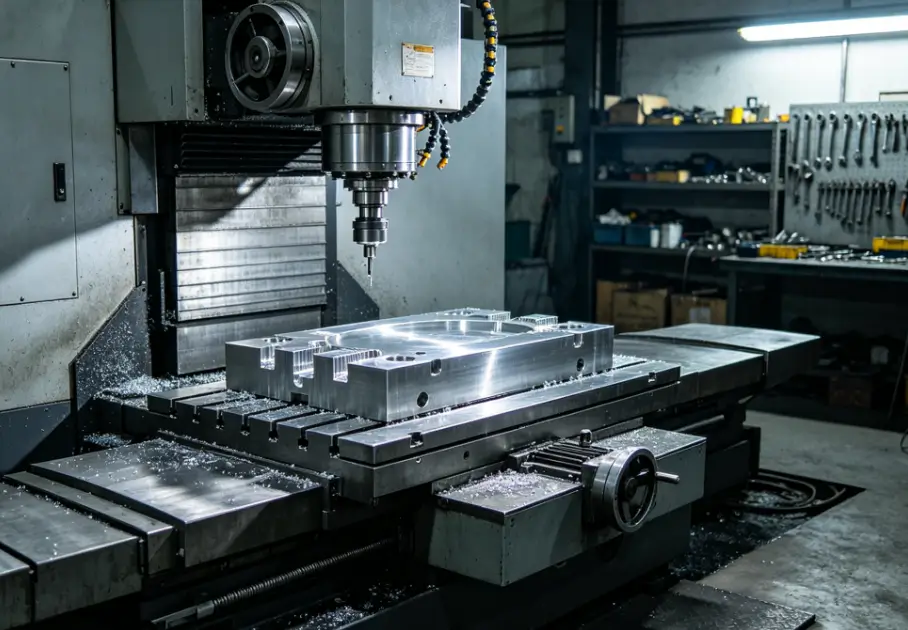
A 3-axis CNC milling machine only has three linear axes: X, Y, and Z, which is equivalent to a "machining box" that can only move up and down, left and right, and back and forth. The direction of the tool axis is fixed, and the tool can only approach the workpiece surface from a single direction during machining. This means that when machining multi-sided, beveled, or complex-structured workpieces, it is necessary to repeatedly disassemble and re-clamp the workpiece, which is not only time-consuming and labor-intensive but also causes cumulative errors due to multiple clamping, affecting product precision. Moreover, it cannot handle high-end machining needs such as complex spatial curved surfaces.
A 5-axis CNC milling machine, on the other hand, adds two rotary axes (the most common are the A-axis rotating around the X-axis and the C-axis rotating around the Z-axis) on the basis of the three linear axes X, Y, and Z, which is equivalent to equipping the "machining box" with a flexible "wrist" and "rotating base". This structure allows the tool to approach the workpiece from any angle in space, realizing the machining logic of "the tool adapts to the workpiece" and completely solving the pain points of 3-axis machining.
The following is a core comparison between the two to help you quickly sort out the differences:
- Machining Precision: Due to multiple clamping, the cumulative error of 3-axis machining is usually more than ±0.03mm; 5-axis machining can complete multi-sided machining with one clamping, and the error can be controlled within ±0.005mm, greatly improving product consistency.
- Machining Efficiency: 3-axis machining of complex parts requires multiple clamping and process switching, resulting in a long single-piece machining cycle; 5-axis machining does not require repeated clamping, can optimize tool paths, improve cutting efficiency, and the overall efficiency is more than 40% higher than that of 3-axis machining.
- Machining Range: 3-axis can only process regular structures such as planes, straight grooves, and simple cavities; 5-axis can easily handle complex curved surfaces, deep cavities, undercuts, and other structures, covering more high-end machining needs.
- Tool Wear: When machining beveled surfaces with 3-axis, bottom edge cutting is mostly used, and the tool wears quickly; 5-axis can realize side edge cutting by adjusting the tool axis angle, making cutting more stable and significantly extending the tool life.
- Programming Difficulty: 3-axis programming is essentially the superposition of 2D plane machining, with linear thinking and low difficulty; 5-axis programming requires planning spatial coordinated movement, mastering the core function of RTCP (Rotation Tool Center Point), and has higher requirements for the programmer's spatial imagination and process knowledge.
Simply put, 3-axis machining is the "universal base" of the manufacturing industry, solving more than 80% of conventional machining needs; while 5-axis machining is a "high-end tool" that specializes in the 20% of high-difficulty, high-value-added machining tasks that 3-axis cannot solve or cannot solve well. This is also the core embodiment of the advantages of 5-axis machining.
II. Types of Workpieces Suitable for 5-Axis CNC Milling: Must-Upgrade Scenarios
The most direct criterion for judging whether to upgrade to 5-axis machining is the enterprise's workpiece machining needs—when your products involve the following types and 3-axis machining has obvious bottlenecks, upgrading to a 5-axis CNC milling machine is an inevitable choice, and it is also a key scenario to give play to the advantages of 5-axis machining.
1. Complex Curved Surface Workpieces
Such workpieces are the "main battlefield" of 5-axis machining, and 3-axis machining is often incompetent or inefficient. Typical representatives include integral blisks and turbine blades of engines in the aerospace field, marine propellers in the energy field, automotive headlight molds and bumper molds in the automotive industry, and artificial joints in the medical device field. The curvature of the curved surfaces of such workpieces changes complexly. 5-axis machining can make the tool always perpendicular to the curved surface for normal cutting by swinging the tool axis, which not only improves the surface finish (up to Ra0.8 or below) but also avoids tool interference, greatly shortening the machining cycle. For example, traditional 3-axis machining of aviation blades requires multiple clamping and point milling, which is inefficient and has poor surface quality, while 5-axis machining can be formed in one time, achieving a qualitative improvement in both precision and efficiency.
2. Special-Shaped Structures and High-Precision Parts
For high-precision parts with undercut structures, deep cavities, slender holes, or asymmetric shapes, such as precision connectors, hydraulic valve blocks, and optical instrument brackets, 3-axis machining has obvious blind spots—deep cavity machining requires the use of long overhang tools, which have poor rigidity, are prone to vibration, and cannot guarantee precision; undercut structures cannot be directly machined. 5-axis machining, on the other hand, can use short and thick tools to process deep cavities by tilting the tool axis, improving rigidity, and directly side-mill to complete the processing of undercut areas, realizing "one clamping, precise forming", which is especially suitable for the processing of parts with extremely high dimensional accuracy (micron level).
3. Batch Parts with Multi-Sided Machining
If an enterprise needs to batch process multi-sided parts (such as polyhedral boxes and complex brackets), 3-axis machining requires multiple clamping and process switching, which is not only inefficient but also prone to reduced product qualification rate due to clamping errors. 5-axis machining can complete the processing of five surfaces (except the bottom surface) with one clamping, reducing process conversion, improving the consistency of mass production, and reducing labor costs. For example, after a mold factory introduced a 5-axis machine tool, the automotive die-casting mold that originally required 3 clampings and 2 days of processing can now be completed within 8 hours, and the customer rework rate has dropped to zero.
4. Workpieces Processed with Special Materials
When an enterprise involves the processing of difficult-to-machine materials such as titanium alloys, hardened steel, and composite materials, 3-axis machining often faces problems such as difficult cutting, workpiece deformation, and fast tool wear. The rigid structure and intelligent cutting strategy of 5-axis CNC milling machines can reduce the risk of workpiece thermal deformation through small cutting depth and fast feed mode, combined with optimized cooling schemes, while reducing tool wear and efficiently completing the processing tasks of difficult-to-machine materials. This is also the core reason why 5-axis machining is widely used in the aerospace and high-end manufacturing fields.
III. Investment Threshold and Return of 5-Axis Machining: Must-See for Enterprise Upgrading
For enterprises and technical managers considering technological upgrading, the investment threshold and return are the core considerations—the initial investment of 5-axis CNC milling machines is indeed higher than that of 3-axis, but reasonable planning can achieve considerable long-term returns. The key is to judge the input-output ratio based on their own business needs.
1. Investment Threshold: Rationally View Costs and Technical Requirements
The investment threshold of 5-axis machining is mainly concentrated in three aspects: equipment cost, technical cost, and maintenance cost, which are also the key contents to focus on in the 5-axis entry stage:
- Equipment Cost: The price of a 5-axis CNC milling machine is usually 3-5 times that of a 3-axis machine of the same specification. Imported equipment often costs three to four million yuan, but with the breakthrough of domestic technology, high-rigidity equipment with true 5-axis linkage and RTCP functions can now be bought for less than 800,000 yuan, which has greatly reduced the entry threshold for small and medium-sized enterprises. It should be noted to distinguish between "true 5-axis" and "pseudo 5-axis"—true 5-axis can realize continuous 5-axis linkage, while pseudo 5-axis can only realize 3+2 positioning, which cannot meet the continuous processing needs of complex curved surfaces.
- Technical Cost: 5-axis machining has higher requirements for talents and software. In terms of programming, it is necessary to be equipped with professional CAM software and special post-processors to convert general tool paths into codes recognizable by specific machine tools; in terms of operation, operators need to deeply understand the machine tool structure, coordinate system, and anti-collision logic, and have strong spatial thinking ability. However, some domestic equipment currently has built-in AI process optimization systems and industry process packages, and new employees can go on duty after 1 day of training, which greatly reduces labor dependence.
- Maintenance Cost: The system of 5-axis machine tools is more complex, and the maintenance difficulty and cost are higher than those of 3-axis, mainly including core component replacement, precision calibration, and software upgrading. However, choosing a manufacturer with localized services can reduce maintenance costs—for example, local manufacturers can provide 24-hour technical support, engineers on-site service within 48 hours, and core spare parts are kept in stock locally to ensure that the equipment operation rate is maintained above 95%.
2. Investment Return: Long-Term Benefits Far Exceed Initial Investment
Although the initial investment of 5-axis machining is relatively high, in the long run, its returns are mainly reflected in three aspects: efficiency improvement, cost reduction, and competitiveness enhancement. Most enterprises can recover the equipment investment within 12-18 months:
- Efficiency Improvement and Production Capacity Doubling: 5-axis machining can reduce the number of clamping times and optimize tool paths. The machining efficiency is more than 40% higher than that of 3-axis. A single 5-axis machine tool can replace 3 3-axis equipment, greatly improving production capacity, while saving space and labor costs. For example, after an aerospace manufacturing enterprise adopted 5-axis machining, the number of processing procedures for engine casings was reduced from 13 to 5, and the single-piece production cycle was shortened from 72 hours to 28 hours.
- Cost Reduction and Less Wear: 5-axis machining can extend the tool life by more than 35%, saving more than 80,000 yuan in consumable costs every year; at the same time, one clamping reduces clamping errors, and the product qualification rate is increased from about 82% to more than 99%, reducing rework costs and raw material loss, and the long-term comprehensive cost advantage is obvious.
- Expand High-End Orders and Improve Competitiveness: Mastering 5-axis machining technology can undertake high-end orders that cannot be completed by 3-axis machining (such as precision parts in the aerospace and medical device fields). The gross profit margin of such orders is more than 15 percentage points higher than that of conventional orders, helping enterprises break through development bottlenecks, improve industry competitiveness, and realize the transformation from "conventional manufacturing" to "high-end manufacturing".
IV. Summary: When to Upgrade to 5-Axis Machining? The Key Lies in These 3 Points
For enterprises and technical managers considering technological upgrading, there is no need to blindly pursue the "high-end label" of 5-axis machining. When the following 3 conditions are met, it is the best time to upgrade to a 5-axis CNC milling machine and the best entry point for 5-axis entry:
- The existing 3-axis machining cannot meet the product needs, such as facing machining bottlenecks such as complex curved surfaces and undercut structures, or the product precision and surface quality cannot meet the standards;
- The enterprise has stable high-end machining orders, or plans to expand into high-end fields such as aerospace, medical devices, and precision molds, which require 5-axis machining capacity as support;
- It has a certain financial strength and technical reserve, can bear the initial investment in equipment, talents, and maintenance, and can recover the investment within 1-2 years through input-output calculation.
A 5-axis CNC milling machine is not "the more expensive the better", nor is it "suitable for all enterprises". The core is to match its own business needs and development plan. As a core equipment for precision manufacturing, the advantages of 5-axis machining lie not only in the improvement of efficiency and precision but also in opening the door to high-end manufacturing for enterprises and realizing long-term sustainable development.
If you are in the 5-axis entry stage and are hesitant about whether to upgrade or how to choose a suitable 5-axis CNC milling machine, you may wish to make a rational evaluation based on your own workpiece type and investment budget—upgrading to 5-axis machining is not a simple equipment update, but an upgrade of the manufacturing model and a leap in enterprise competitiveness.
 Email
Email sales1: +86 15312799623