



New Energy Vehicles Reduce 2000+ Components: How Machining Factories Break Through: Cost Reduction and Efficiency Improvement Are Only the Bottom Line, Structural Transformation Is the Way Out
The global automotive industry is experiencing an unprecedented transformation in a century, with electrification, intelligence, and lightweighting becoming an irreversible mainstream trend. New energy vehicles (NEVs) replace the engine, gearbox, and complex transmission structure of traditional fuel vehicles with the three-electric system (battery, motor, and electronic control), directly leading to a significant reduction in the total number of vehicle components. Authoritative data shows that the powertrain system of a traditional fuel vehicle contains more than 2,000 moving components, while the mainstream pure electric drive system retains only about 20 core moving components. The total number of vehicle components has decreased from 10,000-15,000 to 7,000-10,000, a reduction of more than 20%.
This transformation has directly impacted machining factories whose core businesses focus on engine blocks, crankshafts, camshafts, and gearbox housings: traditional orders are shrinking, capacity utilization is declining, price wars are intensifying, and profits are being continuously compressed. Faced with the drastic changes in the industry, simple cost reduction and efficiency improvement can only delay the decline. Proactively embracing the new energy industrial chain, upgrading precision manufacturing capabilities, and expanding into the global market are the only paths for long-term survival and growth.
Against the background of the transformation of the new energy vehicle industry, this article combines real industry data, process upgrading paths, and global layout strategies to provide a actionable, replicable, and long-term implementation transformation plan for machine tool and machining factories, helping enterprises achieve accurate customer acquisition and brand upgrading through overseas channels such as Google independent websites.
I. Industry Upheaval: How New Energy Vehicles Restructure the Machining Demand Pattern
1.1 Core Data: Structural Decline in Machining Volume Caused by Reduced Components
The value focus of traditional fuel vehicles lies in mechanical transmission and heat energy conversion. The engine, gearbox, intake and exhaust system, and cooling system account for more than 35% of the total machining volume of vehicle manufacturing. A 1.5T fuel engine includes more than 300 precision machined parts such as cylinder blocks, cylinder heads, crankshafts, connecting rods, camshafts, and valve covers, with a single unit machining time of more than 30 hours.
New energy vehicles adopt a motor + reducer + battery pack structure, completely eliminating core components such as engines, clutches, three-way catalytic converters, and traditional gearboxes, directly reducing more than 2,000 mechanical components, and the corresponding machining time decreases by 40%-60%.
- Tesla: The number of components in the electric drive system is only 1/100 of that of the powertrain of traditional fuel vehicles, and the total mechanical machining volume of the vehicle is reduced by more than 55%;
- BYD: Through the integrated design of the e-Platform 3.0, 74 structural parts are integrated into one integrated casting, reducing components by 98.6%;
- Industry Trend: By 2030, the global penetration rate of new energy vehicles will exceed 35%, and traditional engine-related machining orders will shrink by more than 60%.
1.2 Demand Migration: Disappearing Orders and New Blue Oceans
Traditional machining factories are facing three major losses:
1. Orders for engine blocks, cylinder heads, crankshafts, and camshafts are disappearing rapidly;
2. Demand for traditional gearbox housings, gears, and shaft parts is halved;
3. Orders for redundant structural parts, metal pipelines, and brackets of fuel vehicle chassis are continuously declining.
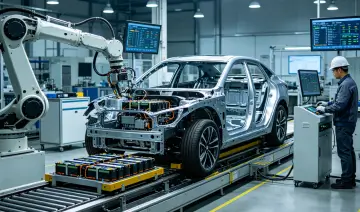
However, the industry is not in an overall decline, but a structural migration of demand. New energy vehicles have brought four major incremental tracks:
1. Electric Drive System: Motor housings, end covers, rotor shafts, stator cores, reducer housings, planet carriers, and high-speed gears;
2. Battery System: Battery pack upper casings, lower trays, water-cooled plates, module brackets, end plates, and fastening structural parts;
3. Electronic Control and Thermal Management: Inverter housings, water-cooled heat dissipation bases, high-voltage junction boxes, and heat pump system structural parts;
4. Post-Finishing of Integrated Die Castings: Deburring of large die castings, precision machining of hole systems, surface grinding, and correction of geometric tolerances.
These new parts have higher requirements for precision, materials, surface quality, and consistency, which cannot be met by traditional low-end mass processing, precisely providing an opportunity for machining factories with precision manufacturing capabilities to overtake on curves.
1.3 Process Subversion: From "Mass Rough Machining" to "Small-Batch High-Precision Machining"
New energy vehicle manufacturing presents three major process characteristics:
- High Precision: Motor shaft coaxiality ≤ 0.005mm, reducer gear tooth surface precision IT4-IT5 grade, battery tray flatness ≤ 0.1mm/m;
- Lightweight Materials: The proportion of aluminum alloys, magnesium alloys, high-strength steel, and composite materials has increased to more than 65%, and their cutting characteristics are completely different from those of cast iron;
- High Integration: Integrated die casting, CTP/CTC battery integration, and multi-in-one electric drive have become mainstream, with increased complexity and reduced quantity of single parts.
The traditional model of "full horsepower and winning by quantity" is no longer effective. High precision, high stability, rapid tool change, and flexible production have become core competitiveness.
II. Misunderstanding Warning: Only Focusing on Cost Reduction and Efficiency Improvement Will Lead to Faster Failure
Faced with declining orders, the first reaction of most machining factories is to cut wages, reduce costs, and compete on prices, but this is a typical slow suicide.
2.1 Three Ceilings of Cost Reduction and Efficiency Improvement
1. The Cost Bottom Line Cannot Be Broken
Raw materials, electricity fees, labor, cutting tools, and equipment depreciation constitute rigid costs. The gross profit margin of small and medium-sized domestic machining factories has been compressed to 10%-15%, and further cost reduction will directly lead to losses.
2. Severe Overcapacity of Low-End Production Capacity
The production capacity of basic processes such as ordinary three-axis machining, turning, and drilling is overcapacity by more than 30%. Price wars will only lead to "the more you reduce, the more you lose; the more you lose, the more you reduce."
3. Irreversible Demand Structure
Engine-related machining demand has permanently disappeared, not cyclical fluctuations. There is no future in clinging to the traditional track.
2.2 Real Cases: Comparison of Outcomes of Two Routes
- Case A (Clinging to Cost Reduction): An engine block machining factory in East China cut wages, reduced salaries, and compressed quality to reduce unit prices by 20% to seize orders. Eventually, due to the electrification transformation of the main engine factory, orders directly dropped to zero, and it went bankrupt and liquidated in 2024.
- Case B (Proactive Transformation): A precision machining factory in South China abandoned engine business and focused on motor housings and battery trays, investing in five-axis machining centers and automated production lines. In 2024, new energy orders accounted for 75% of the total, the gross profit margin increased to 28%, and overseas customers increased by 120%.
Conclusion: Cost reduction and efficiency improvement are the bottom line of survival, not a growth strategy; structural transformation + capability upgrading + global layout are the keys to breaking through.
III. The Path to Breaking Through: Four Core Transformation Strategies for Machining Factories
Strategy 1: Product Restructuring — From Fuel Mechanical Parts to New Energy Precision Parts
3.1.1 Prioritize Entry into Three High-Value Components
1. Motor Housings and End Covers
Demand Boom: The global output of new energy vehicle motors will exceed 45 million units in 2025, and the demand for housings will grow simultaneously;
Process Points: Aluminum alloy high-pressure die casting + five-axis precision machining, high-precision machining of water-cooled channels, and strict control of geometric tolerances;
Profit Margin: 25%-35%, 2-3 times that of traditional engine parts.
2. Battery Pack Trays and Water-Cooled Plates
Market Size: The global market size of battery pack structural parts will exceed 120 billion yuan in 2025;
Process Points: Aluminum alloy profile/die casting forming, friction stir welding, flatness control, and precision machining of sealing grooves;
Customer Types: Power battery factories, new energy main engine factories, and Tier 1 suppliers.
3. Reducer Housings and High-Speed Gears
Technical Barriers: High speed, low noise, and high precision, with few qualified suppliers in the industry;
Processing Requirements: Gear precision ISO 5 grade, surface roughness Ra ≤ 0.4μm, and tooth profile modification;
Profit Level: High unit value, stable orders, and strong customer stickiness.
3.1.2 Implementation Steps of Product Transformation
1. Inventory existing equipment capabilities and screen product lines that can be directly transformed;
2. Connect with 1-2 new energy Tier 1 suppliers to conduct sample verification of processes;
3. Establish material databases and process parameter databases;
4. Form standardized processing plans and focus on displaying them on Google independent websites.
Strategy 2: Capability Upgrading — From Ordinary Machining to Precision Intelligent Manufacturing
3.2.1 Equipment Upgrading: Building High-Precision Flexible Production Lines
- Core Equipment: Five-axis machining centers, turn-mill composite machines, high-speed hobbing machines, and high-precision grinders;
- Automation Transformation: Truss manipulators, robot loading and unloading, automatic inspection, and automatic deburring to realize "lights-out factories";
- Data Benefits: Automation rate increased by 60%, labor costs reduced by 40%, and delivery cycle shortened by 30%-50%.
3.2.2 Process Upgrading: Mastering New Energy-Specific Machining Technologies
1. Efficient Aluminum Alloy Cutting: Optimize tool paths and cutting parameters to reduce vibration and deformation, and increase yield to more than 99%;
2. Stable Machining of Thin-Walled Parts: Special tooling, vacuum fixtures, and low-stress cutting to solve deformation problems;
3. Complex Channel Machining: Five-axis linkage, deep hole drilling, and helical milling to meet water-cooling and heat dissipation needs;
4. Post-Finishing of Integrated Die Castings: Datum alignment of large castings, precision machining of hole systems, deburring, and online inspection.
3.2.3 Quality Upgrading: Meeting Automotive-Grade IATF 16949 Requirements
- Establish a full-process quality traceability system to record data from raw materials to finished products;
- Equip with coordinate measuring machines, roughness meters, roundness meters, and gear inspection centers;
- Control the defective product rate within 0.5% and reduce customer complaint rate by 60%;
- Obtain IATF 16949 certification to become a qualified supplier for global automakers.
Strategy 3: Market Restructuring — From Domestic Involution to Global Overseas Expansion
3.3.1 Overseas Market Opportunities (Core Customer Acquisition Direction for Google Independent Websites)
1. European and American Markets: Dense high-end new energy models, high requirements for precision machining and quality stability, high unit prices, and good payment terms;
2. Southeast Asian Markets: Rapid expansion of electric vehicle production capacity in Thailand, Vietnam, and Malaysia, with strong demand for localized supply chains;
3. Japanese and Korean Markets: Leading motor, electronic control, and battery technologies, requiring a large number of precision structural parts for supporting;
4. Middle Eastern Markets: Stable machining demand brought by new energy energy storage and commercial vehicle electrification.
3.3.2 Core SEO Customer Acquisition Methods for Google Independent Websites
1. Keyword Layout
Core Keywords: EV motor housing machining, EV gearbox housing, battery tray CNC machining, aluminum alloy precision machining, IATF 16949 machining service
Long-Tail Keywords: 5-axis CNC machining for new energy vehicles, custom electric vehicle parts manufacturing, high-precision EV component supplier
2. Content Strategy
- Key Displays: New energy parts machining cases, precision parameters, equipment capabilities, certification qualifications, and delivery capabilities;
- Data Expression: Precision ±0.002mm, yield 99.5%, delivery cycle 7-15 days, annual production capacity XX ten thousand pieces;
- Trust Endorsement: IATF 16949, ISO 9001, export certifications, and cooperative customer cases.
3. Overseas Marketing Closed Loop
Independent Website Display → Inquiry Connection → Online Sample Quotation → Remote Factory Inspection → Small-Batch Trial Order → Long-Term Strategic Cooperation.
3.3.3 Overseas Revenue Data
- The gross profit margin of overseas orders is 15%-25% higher than that of domestic orders;
- Strong customer stability with a cooperation cycle of 3-5 years;
- Avoid domestic price wars and achieve differentiated competition.
Strategy 4: Model Upgrading — From Machining Workshop to Solution Service Provider
3.4.1 From "Processing with Provided Materials" to "One-Stop Manufacturing Services"
Provide: Full-chain services including design optimization → process development → mold manufacturing → CNC machining → surface treatment → inspection → delivery.
3.4.2 From "Order-Based Production" to "Joint Development"
Participate in product design together with customers, provide DFM (Design for Manufacturability) suggestions, reduce costs, improve efficiency, and lock in long-term orders.
3.4.3 From "Equipment Factory" to "Digital Factory"
- Deploy MES system to realize equipment networking, production visualization, and delivery controllability;
- Provide customers with remote monitoring of production progress services to enhance trust;
- Use digital capabilities to improve brand premium and form core competitiveness on Google independent websites.
IV. Cost Reduction and Efficiency Improvement: Not to Be Abandoned, but to Be Done Precisely (Bottom Line Capability)
Transformation does not mean abandoning cost reduction, but replacing blind cost cutting with technological cost reduction, management cost reduction, and digital cost reduction.
4.1 Three Directions for Precise Cost Reduction
1. Cost Reduction of Cutting Tools and Consumables
Select special aluminum alloy cutting tools and optimize cutting parameters to increase tool life by 50%-100% and reduce unit tool cost by 30%.
2. Energy Consumption Cost Reduction
Replace energy-saving spindles, frequency conversion systems, and waste heat recovery to reduce energy consumption per unit output by 15%-20%;
Build rooftop photovoltaic systems in factories for self-use, reducing electricity costs by 20%-40%.
3. Labor Cost Reduction
Automated loading and unloading, automatic inspection, and one person operating multiple machines to increase per capita output value by 80%-150%.
4.2 Core Goals of Cost Reduction and Efficiency Improvement
- Overall Equipment Efficiency (OEE) increased from 60% to more than 85%;
- Production cycle shortened by more than 30%;
- Manufacturing cost reduced by 15%-20%;
- Product first-pass yield ≥ 99.5%.
V. Implementation Path: 12-Month Transformation Plan
Months 1-3: Diagnosis and Positioning
- Sort out existing equipment, processes, customers, and production capacity;
- Determine core transformation products (motor housings/battery trays/reducer housings);
- Complete the revision of the Google independent website, focusing on new energy keywords.
Months 4-6: Process and Equipment Upgrading
- Transform 1-2 flexible production lines and complete sample verification and certification;
- Introduce the IATF 16949 system and establish quality standards;
- Connect with 3-5 potential overseas customers to obtain trial orders.
Months 7-9: Market Breakthrough and Capacity Ramp-Up
- Achieve small-batch delivery and stabilize yield;
- Launch SEO optimization of the independent website to obtain stable inquiries;
- Develop 2-3 long-term overseas customers.
Months 10-12: Scaling and Branding
- New energy orders account for ≥ 50%;
- Gross profit margin increased to more than 25%;
- Form standardized overseas delivery capabilities and become an invisible champion in the segmented field.
VI. Conclusion: Rebirth in Change, Growth in Transformation
The reduction of more than 2,000 components in new energy vehicles is not the end of the machining industry, but the starting point of a new era of precision manufacturing.
Clinging to traditional fuel engine machining will only lead to elimination by the industry;
Simple cost reduction and efficiency improvement can only delay death;
Proactively entering the new energy track, upgrading precision intelligent manufacturing capabilities, and expanding into the global market are the only ways to cross the cycle and achieve sustained growth.
For machine tool and machining factories with Google independent websites, the high-end overseas market is the largest blue ocean, new energy precision components are the best track, and high precision, high quality, and fast delivery are the core competitiveness.
In the next 10 years, the global new energy vehicle and high-end equipment manufacturing industries will continue to expand. Machining factories with precision machining capabilities + digital management + global vision will become core links in the industrial chain and gain long-term stable profits and growth.
Instead of involuting in the red sea, it is better to lead in the blue sea; instead of shrinking passively, it is better to transform proactively. Seize the opportunities of the new energy era and build a global precision manufacturing brand. Your factory can not only survive, but also thrive and go further.

 Email
Email sales1: +86 15312799623