



Swiss-type Lathe 2026: The Best Choice for Small Precision Medical Parts
The medical device industry is evolving at an unprecedented pace, with increasingly stringent requirements for small precision parts such as surgical needles, micro bone screws, dental implants, and minimally invasive surgical instruments. These components demand micron-level accuracy, consistent quality, and full compliance with strict regulatory standards. In 2026, as the industry embraces digital transformation and green manufacturing trends, the Swiss-type lathe has emerged as the unrivaled choice for processing small precision medical parts. This article explores why Swiss-type lathes are leading the way in 2026, focusing on their technical advantages, regulatory adaptability, technological innovations, and real-world applications.
1. Unmatched Precision: The Core Requirement for Medical Parts Met by Swiss-type Lathes
Small precision medical parts typically have diameters ranging from 0.3mm to 6mm, with tolerance requirements as tight as ±0.001mm — a standard that traditional machining equipment struggles to meet. Swiss-type lathes, however, are engineered to excel in this high-precision domain, thanks to their unique structural design and advanced componentry.
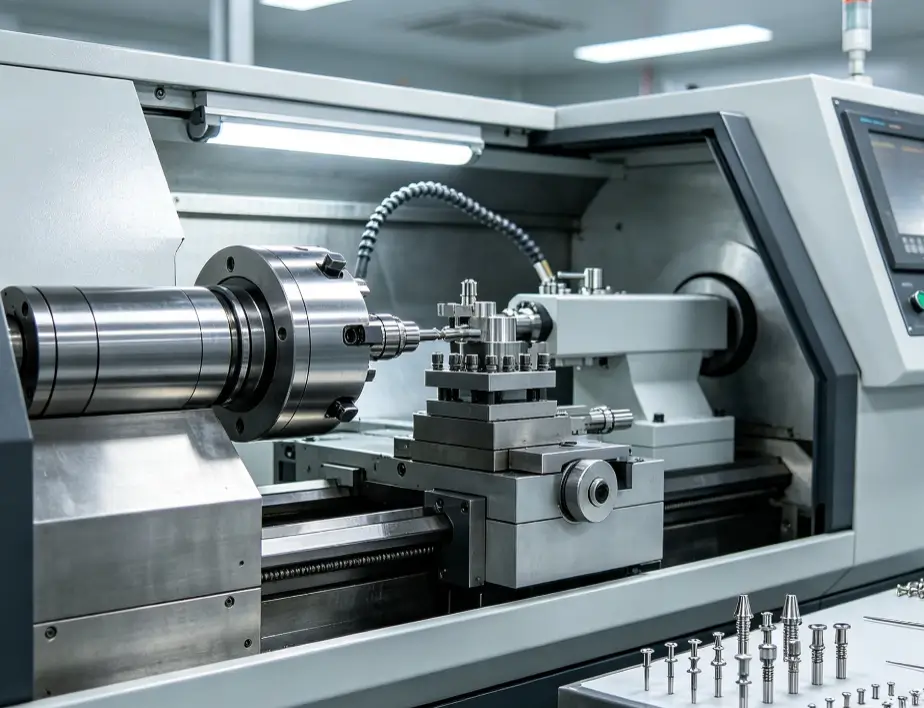
A key feature of modern Swiss-type lathes is the guide bushing design, which minimizes deflection during the machining of slender workpieces. This is critical for medical parts like surgical needles and micro shafts, where even the slightest deviation can compromise functionality and patient safety. For example, Tornos Swiss-type lathe collets (also known as spring collets) offer micron-level repeat positioning accuracy, supporting bar diameters from 0.3mm to 32mm and are widely used in machining ultra-precision medical components such as dental implants and surgical suturing needles . Leading models like the STAR SB-20R G-type Swiss-type lathe boast a C-axis resolution of 0.001° and a maximum spindle speed of 10,000 rpm, enabling precise machining of complex contours and threads on small medical parts .
In 2026, the precision of Swiss-type lathes has been further enhanced by the integration of high-rigidity servo motors and advanced linear guideways. For instance, Guangdong Jiecheng's 5-axis Swiss-type lathe A255D adopts high-power servo motors (1300KW and 850KW) to ensure stable cutting forces even during heavy-duty machining, while its high-precision linear guideways reduce motion errors to near-zero levels . This level of precision ensures that every medical part meets the strict dimensional requirements of standards such as ISO 13485.
2. 2026 Technological Upgrades: AI Integration and Green Machining Drive Efficiency
The year 2026 has witnessed significant technological leaps in Swiss-type lathe design, with AI-driven automation and green machining solutions taking center stage. These innovations not only boost processing efficiency but also align with the global trend toward sustainable manufacturing and digital transformation in the medical industry.
2.1 AI-Powered Programming and Predictive Maintenance
Manual G-code programming is becoming a thing of the past, as 2026 Swiss-type lathes increasingly adopt AI-driven programming systems. Software solutions like SolidCAM enable offline programming directly within SOLIDWORKS and Autodesk Inventor environments, optimizing tool paths and simulating machining processes to eliminate errors before production begins . Advanced CNC controllers, such as the FANUC Series Oi-TD used in the STAR SB-20R G-type, are now integrated with AI algorithms that learn from historical machining data to optimize feed rates, spindle speeds, and tool paths in real time.
AI also enables predictive maintenance, a critical feature for medical part manufacturers who cannot afford unplanned downtime. By monitoring spindle vibration, tool wear, and temperature data, AI systems can predict potential equipment failures and schedule maintenance proactively. Medical part processors using AI-equipped Swiss-type lathes have reported a 40% reduction in tool wear and a 35% decrease in unplanned downtime .
2.2 Green Machining for Medical Compliance
The medical industry's focus on cleanliness and sustainability has driven the adoption of green machining technologies in 2026 Swiss-type lathes. Micro-quantity lubrication (MQL) systems, which replace traditional flood cooling with minimal, eco-friendly lubricants, are now standard in many models. For example, Huizhuan's ultrasonic green Swiss-type lathes integrate MQL technology with ultrasonic machining, reducing cutting temperatures by 42% and friction coefficients by 31% . This not only reduces environmental impact but also eliminates the risk of coolant contamination in medical parts, a key concern for compliance with FDA and EU medical device regulations.
Energy efficiency is another focus of 2026 Swiss-type lathe designs. Many models feature regenerative braking systems that recover energy during deceleration, while high-efficiency electric spindles reduce power consumption by up to 30%. These features help medical manufacturers reduce their carbon footprint and meet the requirements of the EU's Carbon Border Adjustment Mechanism (CBAM).
3. Full Compliance with 2026 GMP Standards: A Critical Advantage for Medical Manufacturers
The implementation of the 2026 version of the Good Manufacturing Practices (GMP) for Medical Devices has raised the bar for quality management and traceability in the industry. Swiss-type lathes in 2026 are specifically engineered to meet these new regulatory requirements, making them an ideal choice for medical part production.
One of the key changes in the 2026 GMP is the emphasis on digital records and data traceability. Modern Swiss-type lathes are equipped with advanced MES (Manufacturing Execution System) integration capabilities, enabling real-time data collection and documentation of every machining parameter — from raw material batch numbers to spindle speeds and tool changes. This electronic data management system ensures that all records are tamper-proof, traceable, and easily accessible for regulatory audits .
The 2026 GMP also extends responsibility to cover the entire supply chain, including outsourcing and subcontracting. Swiss-type lathe manufacturers like TODAYCNC have responded by implementing strict quality control systems that meet ISO and SGS standards, with full IQC (Incoming Quality Control), IPQC (In-Process Quality Control), FQC (Final Quality Control), and OQC (Outgoing Quality Control) processes . This ensures that every component of the Swiss-type lathe meets the highest quality standards, and manufacturers can provide comprehensive quality documentation to their medical industry customers.
4. Real-World Applications: Swiss-type Lathes in 2026 Medical Part Production
The versatility and precision of 2026 Swiss-type lathes make them suitable for a wide range of small precision medical parts. Below are some notable application cases that highlight their effectiveness:
4.1 Dental Implants and Abutments
Dental implants require exceptional surface finish and dimensional accuracy to ensure biocompatibility and long-term stability. Swiss-type lathes equipped with ultrasonic machining technology, such as Huizhuan's UGV100L-5AXIS, can process titanium alloy dental abutments with a surface roughness of 0.053μm, eliminating the need for post-processing polishing . The 5-axis simultaneous machining capability of these lathes also enables complex contouring of implant surfaces, ensuring a perfect fit with patient anatomy.
4.2 Minimally Invasive Surgical Instruments
Minimally invasive surgical instruments, such as laparoscopic forceps and endoscopic probes, require small, lightweight components with precise mechanical properties. Swiss-type lathes like the MANURHIN K’MX 816 CLEVER, designed for parts up to 16mm in diameter, excel in machining these complex components. Their multi-axis capability allows for simultaneous turning and milling, reducing production time by up to 50% compared to traditional machining methods .
4.3 Micro Bone Screws and Surgical Needles
Micro bone screws (with diameters as small as 1mm) and surgical needles demand extreme precision to avoid damaging surrounding tissue during procedures. Tornos Swiss-type lathes, with their high-precision collets and C-axis control, can machine these parts with tolerances as tight as ±0.001mm . The integration of AI-driven tool path optimization ensures consistent quality even for high-volume production runs.
5. Choosing the Right Swiss-type Lathe for 2026 Medical Part Production
When selecting a Swiss-type lathe for medical part production in 2026, manufacturers should consider the following key factors:
- Precision and Rigidity: Look for models with high spindle speeds (10,000 rpm or higher), C-axis resolution of 0.001°, and high-rigidity linear guideways to ensure consistent micron-level accuracy.
- AI and Automation Features: Prioritize lathes with AI-driven programming, predictive maintenance, and cobot integration capabilities to improve efficiency and reduce labor costs.
- Green Machining Capabilities: Choose models with MQL systems and energy-efficient components to meet sustainability requirements and reduce environmental impact.
- Regulatory Compliance: Ensure the lathe has MES integration and digital data management capabilities to meet 2026 GMP requirements for traceability and documentation.
- Supplier Reliability: Select manufacturers with a proven track record in the medical industry, such as Tornos, STAR, and TODAYCNC, who can provide comprehensive after-sales support and quality documentation .
6. Conclusion: Swiss-type Lathes — The Future of Small Precision Medical Part Production
In 2026, the Swiss-type lathe stands out as the best choice for small precision medical part production, thanks to its unmatched precision, advanced AI and green machining technologies, and full compliance with the latest regulatory standards. As the medical device industry continues to demand smaller, more complex, and higher-quality components, Swiss-type lathes will play an increasingly critical role in driving innovation and ensuring patient safety.
Whether machining dental implants, surgical needles, or minimally invasive surgical instruments, 2026 Swiss-type lathes offer the precision, efficiency, and regulatory compliance that medical manufacturers need to stay competitive in a rapidly evolving industry. By investing in the right Swiss-type lathe, medical device companies can not only improve their production processes but also contribute to the development of safer, more effective medical treatments.
 Email
Email sales1: +86 15312799623