



Top Benefits of Using a CNC Milling Machine for Manufacturing
In today’s fast-paced manufacturing industry, efficiency, precision, and consistency are the keys to staying competitive. Whether you’re a small job shop, a mid-sized manufacturer, or a large industrial facility, integrating a CNC milling machine into your production line can transform your operations—cutting costs, improving quality, and opening up new opportunities for growth. Unlike manual milling machines that rely on operator skill and consistency, CNC milling offers automated, repeatable performance that aligns with the demands of modern manufacturing.
This article breaks down the top benefits of using a CNC milling machine for manufacturing, focusing on practical, real-world advantages that directly impact your bottom line. From enhanced precision to reduced labor costs, we’ll explore why CNC milling has become an essential tool for manufacturers across industries—no technical jargon, just clear, actionable insights.
1. Unmatched Precision and Consistency
One of the biggest advantages of CNC milling machines is their ability to produce parts with extreme precision and consistent quality—something manual machining simply cannot match. CNC systems use pre-programmed G-code to control every movement of the cutting tool and workpiece, eliminating human error and ensuring that every part is identical to the original design.
For manufacturing applications that require tight tolerances (often as low as ±0.001mm), CNC milling is indispensable. Whether you’re producing automotive components, medical devices, or aerospace parts, consistent precision reduces waste from faulty parts, improves product reliability, and enhances your brand reputation. Unlike manual operators, who may experience fatigue or inconsistency over long shifts, CNC machines maintain the same level of accuracy for hours on end—even during 24/7 operation.
2. Increased Production Efficiency
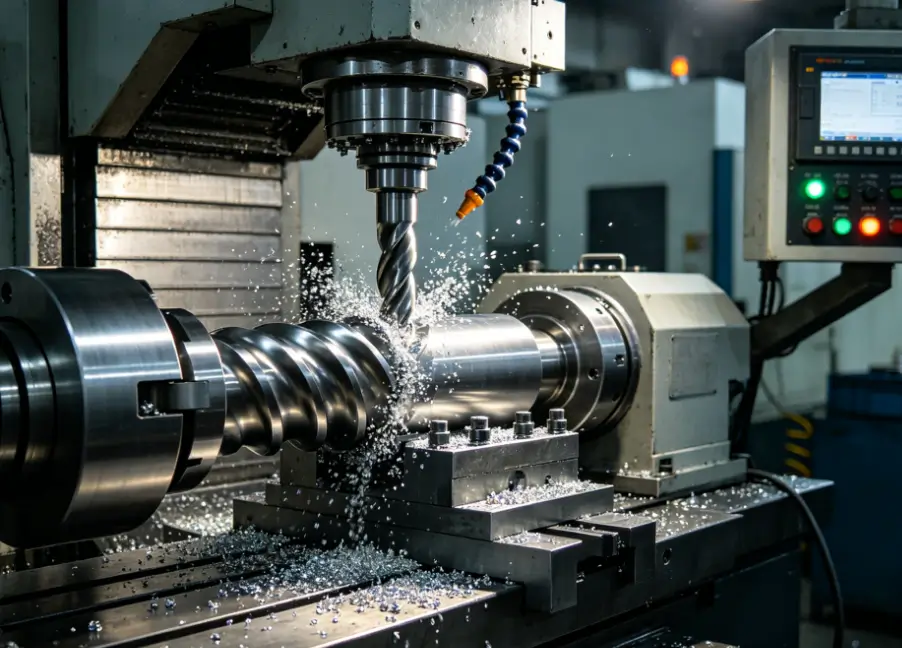
CNC milling machines dramatically boost production efficiency by minimizing downtime, reducing setup time, and enabling continuous operation. Unlike manual milling, which requires constant operator supervision, CNC machines can run unattended for extended periods—freeing up your team to focus on other critical tasks, such as programming, quality control, or machine maintenance.
Modern CNC milling machines also feature automatic tool changers (ATC) and pallet changers, which reduce setup time between jobs. For example, a machine with an ATC can switch between multiple cutting tools in seconds, eliminating the need for manual tool changes and reducing idle time. This efficiency is especially valuable for high-volume production, where even small reductions in setup time can lead to significant increases in output.
3. Reduced Labor Costs and Dependence on Skilled Operators
Finding and retaining skilled manual machinists is a major challenge for many manufacturers—especially as the industry faces a labor shortage. CNC milling machines reduce this dependence by automating most of the machining process, requiring operators to focus on programming, monitoring, and maintenance rather than manual operation.
While CNC operators do need training, the learning curve is often less steep than for manual machinists. Additionally, a single CNC operator can oversee multiple machines at once, reducing the number of employees needed to maintain production levels. Over time, this translates to lower labor costs, reduced training expenses, and less risk of delays due to staffing shortages.
4. Versatility for Complex and Custom Parts
CNC milling machines are highly versatile, capable of machining a wide range of materials—including metal, plastic, wood, composites, and more—and producing complex shapes that would be impossible or time-consuming with manual machines. From 3D contours and intricate pockets to multi-sided components, CNC milling can handle even the most challenging designs with ease.
This versatility is a game-changer for manufacturers that offer custom parts or prototype development. With CNC milling, you can quickly switch between different jobs by updating the program, making it easy to adapt to changing customer demands. Whether you’re producing small batches of custom parts or large runs of standardized components, CNC milling offers the flexibility to meet your production needs.
5. Improved Safety for Operators
Safety is a top priority in any manufacturing environment, and CNC milling machines are designed with operator safety in mind. Unlike manual milling machines, which require operators to work closely with rotating cutting tools, CNC machines feature enclosed work areas, safety doors, and emergency stop buttons that minimize the risk of injury.
Since CNC machines run automatically, operators are not required to be in direct contact with the cutting process—reducing the risk of cuts, burns, or other injuries. Additionally, modern CNC systems include safety interlocks that prevent the machine from operating if the safety door is open, further enhancing workplace safety. This not only protects your employees but also reduces the risk of costly workplace accidents and downtime.
6. Lower Waste and Higher Material Efficiency
Waste is a major cost driver in manufacturing, and CNC milling machines help reduce waste by optimizing material usage and minimizing errors. The precision of CNC milling means that less material is wasted on faulty parts, and the ability to program efficient tool paths reduces the amount of material removed during machining.
For example, CNC milling can use nesting software to arrange multiple parts on a single workpiece, maximizing material usage and reducing scrap. Additionally, the consistent precision of CNC machines means that fewer parts are rejected due to errors, further reducing waste and lowering material costs. Over time, these savings can add up significantly, improving your overall profitability.
7. Scalability to Grow With Your Business
CNC milling machines are highly scalable, making them an ideal investment for growing manufacturers. As your production needs increase, you can add more CNC machines, upgrade to higher-performance models (such as 5-axis machines), or integrate automation features (like robotic loading/unloading) to further boost efficiency.
Unlike manual machines, which have a fixed capacity, CNC milling machines can be easily programmed to handle larger batches, more complex parts, or new materials—allowing you to expand your product offerings and take on new clients. This scalability ensures that your investment in CNC milling will continue to deliver value as your business grows.
8. Enhanced Quality Control and Traceability
Modern CNC milling machines often integrate with quality control (QC) tools, such as probing systems and digital measuring devices, to ensure that every part meets your specifications. These tools can automatically measure parts during or after machining, flagging any deviations from the design and allowing for immediate adjustments.
Additionally, CNC systems can track and record machining data—including program details, tool usage, and production times—providing full traceability for each part. This traceability is essential for industries with strict regulatory requirements, such as aerospace, medical, and automotive manufacturing, where documentation of production processes is mandatory.
Why CNC Milling Is a Worthwhile Investment for Manufacturing
Investing in a CNC milling machine is more than just upgrading your equipment—it’s investing in the long-term success of your manufacturing business. The benefits of CNC milling—precision, efficiency, reduced labor costs, versatility, and safety—directly address the most common challenges manufacturers face today.
Whether you’re looking to improve part quality, increase production output, reduce waste, or scale your operations, CNC milling offers a proven solution. From small 3-axis vertical machines to advanced 5-axis horizontal machines, there’s a CNC milling solution to fit every manufacturing need and budget.
Conclusion
In the competitive world of manufacturing, CNC milling machines have become an essential tool for businesses looking to stay ahead. The top benefits—unmatched precision, increased efficiency, reduced labor costs, versatility, safety, lower waste, scalability, and enhanced quality control—make CNC milling a smart investment that delivers long-term value.
By integrating CNC milling into your production line, you can improve your bottom line, meet customer demands more effectively, and position your business for growth. Whether you’re a small job shop or a large industrial facility, the advantages of CNC milling are clear—and the return on investment is well worth it.

 Email
Email sales1: +86 15312799623