



10 Types of CNC Machines: Uses, Differences & How to Choose
CNC machines are widely used in modern manufacturing to produce precision components, complex shapes, and customized products. However, different types of CNC machines are designed for different materials, machining processes, and production requirements.
The 10 common CNC machine types covered in this guide are CNC milling machines, lathes, routers, plasma cutters, laser cutters, EDM machines, machining centers, Swiss-type lathes, grinding machines, and mill-turn centers. Some are specialized configurations within broader CNC machine categories.
For example, CNC milling machines are commonly used for pockets and complex profiles, while CNC lathes are better suited to cylindrical components. CNC grinding machines are used for precision finishing, and EDM machines can produce intricate features in electrically conductive materials.
This guide compares their working principles, applications, advantages, and limitations to help you choose the right CNC machine for your manufacturing needs.
What Is a CNC Machine and How Does It Work?
A CNC machine (Computer Numerical Control machine) is manufacturing equipment that uses computer-controlled instructions to automate machining or other material-processing operations.
Instead of relying entirely on manual movements, CNC systems control machine axes and operating functions according to programmed instructions.
Many CNC machine tools use G-code to define movements, feed rates, spindle functions, and machining sequences.
Depending on the machine type, CNC equipment can perform operations such as:
- Milling, drilling, and tapping
- Turning and threading
- Grinding and precision finishing
- Laser or plasma cutting
- Electrical discharge machining
CNC machines can process metals, plastics, wood, and other suitable materials.
Their primary benefits include repeatability, programmable operation, and the ability to manufacture complex parts.
However, CNC machining accuracy depends on machine rigidity, positioning performance, tooling, workholding, and process control—not computer programming alone.
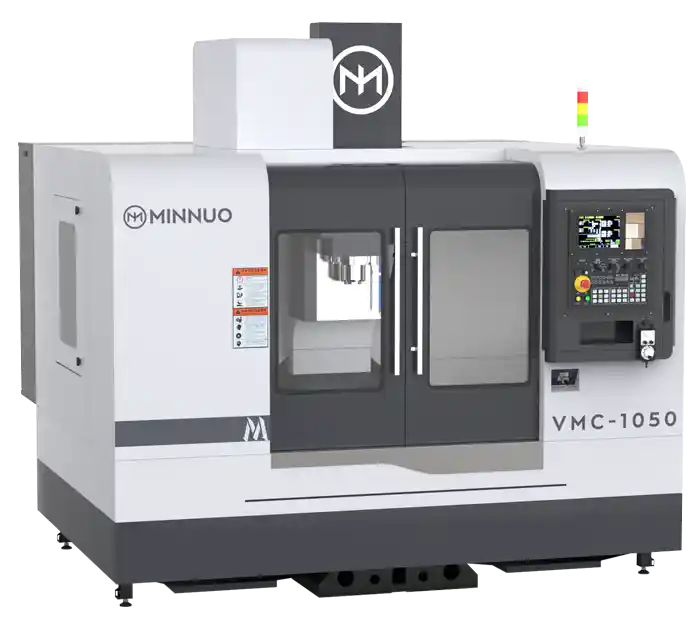
CNC Machine Types Compared: Processes and Applications
Different CNC machines use different methods to remove or process material.
The following table summarizes 10 common CNC machine types and configurations.
| CNC Machine Type | Main Process | Typical Applications |
|---|---|---|
| CNC Milling Machine | Rotary cutting tools remove material | Pockets, slots, profiles, and mechanical components |
| CNC Lathe | Rotating workpiece with controlled cutting tools | Shafts, bushings, threads, and cylindrical parts |
| CNC Router | High-speed milling and engraving | Wood panels, plastics, signs, and furniture |
| CNC Plasma Cutter | Plasma arc cutting | Electrically conductive metal plates |
| CNC Laser Cutter | Focused laser processing | Precision sheet cutting and selected engraving applications |
| CNC EDM Machine | Electrical discharge erosion | Dies, molds, and complex conductive-metal features |
| CNC Machining Center | Multiple operations with automatic tool changes | Complex parts requiring milling, drilling, and tapping |
| Swiss-Type CNC Lathe | Precision turning with sliding-headstock arrangements | Small-diameter, slender precision components |
| CNC Grinding Machine | Abrasive material removal | Precision shafts, surfaces, and finishing operations |
| CNC Mill-Turn Center | Combined turning and milling | Complex rotational components with additional milled features |
Important: CNC machine classifications can overlap. Machining centers belong to the broader milling machine family, while Swiss-type lathes and mill-turn centers are specialized turning configurations.
The following sections explain what each machine does and where it is most useful.
10 Common Types of CNC Machines and Their Uses
1. CNC Milling Machines: Slots, Pockets, and Complex Parts
CNC milling machines use rotating cutting tools to remove material from a workpiece.
How It Works
The machine controls relative movement between the rotating cutting tool and the workpiece along programmed axes.
Most conventional CNC milling operations use three linear axes: X, Y, and Z. More advanced machines may incorporate rotary axes for complex machining requirements.
Common Applications
- Precision brackets and housings
- Slots, grooves, and pockets
- Mechanical components
- Mold cavities and complex profiles
Main Advantages
CNC milling machines can produce a wide variety of geometric features using different cutting tools.
They are suitable for prototypes, custom components, and repeat production.
Key Considerations
Machine rigidity, spindle capability, tooling, and workholding must match the workpiece material and cutting requirements.
Parts with complex geometry may also require multiple setups or additional machining axes.
2. CNC Lathes: Shafts and Cylindrical Components
CNC lathes are designed primarily for machining rotational components.
How It Works
The workpiece rotates in the spindle while cutting tools move along controlled paths to remove material.
Typical operations include turning, facing, grooving, threading, drilling, and boring.
Some CNC turning centers also support driven tools for additional operations.
Common Applications
- Shafts and bushings
- Sleeves and flanges
- Threaded components
- Cylindrical machine parts
Main Advantages
CNC lathes are particularly suitable for producing controlled diameters, rotational profiles, and concentric features.
They can also support automated production with suitable bar-feeding and part-handling systems.
Key Considerations
Conventional CNC lathes are less suitable for components dominated by complex prismatic geometry.
Parts requiring extensive milling may need additional equipment or a turning center with driven tooling.
3. CNC Routers: Wood, Plastics, and Large Panels
CNC routers are commonly designed for high-speed cutting, engraving, and shaping of panels and relatively easy-to-machine materials.
How It Works
A rotating cutting tool follows programmed paths across the workpiece.
Many CNC routers use a gantry-style design with a large working area.
Common Applications
- Woodworking and cabinetry
- Acrylic and plastic components
- Sign making
- Furniture production
- Selected aluminum parts
Main Advantages
CNC routers provide flexible machining across large sheets and panels.
They are well suited to custom shapes, decorative features, and repeated cutting patterns.
Key Considerations
Not all routers have the rigidity or cutting-force capacity required for demanding metal machining.
The material, required accuracy, and cutting forces should be considered before using a router instead of an industrial milling machine.
4. CNC Plasma Cutters: Conductive Metal Plate Cutting
CNC plasma cutters use a high-temperature plasma arc to cut electrically conductive materials.
How It Works
An electrically conductive plasma jet melts material along a programmed cutting path.
High-velocity gas helps remove molten metal from the cut.
Common Applications
- Carbon steel plates
- Stainless steel plates
- Aluminum plates
- Structural steel fabrication
- Metal components requiring profile cutting
Main Advantages
Plasma cutting can provide efficient processing of suitable metal plates, especially in general fabrication applications.
Key Considerations
Plasma cutting creates a heat-affected zone and may require additional edge finishing.
The choice between plasma and laser cutting depends on material, thickness, edge quality, production requirements, and operating costs.
5. CNC Laser Cutters: Precision Sheet Cutting
CNC laser cutters use a focused laser beam to cut or process materials.
How It Works
A concentrated laser beam heats material along a programmed path, causing localized melting, vaporization, or another material removal process.
Industrial laser cutting commonly uses assist gases to support cutting and remove material from the kerf.
Common Applications
- Precision sheet metal components
- Complex two-dimensional profiles
- Metal enclosures and brackets
- Suitable nonmetallic cutting applications
- Selected marking and engraving operations
Common Laser Types
Fiber Laser Cutters: Widely used for cutting metals such as carbon steel, stainless steel, and aluminum.
CO₂ Laser Cutters: Commonly used for nonmetallic materials and also capable of processing certain metals with appropriately designed equipment.
Main Advantages
Laser cutting can produce intricate profiles, relatively narrow kerfs, and repeatable cutting results.
Key Considerations
Cutting capability depends on material, thickness, laser power, beam characteristics, and machine configuration.
Laser cutting is not automatically the best option for every metal thickness or material.
6. CNC EDM Machines: Precision Features in Conductive Materials
Electrical discharge machining (EDM) removes material through controlled electrical discharges rather than conventional cutting forces.
How It Works
Repeated electrical discharges occur between an electrode and an electrically conductive workpiece, causing localized material erosion.
Common Types
Wire EDM: Uses a continuously fed wire electrode to cut intricate profiles in conductive materials.
Sinker EDM: Uses a shaped electrode to machine cavities and internal features.
Common Applications
- Precision dies and molds
- Hardened steel components
- Narrow slots
- Intricate cavities
- Complex profiles in electrically conductive materials
Main Advantages
EDM can produce complex features in hard conductive materials without the mechanical cutting forces associated with conventional milling.
Key Considerations
EDM requires electrically conductive workpiece materials.
Material removal rates, electrode requirements, dielectric systems, and operating costs should be considered when selecting the process.
7. CNC Machining Centers: Multi-Operation Machining
CNC machining centers are advanced milling-based machines designed to perform multiple operations with automated tool changes.
How It Works
A machining center typically combines a controlled spindle, multiple machine axes, and an automatic tool changer.
Depending on the configuration, it can perform milling, drilling, boring, tapping, and related operations.
Common Types
Vertical Machining Centers (VMCs): Use a vertically oriented spindle and are widely used for general-purpose precision machining.
Horizontal Machining Centers (HMCs): Use a horizontally oriented spindle and can be suitable for multi-sided machining and repeat production.
5-Axis Machining Centers: Provide additional rotary-axis positioning or simultaneous movement for complex components.
Common Applications
- Automotive housings
- Aerospace structural parts
- Precision molds
- Complex mechanical components
- Parts requiring multiple machining operations
Main Advantages
Automatic tool changing and multi-operation machining can reduce manual intervention and help improve production efficiency.
Key Considerations
The optimal configuration depends on part geometry, axis requirements, fixture design, production volume, and machining complexity.
Not every part requires a 5-axis machine or a highly automated machining center.
8. Swiss-Type CNC Lathes: Small and Slender Parts
Swiss-type CNC lathes are specialized turning machines commonly used for precision components with small diameters.
How It Works
In a typical sliding-headstock arrangement, the bar stock moves axially through a guide bushing that supports the workpiece close to the cutting tool.
This support helps control deflection during the machining of slender components.
Some Swiss-type lathes also provide guide-bushing-less configurations for suitable short parts.
Common Applications
- Medical instrument components
- Precision screws and pins
- Small shafts
- Electronic connectors
- Slender mechanical parts
Main Advantages
Swiss-type lathes provide near-cutting-point support, making them particularly useful for small and slender turned components.
Key Considerations
Bar quality, guide bushing configuration, part length, tooling requirements, and production volume affect equipment selection.
For short, relatively rigid parts, a conventional turning center may be more suitable.
9. CNC Grinding Machines: Precision Surface Finishing
CNC grinding machines use abrasive wheels to remove material and produce controlled dimensions and surface characteristics.
How It Works
A rotating grinding wheel removes material while the CNC system controls the relative movement between the wheel and workpiece.
Grinding is often used after turning, milling, or heat treatment when additional finishing is required.
Common Types
- CNC surface grinders
- CNC cylindrical grinders
- CNC internal grinders
- CNC centerless grinders
Common Applications
- Precision shafts
- Bearing-related components
- Hardened metal parts
- Flat and cylindrical surfaces
- Components requiring controlled surface finish
Main Advantages
CNC grinding can provide precise finishing of selected surfaces and geometries.
Key Considerations
Grinding wheel selection, machine condition, thermal effects, dressing, and inspection significantly influence the results.
Grinding is not necessarily the most efficient choice for large-volume material removal.
10. CNC Mill-Turn Centers: Combined Turning and Milling
CNC mill-turn centers combine turning and milling operations in a single machine.
How It Works
These machines integrate turning spindles with driven tools and, depending on the configuration, additional milling axes, sub-spindles, or automated transfer functions.
This enables multiple machining operations to be completed with fewer workpiece transfers.
Common Applications
- Complex shafts
- Valve bodies and components
- Hydraulic fittings
- Precision rotational components
- Parts with both turned and milled features
Main Advantages
Mill-turn centers can reduce repeated setups and support efficient machining of complex components.
Key Considerations
They generally require more complex programming and process planning than basic turning or milling machines.
Their additional investment should be justified by the required operations and production volume.
How to Choose the Right CNC Machine: 5 Key Factors
Choosing a CNC machine requires matching its capabilities to the actual manufacturing task.
The following five factors provide a practical starting point.
1. What Part Geometry Do You Need to Machine?
Start by identifying the main geometry and machining operations required.
For example:
- Cylindrical shafts: CNC lathe
- Slots, pockets, and mechanical housings: CNC milling machine or machining center
- Long, small-diameter components: Swiss-type CNC lathe
- Complex parts requiring both turning and milling: CNC mill-turn center
- Precision-finished shafts or surfaces: CNC grinding machine
- Two-dimensional metal sheet profiles: CNC laser or plasma cutter
Part geometry is often the most useful starting point for selecting the machine category.
2. Which Workpiece Materials Will You Process?
Different materials require different machine structures, tools, and machining conditions.
Steel and titanium alloys may require rigid metal-cutting machines and appropriate tooling.
Wood, plastics, and large panels may be suitable for CNC routers.
EDM is suitable only for electrically conductive workpiece materials.
Material selection should also consider cutting forces, chip control, heat generation, and tool wear.
3. What Accuracy and Surface Finish Do You Need?
Machine capability should be assessed against actual drawing requirements.
Important factors include:
- Positioning accuracy and repeatability
- Machine rigidity
- Spindle and axis performance
- Thermal stability
- Toolholding and workholding
- Inspection requirements
For example, a precision shaft requiring a specific surface finish may need a grinding operation after turning.
Do not assume that all CNC machines can achieve the same tolerance simply because they use computer control.
4. Are You Producing Prototypes or High Volumes?
Production volume affects machine selection and automation requirements.
A flexible CNC milling machine may be suitable for prototypes and low-volume production.
For repeat manufacturing, features such as automatic tool changers, bar feeders, pallet systems, and integrated machining operations may help reduce handling time.
The appropriate level of automation should match expected demand.
5. What Is the Total Cost of Ownership?
Machine purchase price is only part of the manufacturing investment.
Additional costs may include:
- Cutting tools and consumables
- Fixtures and workholding
- Maintenance and spare parts
- Programming and operator training
- Energy consumption
- Production downtime
- Machine utilization
The most suitable CNC machine is the one that meets part quality and production requirements at an acceptable total operating cost.
A more complex machine is not automatically the more economical choice.
Conclusion: Matching CNC Machine Types to Your Needs
Different types of CNC machines serve different manufacturing purposes.
CNC milling machines and machining centers are suitable for many complex mechanical components, while CNC lathes and Swiss-type lathes specialize in turned parts.
CNC routers are commonly used for sheet materials, laser and plasma cutters process suitable material profiles, EDM machines produce intricate features in conductive materials, and CNC grinding machines support precision finishing.
Mill-turn centers combine multiple machining capabilities for components requiring both turning and milling.
The best CNC machine depends on your workpiece geometry, material, accuracy requirements, production volume, and operating costs.
Understanding these differences helps manufacturers select equipment that supports consistent production rather than investing in unnecessary machine capabilities.
MINNUO provides CNC machine tool solutions for industrial manufacturing applications. Manufacturers can compare different machine configurations according to their part requirements and production plans.
Frequently Asked Questions About CNC Machine Types
Q1:What Are the Main Types of CNC Machines?
A:Common CNC machine categories include milling machines, lathes, routers, laser cutters, plasma cutters, EDM machines, and grinding machines.
Machining centers, Swiss-type lathes, and mill-turn centers are specialized configurations within broader CNC machine families.
Q2:What Is the Difference Between a CNC Mill and a CNC Lathe?
A:A CNC mill primarily uses rotating cutting tools to machine slots, pockets, surfaces, and complex profiles.
A CNC lathe primarily rotates the workpiece while a cutting tool removes material, making it particularly suitable for shafts and other rotational parts.
Q3:Which CNC Machine Is Best for Metal Parts?
A:The best machine depends on the geometry and required operations.
CNC milling machines and machining centers are suitable for many prismatic metal parts, while CNC lathes are useful for cylindrical components.
Grinding and EDM may be selected for additional precision finishing or specialized features.
Q4:Can One CNC Machine Perform Both Milling and Turning?
A:Yes. CNC mill-turn centers combine turning and milling functions.
Some turning centers also use driven tools to perform selected milling operations, although their capabilities depend on the machine configuration.
Q5:How Do I Choose a CNC Machine for My Workshop?
A:Identify the parts you plan to manufacture, their materials, required tolerances, and expected production quantities.
Then compare machine capabilities, tooling, automation, maintenance, and total operating costs before selecting equipment.
 Email
 sales1: +86 15312799623