



Common Types and Selection Guide of Feeding Machine for Machining Center
In modern industrial automation systems, machining centers function as core processing equipment whose production efficiency and precision performance are entirely dependent on the precise coordination of material feeders. As the critical component in material handling, feeders directly determine material utilization rates, production rhythm stability, and finished product qualification rates. They are extensively applied across high-value-added sectors including automotive manufacturing, electronic component processing, precision machinery production, and new energy battery manufacturing. With the deep integration of Industry 4.0 and smart manufacturing, feeders have evolved from traditional mechanical transport devices into core automation units featuring precision control, intelligent linkage, and flexible adaptability. This article systematically analyzes mainstream types, technical characteristics, application scenarios, and selection criteria of machining center feeders, incorporating the latest industry technological advancements through 2026 to provide professional references for enterprise intelligent upgrades.
1 Servo Feeder — The Core Choice of High Precision Machining
Servo feeders, powered by servo motors and closed-loop control systems, have become the most widely adopted and adaptable high-precision feeding equipment in machining centers. They perfectly meet modern production demands for diverse product types, small batches, and high accuracy, with a market share exceeding 60%. Their core competitiveness lies in digitally controlled, fully adjustable feeding parameters, which completely overcome the precision limitations and flexibility constraints of traditional feeding systems.
The system's technical highlights are concentrated in two core dimensions: high programmability and excellent positioning accuracy. It employs a high-end servo drive system paired with a CCS computer control system, enabling precise configuration of parameters like feed length, speed, and step distance via a touchscreen. Supporting 20 parameter sets for quick switching, each set accommodates 999 consecutive stamping cycles, significantly reducing line-switching debugging time for multi-batch production. In terms of precision control, the guide pin positioning mode achieves ±0.01mm accuracy, while the standard mode maintains stability within ±0.02mm. The feed length range spans from 0.1mm to 9999.99mm, meeting diverse processing requirements for both ultra-short and ultra-long step distances.
Different servo feeding machines cater to specialized applications: The NC servo feeder, a premium entry-level model, delivers 16-24m/min feeding speed. Upgraded versions with rapid cylinder modifications achieve up to 300 cycles per minute, accommodating material widths from 100-1300mm. Widely used in precision stamping for automotive components and electronic connectors, the three-in-one servo feeder integrates uncoiling, leveling, and feeding functions in a compact design. Compared to traditional modular units, it reduces floor space by 50% while featuring automatic hydraulic expansion and anti-scratch roller coatings. In precision stamping for new energy lithium battery aluminum casings and hydrogen fuel cell bipolar plates, this system enables "single-operator" full automation, boosting efficiency by over 30% while preventing surface scratches and ensuring product quality. The offset feeder, designed for irregularly shaped materials, precisely controls swing angles and feeding rhythms through servo motors, ideal for processing complex workpieces like custom sheet metal and automotive body structures.
Scenario Expansion: Beyond traditional precision electronic component manufacturing and automotive stamping, servo feeders seamlessly integrate with machining centers in high-end sectors like new energy battery copper/aluminum foil handling and aerospace specialty alloy processing through EtherCAT bus protocol. This enables millisecond-level synchronization between material feeding and machining cycles. Amid the rapid expansion of the new energy industry, the three-in-one servo feeder has become a standard equipment in lithium battery structural stamping production lines. Its high precision and stability significantly improve battery casing dimensional consistency, reducing defect rates to below 0.5%.
2 Mechanical Feeder — Economical Choice with High Stability
Mechanical feeders, featuring a purely mechanical transmission system, maintain a dominant market position in medium-low speed, high-volume, and fixed-rhythm processing applications. Their core advantages—simple structure, low failure rates, low maintenance costs, and no additional energy requirements—make them particularly suitable for cost control needs in small and medium-sized processing plants. With typical service lives of 5-10 years, some premium models can exceed 15 years. The core types include roller feeders, clamp feeders, and gear feeders, each designed for specific processing conditions.
2.1 Roller Feeder
As the most widely used mechanical feeding equipment, the roller feeder operates by rotating upper and lower rollers via a press output shaft or independent drive mechanism. Its feeding accuracy is typically ±0.05mm, which can be improved to ±0.01mm with guide pin positioning assistance, achieving a maximum speed of 600 cycles per minute. This system is ideal for high-speed, short-step processing of thin sheet materials (0.1-2.5mm) and excels in mass production of electronic components and hardware parts. Its key advantages include stable operation free from pneumatic/hydraulic fluctuations, long-term continuous operation, and maintenance requiring only periodic lubrication of transmission components, with annual maintenance costs under 1,000 yuan.
2.2 Clamp Feeder
The clamp feeder utilizes a cam or linkage mechanism to control the stepwise opening/closing and movement of its clamps. Its key feature is quiet operation with noise levels below 55 decibels. The clamps are made of soft, wear-resistant materials that prevent surface marks or scratches, making it ideal for high-precision stamping of materials like electroplated metals, stainless steel sheets, and mirror-polished metals—where surface quality is critical. With flexible step adjustment and compatibility for materials up to 800mm wide, it offers slightly slower feeding speed (up to 300 steps/min) than roller feeders but delivers superior stability. This makes it indispensable in decorative hardware and electronic casing applications.
2.3 Gear Feeder
The gear feeder is specifically engineered for heavy-duty thin plate processing. It delivers stable feeding force through gear meshing transmission, featuring strong impact resistance. Ideal for machining high-strength steel plates with thicknesses ranging from 1.0 to 2.5mm, it is widely used in rough machining applications such as automotive chassis components and agricultural machinery parts. However, its drawbacks include cumbersome step distance adjustment, requiring gear set changes for different material specifications, resulting in limited flexibility. This makes it more suitable for single-product, large-scale, and long-term production.
2.4 Application Scenario Summary
Mechanical feeders are ideal for continuous die stamping and fixed-rate thin sheet processing in small-to-medium manufacturing plants, particularly for cost-sensitive operations with mature production processes that require no frequent line changes. Compared to servo feeders, they reduce procurement costs by 40%-60%. While less flexible, they offer superior cost-effectiveness for annual production exceeding 1 million units of a single product.
3 Pneumatic Feeder — A Convenient Choice for Light Materials
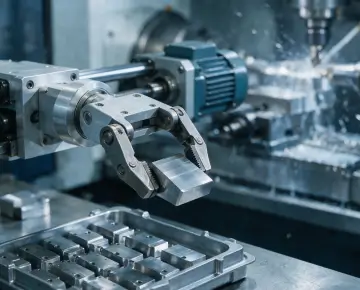
The pneumatic feeder, powered by compressed air, uses a cylinder-driven clamp to hold and feed materials. With features like easy operation, low procurement costs, flexible installation, and compact size, it is an ideal choice for small-scale enterprises and light material processing with limited budgets. Priced at just 1/5 to 1/3 of servo feeders, it requires no professional technicians for installation and debugging, with basic setup completed within half an hour.
In terms of technical specifications, the standard pneumatic feeder accommodates various lightweight materials including metal sheets (0.1-3.2mm), paper strips, plastics, and non-woven fabrics. With a feeding range of 0-450mm, it supports irregularly shaped materials such as circular, triangular, and custom profiles. The system enables rapid adaptation to material variations by simply replacing fixtures of different specifications. Equipped with E-type or R-type solenoid valves, it adjusts feeding sequences according to press stroke requirements, meeting demands for short-stroke presses and high-precision feeding. The pneumatic control valve regulates cylinder extension speed (0.5-5m/s) to accommodate different production rhythms.
The core limitation lies in the significant impact of air pressure fluctuations on feeding accuracy, typically around ±0.3mm, with the maximum achievable precision being only ±0.2mm, which fails to meet precision machining requirements. Additionally, the stability of compressed air directly affects equipment operation, necessitating the use of pressure stabilizers and dryers to prevent moisture ingress into the cylinder and subsequent malfunctions. To address this issue, some high-end pneumatic feeders are equipped with air pressure compensation modules, which can control accuracy fluctuations within ±0.15mm, thereby expanding their application scope.
This system is widely applicable to small stamping parts processing, automated material handling in injection molding machines, auxiliary material conveyance in packaging machinery, and simplified automated production lines for thin sheet materials. It is particularly suitable for products with moderate precision requirements such as hardware accessories, toy components, and small plastic parts. In family workshops and small-scale manufacturing facilities, pneumatic feeding machines can rapidly transition manual processing to automation, with a typical return on investment (ROI) within six months. Additionally, their compact design allows seamless integration into confined workshop layouts, enabling flexible combinations with table-mounted machining centers and small stamping presses.
4 Hydraulic Feeder — The Strong Choice for Heavy Materials
Hydraulic feeders utilize hydraulic systems to drive push rods or clamps for material conveyance. Their core advantages include high conveying capacity, stable operation, and strong load-bearing capability, making them ideal for handling heavy materials like thick plates, bars, and pipes under complex working conditions. These feeders are indispensable in heavy machinery manufacturing and CNC lathe bar processing. A prime example is the hydraulic bar feeder, which enables continuous unmanned conveyance of long bars, significantly enhancing the effective working time of machining centers.
The core technology employs proportional valves to precisely regulate hydraulic oil flow and pressure, integrated with pressure and displacement sensors for load monitoring and position feedback, forming a closed-loop control system that ensures stable feeding speed and stroke. The hydraulic system compensates for pressure fluctuations through accumulators, delivering significantly enhanced stability compared to pneumatic feeders. Utilizing hydraulic damping, the system maintains bar materials suspended within the guide tube, minimizing friction-induced damage to the tube walls, making it particularly suitable for precision bar processing. For slender bar materials (over 3 meters in length), certain models feature multi-point support and vibration damping systems to effectively prevent bending and vibration during feeding.
The high-end hydraulic feeding machine features intelligent functions including automatic diameter adjustment and a residual material detection/discharge system, compatible with rod materials of various specifications (5-50mm diameter). When the remaining rod length falls below the clamping requirement, it automatically discharges the residual material and loads the next rod, supporting over 8 hours of unattended operation. As an upgraded model, the oil-film hydraulic feeding machine employs oil-film lubrication technology to reduce mechanical friction, with noise levels controlled below 60 decibels and enhanced stability. Priced at approximately 28,000 RMB per unit, it is widely used in precision CNC lathe machining.
The system is specifically designed for heavy material processing, including thick plate handling (thickness>3.2mm), rod/tube fabrication (weight>50kg), heavy machinery component production, and continuous bar processing on CNC lathes. In manufacturing heavy components like automotive crankshafts, drive shafts, and hydraulic rods for construction machinery, the hydraulic feeding machine synchronizes with the machining center's spindle encoder to dynamically adjust feeding speed and force, effectively preventing material vibration from compromising precision. However, its drawbacks include substantial equipment weight, requiring fixed installation bases, and higher procurement and maintenance costs compared to pneumatic or mechanical systems. These limitations make it more suitable for heavy processing needs in medium-to-large enterprises.
5 Other Specialized Feeding Machines — Customized Solutions for Special Scenarios
Beyond the four mainstream types, specialized feeders are engineered for specific materials, irregular workpieces, and extreme processing conditions through customized designs. Though their market share remains modest, these machines are indispensable in niche applications. As manufacturing evolves toward personalization and premiumization, their use cases are steadily expanding.
5.1 Vibration Feeder
This system utilizes electromagnetic vibration technology to tilt and vibrate the chute, enabling directional sorting and continuous conveyance of small components. Its core advantages include rapid feeding speed (up to 1,000 pieces per minute), simple structure, and strong adaptability, making it suitable for processing micro parts with diameters ranging from 0.5 to 10mm. It is widely used in industries such as electronic components, pharmaceutical capsules, and hardware fasteners. However, it has drawbacks: high operational noise (typically 70-85 decibels), requiring a soundproof enclosure, and is limited to conveying small, regular parts. The system also demands certain surface hardness of materials to prevent damage from vibration-induced collisions.
5.2 Flexible Vibration Tray Feeder
Integrated with AI vision recognition systems and robotic arms, this system overcomes the physical limitations of traditional vibration feeders. It accommodates precision components with diverse shapes and sizes, minimizing part collisions through flexible vibration and maintaining surface damage rates below 0.1%. Its core advantage lies in high flexibility, enabling seamless adaptation to multiple material types without tooling changes. Ideal for precision components with stringent surface requirements (e.g., smartphone camera modules, medical device parts), it offers high surface finish. However, the equipment is more expensive (approximately 5-8 times the cost of standard vibration feeders) and has a slower feeding speed (up to 300 units per minute), making it unsuitable for large-scale high-efficiency production. It is primarily used in small-batch, multi-variety scenarios in high-end manufacturing.
5.3 Screw Feeder
This device propels materials through rotating spiral blades, ideal for continuous, precise feeding of powders, granules, and powdered materials. Equipped with a variable frequency drive (VFD) system, it ensures accurate material control with an error margin below ±2%, widely used in processing centers for plastics, chemicals, food, and construction materials. Its sealed design effectively prevents material leakage and contamination, operating reliably across temperatures from-20°C to 200°C. However, it may clog with viscous materials and requires regular blade cleaning.
5.4 Chain-type Bar Feeding Machine
Designed for small bars under 22mm diameter, this system can load a bundle of bars at once (e.g., 220 bars for 10mm diameter), enabling continuous automatic feeding without manual loading. Compared to traditional single-bar feeding, it offers significantly improved efficiency. Featuring a robust structure and low failure rate, it is ideal for large-scale bar processing on CNC lathes. However, due to its high equipment cost, it is only suitable for mass production of a single bar specification.
6 Core Points of Processing Center Feeder Selection (2026 Practical Guide)
When selecting equipment, companies should avoid the misconception that "the more advanced, the better." Instead, they should make a comprehensive assessment based on their production conditions, material characteristics, precision requirements, budget, and intelligent needs, while reserving flexibility for future capacity expansion and process upgrades. Below are practical recommendations from five key dimensions:
6.1 Material Parameter Selection
Equipment selection should prioritize material thickness, width, weight, material type, and form. For thin plates (0.1-2.5mm) with general precision requirements, pneumatic or mechanical feeders are suitable. High-precision thin plate processing should prioritize servo feeders. Heavy materials such as thick plates (>3.2mm), bars, and pipes must use hydraulic feeders or heavy-duty servo feeders. Powder and granular materials require screw feeders, while micro parts need vibrating feeders. Special-shaped precision parts should employ flexible vibratory feeder trays. Additionally, material surface characteristics must be considered. Avoid roller feeders for materials prone to scratches, and prioritize clamping or anti-scratch coated servo feeders.
6.2 Precision-Efficiency Balance
Precision machining (tolerance ≤±0.05mm) requires servo feeders, with three-in-one or NC servo feeders recommended for new energy and aerospace applications. Conventional machining (tolerance ≥±0.1mm) may use pneumatic or mechanical feeders, while high-speed machining (feed rate>300 cycles/min) should prioritize roller feeders or high-end servo feeders. Note that precision and efficiency are positively correlated. High-precision equipment requires stable processing environments (e.g., constant temperature, vibration-isolated foundations) to achieve optimal performance.
6.3 Production Scale and Flexibility Requirements
For large-scale, fixed-batch, single-product manufacturing, mechanical feeders offer the best cost-performance ratio. For small-batch, multi-product, and frequent line-switching operations, servo feeders (with rapid parameter switching capability) are essential. Small-scale workshops with limited budgets (under 50,000 RMB) and low precision requirements should opt for pneumatic feeders. Medium-to-large enterprises requiring heavy-duty processing or unattended production should choose hydraulic feeders or intelligent servo feeders.
6.4 Intelligent Integration Requirements
For production lines requiring coordination with machining centers, unwinding machines, robotic arms, and MES systems, servo feeders supporting PLC and EtherCAT bus protocols are recommended to enable data exchange, remote monitoring, and automated scheduling. For standalone processing equipment without integration needs, mechanical or pneumatic feeders can be selected to reduce equipment costs. By 2026, mainstream servo feeders will universally feature IoT modules with fault prediction and predictive maintenance capabilities, making them ideal for smart factory deployment.
6.5 Cost and Maintenance Considerations
The procurement budget should account for the full lifecycle costs, including equipment acquisition, installation and commissioning, spare parts replacement, and maintenance. Mechanical feeders are the most cost-effective to purchase and require minimal maintenance. Pneumatic feeders are affordable to purchase but require auxiliary equipment like air compressors and pressure stabilizers, leading to long-term energy consumption costs. Hydraulic feeders incur higher procurement and maintenance expenses, necessitating regular replacement of hydraulic oil and seals. Servo feeders are the most expensive to purchase but can quickly recoup costs by improving efficiency and reducing defect rates, making them ideal for high-value-added product manufacturing.
 Email
Email sales1: +86 15312799623