



Global Trend Analysis of Machining Centers in 2026 and Jiangsu Minnuo's Intelligent Manufacturing Solutions
In 2026, the global manufacturing industry is at a critical juncture of a new round of technological transformation and industrial upgrading. The rapid development of industries such as new energy vehicles, aerospace, precision medicine, robotics, and general equipment continues to drive the market demand for machining centers, while also imposing higher requirements on equipment accuracy, efficiency, intelligence, flexibility, and environmental sustainability. The global machining center market is exhibiting five core trends: intelligent upgrading, widespread adoption of high precision, accelerated integration, green and low-carbon transformation, and widespread adoption of flexible automation. Against this backdrop, China's equipment manufacturing industry is accelerating its global expansion. Professional machining center manufacturers represented by Jiangsu Minnuo are becoming trusted partners for global clients, leveraging stable quality, high cost-effectiveness, and comprehensive overseas service systems.
I. Deep Application of Intelligent Technology: Machining Centers Enter the Era of Autonomous Decision-Making
Artificial intelligence and digital technologies have evolved beyond being mere supplementary features of machining centers, now serving as core capabilities to enhance efficiency, ensure quality, and reduce costs. The global manufacturing industry currently faces widespread challenges including skilled worker shortages, difficulty in passing down expertise, and insufficient processing stability. Traditional production models reliant on manual experience can no longer meet modern manufacturing demands. Intelligent machining centers utilize multi-dimensional sensors to collect real-time data on cutting forces, vibrations, temperature, and spindle loads. By integrating algorithms for real-time analysis and autonomous adjustments, these systems achieve a transformation from "passive instruction execution" to "proactive machining optimization."
In practical manufacturing operations, intelligent systems automatically adjust cutting parameters based on material properties, tool conditions, and workpiece structures. This approach effectively suppresses vibrations, minimizes tool wear, prevents overcutting and undercutting, and significantly improves first-pass pass rates. Meanwhile, predictive maintenance capabilities enable early detection of potential failures in critical components, reducing unplanned downtime and substantially enhancing equipment efficiency. For enterprises, intelligent systems not only reduce reliance on skilled technicians but also accelerate new employee training, facilitating standardized and stable production processes.
The widespread adoption of digital twin technology is driving manufacturing processes toward greater visualization and predictability. Before formal machining, virtual simulations enable tool path validation, collision detection, interference checks, and thermal deformation analysis, significantly reducing trial-cutting cycles while saving material and time resources. During production, virtual models operate in real-time synchronization with physical equipment, allowing operators to monitor processing status intuitively and achieve remote monitoring with precision management. For complex components, high-value workpieces, and small-batch prototyping scenarios, digital twins can dramatically shorten R&D and production cycles, enhancing corporate market responsiveness.
Jiangsu Minnuo has fully integrated intelligent technologies into product development. Through its independently developed smart control system, the company achieves adaptive processing, tool life management, energy consumption optimization, and remote diagnostics. The equipment can connect with mainstream digital management platforms, supporting production data upload, work order management, and capacity analysis. This helps overseas clients establish transparent, efficient, and traceable modern production workshops, truly realizing "intelligent-driven production."
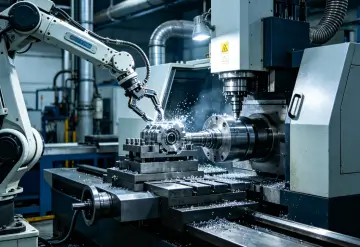
II. Precision manufacturing has become an essential requirement, with the high-end market continuously increasing its demands for accuracy.
With the rapid development of high-end manufacturing industries, workpiece structures have become increasingly complex, and precision requirements continue to rise. Traditional conventional precision equipment can no longer meet the processing demands in sectors such as aviation, aerospace, medical applications, and mold manufacturing. Submicron-level positioning accuracy, high-rigidity structural design, and thermal error compensation technology are now becoming standard capabilities of advanced machining centers.
Enhancing machining precision relies on comprehensive upgrades to structural design, key components, assembly processes, and inspection systems. Through a highly rigid overall structure and optimized rib-and-plate layout, the equipment maintains excellent stability even during prolonged, high-load machining operations, minimizing deformation and vibration. Meanwhile, high-precision transmission and feedback systems ensure more accurate displacement control, while dynamic error compensation and temperature compensation algorithms effectively mitigate precision deviations caused by environmental variations. Prior to shipment, the equipment undergoes extensive running-in tests and thorough precision inspections, ensuring its continuous and stable operation under various operating conditions overseas.
The widespread adoption of five-axis linkage technology stands as one of the most prominent trends in precision machining. For workpieces featuring complex curved surfaces, polyhedral structures, or deep cavities, five-axis machining enables simultaneous multi-faceted processing in a single setup, eliminating cumulative errors caused by repeated clamping and significantly enhancing both machining accuracy and production efficiency. In manufacturing sectors such as aeroengine components, robotic joints, precision molds, and medical devices, five-axis machining centers have become indispensable core equipment. Compared to traditional systems, five-axis machines demonstrate clear advantages in processing efficiency, surface quality, and complexity handling capabilities, making them a strategic investment for enterprises to strengthen their core competitiveness.
Jiangsu Minnuo consistently prioritizes precision and stability as the core competitiveness of its products. From structural design and component selection to assembly inspection, the company adheres to stringent standards, enabling its products to meet diverse requirements ranging from general mechanical processing to high-end precision manufacturing. Whether processing small-to-medium precision parts or large structural components and molds, Minnuo maintains consistent precision performance, helping overseas clients enhance product quality, reduce defect rates, and strengthen market competitiveness.
III. Integration and Multifunctional Integration: A Single Device Completes Multi-Process Machining
The traditional machining model suffers from low efficiency, prolonged cycles, and high costs due to dispersed processes, multiple clamping operations, and equipment transfers between machines. To address production demands characterized by small batches, diverse product varieties, and high complexity, integrated machining has emerged as a key industry trend. Technologies such as turning-milling integration, milling-grinding integration, and multifunctional power head integration enable a single machine to perform multiple operations including turning, milling, drilling, boring, and tapping, achieving complete process completion with a single setup.
The advantages of integrated manufacturing processes are highly evident: they minimize clamping errors and enhance part consistency; eliminate workpiece transfer and waiting times to shorten overall processing cycles; reduce equipment quantity and floor space requirements, lowering capital investment and labor costs; simplify production management workflows while improving workshop efficiency. Particularly in manufacturing components for new energy vehicles, hydraulic parts, construction machinery accessories, and complex shaft/disk components, integrated equipment systems deliver remarkable economic benefits.
Meanwhile, additive and subtractive hybrid manufacturing is progressively entering practical application phases. By integrating near-net-shape 3D printing with precision machining processes, complex structural components can be efficiently manufactured, significantly enhancing material utilization efficiency. This approach proves particularly suitable for high-performance applications such as aerospace engineering and medical implants requiring stringent structural integrity and performance specifications. Looking ahead, the integration of composite materials and multifunctional capabilities will continue to advance, with manufacturing equipment evolving beyond standalone cutting tools to become complete, compact, and flexible production units.
Jiangsu Minnuo has developed highly integrated compound machining solutions tailored to global market demands, featuring multi-power heads and expandable multifunctional modules that can be flexibly configured according to customer processes. The equipment boasts a compact structure with sufficient rigidity, enabling both stable mass production and rapid model switching for diverse product lines. This innovation helps overseas clients achieve higher production capacity with lower investment costs.
IV. Green and Low-Carbon Development Becomes Global Consensus: Energy-Efficient and Environmentally Friendly Machine Tools Gain Greater Competitiveness
Driven by global "dual carbon" goals and stringent environmental regulations, green manufacturing is no longer an option but has become a fundamental prerequisite for entering overseas markets. Regions such as Europe, the United States, the Middle East, and the Asia-Pacific are imposing increasingly rigorous requirements on equipment energy consumption, wastewater discharge, and noise control. Energy efficiency, reduced consumption, low pollution, and low noise levels have emerged as critical competitive advantages for machining centers.
The new-generation green machining center significantly reduces overall energy consumption through high-efficiency motors, energy-saving servo systems, and optimized transmission structures, achieving efficient energy utilization during idle, standby, and cutting operations. Some units feature energy recovery capabilities that capture and reuse kinetic energy during braking and deceleration, further enhancing energy savings. Over extended use, these low-energy-consuming machines help customers save substantial electricity costs while meeting corporate ESG development requirements.
In environmental protection technologies, innovations such as micro-lubrication systems, dry cutting methods, and cutting fluid recycling filtration have seen rapid adoption. Micro-lubrication systems significantly reduce cutting fluid consumption with virtually zero waste liquid discharge, effectively mitigating environmental pollution while lowering procurement, replacement, and disposal costs for cutting fluids. These advancements also enhance workplace conditions. For common materials like aluminum alloys and cast iron, dry cutting achieves near-zero pollution during processing, better complying with international environmental standards.
Jiangsu Minnuo integrates green principles from the product design phase. Its complete equipment series features energy-efficient drive systems and comes standard with eco-friendly lubrication solutions, while offering optional closed-loop filtration systems and waste liquid reduction devices to meet stringent environmental certification requirements such as those in the EU. These innovations enable energy conservation while maintaining high processing efficiency, helping overseas clients achieve a win-win scenario of economic benefits and environmental sustainability.
V. Flexible automation is accelerating its adoption, with unmanned operations and light-off production becoming prevailing trends.
Global labor costs continue to rise, with recruitment challenges and management difficulties becoming increasingly prominent, driving the processing industry toward automation, reduced workforce reliance, and unmanned operations. Solutions such as flexible manufacturing units, automated production lines, robotic material handling, and automated pallet switching are rapidly gaining adoption. Enterprises are achieving 24/7 continuous production through automation, significantly enhancing equipment utilization rates and production capacity.
The core strengths of flexible manufacturing lie in rapid model switching, agile scheduling, and stable output. In a market environment characterized by fragmented orders and shortened delivery timelines, automated processing units can swiftly switch workpieces and programs, minimizing manual intervention and enhancing production continuity. By integrating with AGVs, automated storage systems, and MES systems, the entire process—from raw material intake, processing, and inspection to finished product dispatch—can be fully automated, establishing a true zero-light factory.
For overseas clients, automation not only reduces labor costs but also ensures consistent product quality, minimizes human errors, and enhances delivery reliability. Particularly in batch processing sectors such as automotive components, 3C products, hardware, and molds, automated production lines have become standard configurations for leading enterprises.
Jiangsu Minnuo boasts comprehensive automation integration capabilities, offering end-to-end solutions including standalone automation systems, multi-machine collaborative production lines, and flexible manufacturing units. The company's systems seamlessly integrate with global mainstream robotics and control systems, enabling automated material handling, tool switching, quality inspection, and material transfer. Additionally, the equipment supports remote monitoring and diagnostics, allowing overseas clients to track operational status in real-time, promptly troubleshoot issues, and ensure uninterrupted production continuity.
VI. Global Processing Center Market Landscape and Regional Demand Characteristics
The global machining center market currently exhibits a diversified and multi-tiered demand landscape, with varying regional priorities regarding equipment performance, configurations, pricing, and service offerings.
The European market prioritizes precision, reliability, intelligent features, and environmental compliance standards. Customers generally seek long-term stability and low failure rates, demonstrating high acceptance of automation and digital solutions. They also emphasize comprehensive after-sales services and rapid response capabilities.
The North American market primarily focuses on sectors such as aerospace, automotive, and energy, emphasizing high rigidity, heavy cutting capabilities, and system openness. There is strong demand for five-axis systems, automation, and remote operation and maintenance functions, while suppliers are required to possess mature overseas delivery capabilities.
As the world's largest consumer market for processing centers, the Asia-Pacific region demonstrates demand spanning from general processing to high-end manufacturing. Emerging manufacturing nations are experiencing rapid growth, with clients placing greater emphasis on cost-effectiveness, stability, delivery speed, and ease of operation. Concurrently, there is a growing expectation for suppliers to provide process support and training services.
The manufacturing sectors in markets such as the Middle East, Latin America, and Eastern Europe continue to upgrade, driving steady growth in demand for versatile vertical and horizontal machining centers. Customers prioritize equipment durability, ease of maintenance, and global warranty coverage, with particular emphasis on customization capabilities to accommodate varying voltages, languages, and operating conditions.
Jiangsu Minnuo provides customized configuration solutions tailored to the characteristics of different regional markets, including multilingual operation interfaces, compliance with local electrical standards, environmental certifications, and system selection. Meanwhile, it has established a global service network to offer overseas customers end-to-end support covering pre-sales consultation, solution planning, installation and commissioning, as well as after-sales maintenance and spare parts supply.
VII. China's machining center industry is rising globally, with Jiangsu Minnuo assisting overseas clients in upgrading
In recent years, China's equipment manufacturing industry has seen rapid technological advancements, achieving significant breakthroughs in structural design, precision manufacturing, intelligent control, and supply chain integration. Domestic machining centers are no longer limited to the mid-to-low-end market but are steadily entering the global mid-to-high-end market, with export volumes continuing to grow. Domestic equipment is reshaping the international market competition landscape through higher cost-performance ratios, more flexible customization capabilities, more efficient delivery, and more pragmatic service systems.
Jiangsu Minnuo, a manufacturing enterprise specializing in machining center R&D, production, and overseas sales, adheres to a technology-driven approach with quality as its core and customer-centric philosophy. Its products are exported to numerous countries and regions worldwide, widely applied in industries such as automotive, mold manufacturing, aerospace, medical equipment, hardware, and construction machinery. The company strictly complies with international quality management systems and safety standards, implementing rigorous controls throughout every process—from raw material procurement and manufacturing to assembly and inspection—to ensure equipment maintains stable performance even during long-distance transportation and diverse operating environments.
Compared to international traditional brands, Jiangsu Minnuo delivers superior overall cost efficiency, shorter delivery cycles, more flexible customization options, and customer-centric service models while maintaining performance parity or even exceeding it. The company provides tailored equipment and integrated solutions for both small-to-medium overseas manufacturers and large-scale chemical plants, truly embodying the principles of "user-friendly, durable, and practical" solutions.
VIII. Jiangsu Minnuo's Product and Service System Provides Global Customer Protection
Jiangsu Minnuo possesses a comprehensive product system of machining centers, covering various types including vertical, horizontal, five-axis联动, and turning-milling hybrid systems, capable of meeting diverse requirements ranging from general part machining to complex precision workpiece production. All products emphasize high-rigidity structures, stable accuracy, efficient cutting performance, and ease of operation, making them suitable for long-term continuous production.
In service delivery, the company has established a comprehensive overseas service system: Before-sales support includes process analysis, sample cutting, solution planning, and equipment selection to help clients precisely match their needs; During-sales operations enforce strict production and quality control processes to ensure timely and high-quality delivery, complemented by professional packaging and international logistics support; After-sales services provide remote guidance, on-site installation and commissioning, operational training, maintenance services, and spare parts supply to enable rapid response.
Regardless of the client's location, Jiangsu Minnuo has established itself as a long-term trusted partner through its stable products, professional solutions, and reliable services.
IX. Future Trend Outlook and Development Direction of Jiangsu Minnuo
In the coming years, machining centers will evolve towards higher precision, greater intelligence, enhanced flexibility, lower energy consumption, and stronger interconnectivity. Technologies such as large-scale AI models, industrial internet, nanometer-level precision, and end-to-end automation will become more widespread, driving manufacturing into a new phase characterized by higher efficiency, intelligence, and sustainability.
Jiangsu Minnuo will continue to increase R&D investment, focusing on enhancing capabilities in intelligent control, precision machining, and integrated automation systems. The company will continuously optimize product performance and reliability while expanding its global market presence. By deepening overseas channel development and refining localized services, Minnuo aims to deliver superior products and comprehensive solutions that help global manufacturing clients improve efficiency, reduce costs, and strengthen competitiveness.
epilogue
In 2026, the global processing center industry will face both opportunities and challenges. Intelligence, precision, integration, greenness, and automation have become irreversible trends, which also bring tremendous opportunities to China enterprises with technological strength and global vision.
Jiangsu Minnuo has always focused on the machining center field, providing mature and reliable products, cost-effective solutions, and global services to help overseas customers achieve production upgrades. Whether customers pursue high precision, high efficiency, automation, or low cost, Jiangsu Minnuo can offer suitable equipment and solutions, becoming a trusted China brand for global manufacturing partners.
In the future, Jiangsu Minnuo will continue to uphold quality and innovation, deepen its presence in the international market, collaborate with global clients, grow together amidst the wave of intelligent manufacturing, and consistently contribute China's strength to global high-end manufacturing.
 Email
Email sales1: +86 15312799623