



Horizontal Milling Machine and Horizontal Machining Center: Comprehensive Analysis of Structural and Machining Capability Differences Introduction
Introduction
In modern mechanical manufacturing, horizontal milling machines and horizontal machining centers serve as two essential processing equipment types, each meeting distinct production requirements. While sharing some visual similarities, they differ significantly in structural complexity, automation levels, and machining capabilities. As manufacturing evolves toward higher efficiency and precision, a thorough understanding of these differences is crucial for enterprises to make informed equipment selection decisions tailored to their specific needs. This article provides a professional technical reference by analyzing the structural characteristics, control systems, machining capacities, and application scenarios of horizontal milling machines versus horizontal machining centers.
1 Basic Overview of Horizontal Milling Machine and Horizontal Machining Center
1.1 Definition and Historical Evolution of Horizontal Milling Machines
A horizontal milling machine is a metal-cutting equipment with a horizontally mounted spindle, featuring a worktable that can move longitudinally, laterally, and vertically. Widely used in mechanical processing industries for manufacturing flat, inclined, and grooved components, it serves as a traditional general-purpose machining tool. Early models operated manually, later evolving into mechanically automated systems, though their core function remained milling. A prime example is the X6132 horizontal universal lifting table milling machine, which offers a worktable area of 320×1320mm, a spindle speed range of 30-1500r/min, and compatibility with various cutting tools including cylindrical, disc, angle, and profile milling cutters.
1.2 Definition and Technical Features of Horizontal Machining Centers
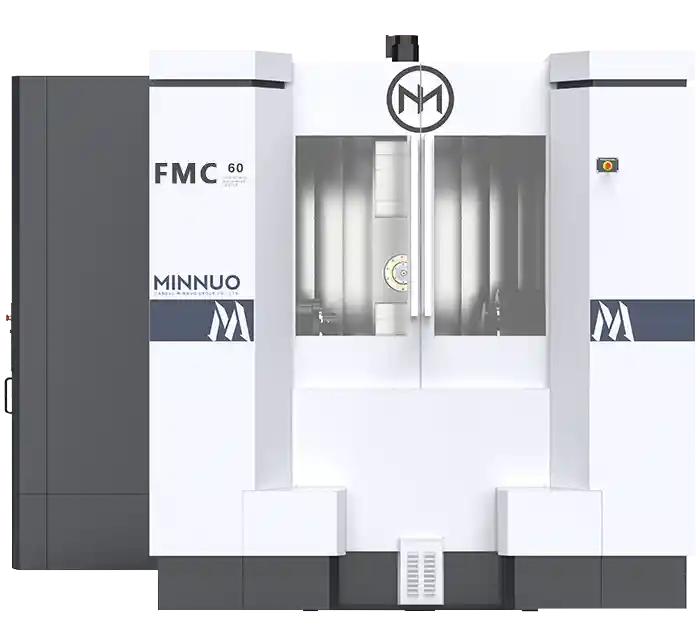
The horizontal machining center, an advanced CNC system evolved from horizontal milling machines, combines milling capabilities with integrated tools such as automatic tool changers and measurement systems. Its hallmark modular design features a horizontally mounted spindle, enabling 4-5-axis coordinated machining through CNC or universal rotary tables. These centers typically feature tool magazines with 40,60,90, or even 120 tool slots, supporting operations like milling, boring, drilling, tapping, turning, and 3D surface machining. The HMC-1000 model by Dalian Zhuangzhong CNC exemplifies this precision, delivering spindle speeds of 45-6000rpm and ±0.008mm positioning accuracy, showcasing the cutting-edge precision of modern horizontal machining centers.
2 Comparison of Structural Design and Technical Parameters
2.1 Differences in Main Structural Components
The horizontal milling machine features a relatively simple structure, primarily consisting of the bed, spindle housing, worktable, and lifting table. The bed is typically constructed from high-strength cast iron, with rectangular guide rails designed and equipped with plastic bonding technology to enhance wear resistance. The spindle housing is fixedly installed, and the spindle transmits power through a gear speed-changing system, generally offering 18-speed adjustment with a speed range of 40-1500 r.p.m. The worktable can move along longitudinal, transverse, and vertical directions, though the axes typically do not employ closed-loop control systems.
Horizontal machining centers feature a more complex structure, incorporating key modules such as an automatic tool changer system, CNC system, and automatic cooling system, in addition to the basic bed, spindle housing, and worktable. The bed is cast using mineral casting technology, offering excellent rigidity and vibration resistance. The spindle housing houses an electric spindle directly driven by a motor, enabling stepless speed adjustment. All motion axes utilize high-precision ball screws and linear rolling guides, equipped with full closed-loop grating scale control and thermal deformation compensation technology to ensure high-precision positioning. Taking the Grm-1250HP-D horizontal machining center as an example, its X-axis travel reaches 2000mm, with a repeat positioning accuracy of ±0.003mm, significantly surpassing that of conventional horizontal milling machines.
2.2 Spindle System and Tool Management
The spindle system of a horizontal milling machine is relatively simple, with spindle taper holes typically measuring ISO50# or similar specifications. Tool changes require manual operation, resulting in lower efficiency. In contrast, the spindle system of a horizontal machining center is more complex and precise, featuring a spindle diameter exceeding 130mm and rotational speeds reaching 4000-6000r/min. The main motor power generally ranges from 18.5kW to 26kW.
The tool management system stands out as one of the most significant differences between the two. Horizontal machining centers are equipped with disc or chain tool magazines, enabling automatic tool storage and retrieval. For instance, the Dalian Zhuangzhong horizontal machining center features a 24-tool magazine with a tool change time of just 5.5 seconds. In contrast, the Grm-1250HP-D model from GEMMA CNC Technology boasts a 60-tool magazine, supporting tools up to 500mm in length and 18kg in weight. This automated tool change function significantly boosts machining efficiency, particularly advantageous for complex part processing requiring frequent tool switching.
2.3 Control System and Automation Level
Horizontal milling machine is usually controlled by traditional mechanical control or simple numerical control system, and its control function is mainly focused on the basic motion trajectory control.
In contrast, horizontal machining centers utilize advanced computer numerical control (CNC) systems, featuring enhanced data processing capabilities and sophisticated control functions. Modern horizontal machining centers' CNC systems not only enable multi-axis coordinated control but also incorporate advanced functionalities such as automatic measurement, error compensation, and fault diagnosis. Users can achieve automated machine control simply by programming the machining process through specialized software, significantly reducing reliance on operator skills while improving the consistency of machining precision.
3 Analysis of Processing Capability and Application Scenarios
3.1 Processing Accuracy and Stability
Horizontal machining centers demonstrate significant advantages in machining precision. Equipped with fully closed-loop control systems and thermal deformation compensation technology, they achieve superior positioning accuracy and repeat positioning accuracy. A typical horizontal machining center can achieve a positioning accuracy of 0.005mm and a repeat positioning accuracy of ±0.003mm. In contrast, traditional horizontal milling machines, constrained by their mechanical structures and control methods, typically exhibit precision levels one order of magnitude lower.
Furthermore, the structural design of horizontal machining centers provides enhanced resistance to cutting forces and thermal deformation. With the spindle axis aligned perpendicular to the worktable, components such as the spindle housing, column, and spindle experience more uniform stress distribution, resulting in reduced thermal deformation. This is particularly critical for maintaining machining accuracy in large and heavy-duty parts. Additionally, horizontal machining centers enable real-time monitoring of various parameters during processing and utilize an automatic compensation system to correct errors, ensuring stability throughout extended machining operations.
3.2 Processing Efficiency and Flexibility
Horizontal machining centers demonstrate a decisive advantage in processing efficiency, primarily due to their automatic tool-changer system, high-speed spindle, and multi-axis coordination capability. Research indicates that for complex box-type parts, horizontal machining centers can achieve 3-5 times higher efficiency compared to traditional horizontal milling machines.
In terms of flexibility, horizontal machining centers can quickly adapt to different part processing requirements through modular design and programmable control systems. When changing workpieces, simply invoking the corresponding machining programs and tools significantly reduces adjustment time. In contrast, horizontal milling machines require extensive manual adjustments each time workpieces are changed, resulting in low efficiency.
It is worth noting that horizontal machining centers are typically equipped with dual worktables or multi-station rotary tables. For instance, the Grm-1250HP-D model features a dual worktable system, enabling the clamping of one workpiece while the next is being processed on the other worktable, thereby enhancing equipment utilization.
3.3 Comparison of Applicable Processing Scope
Horizontal milling machines are primarily designed for machining relatively simple shapes such as flat surfaces, inclined planes, grooves, and gear profiles. When equipped with accessories like indexing heads, they can also handle basic curved surfaces and gear processing. However, their limited functionality often requires multiple clamping operations or multi-machine setups when processing complex geometries or parts requiring combined operations, which compromises both machining accuracy and efficiency.
Horizontal machining centers are particularly suited for processing complex box-shaped components, molds, and multi-faceted workpieces. With multi-axis coordination capabilities (typically 4-5 axes), they can machine intricate surfaces and inclined holes. For instance, CNC horizontal milling and boring machines support planar and curved surface milling, as well as interpolation milling, enabling simultaneous machining of five surfaces in a single setup. This significantly enhances the precision and efficiency of manufacturing complex parts.
3.4 Industry Application Differences
The horizontal milling machine is still widely used in small and medium-sized machining workshop, maintenance workshop and educational institution because of its simple structure, easy operation and low investment cost. It is suitable for small batch and multi-variety production mode or as auxiliary equipment in mass production.
Horizontal machining centers are primarily used in industries with stringent precision and efficiency requirements, such as aerospace, automotive manufacturing, precision molds, and energy equipment. These sectors frequently require processing complex components like engine blocks, cylinder heads, transmission housings, and impellers. Such tasks demand exceptional equipment capabilities, and only horizontal machining centers can meet these demands. For instance, in aircraft engine component manufacturing, horizontal machining centers can complete the entire process from rough machining to finishing, ensuring exceptional dimensional and positional accuracy.
4 Analysis of Investment Return and Operating Cost
4.1 Initial Investment and Operating Costs
The initial investment for a horizontal milling machine is significantly lower than that for a horizontal machining center. A standard horizontal milling machine typically costs only one-third to one-fifth of a comparable horizontal machining center. Additionally, horizontal milling machines require relatively less in terms of factory infrastructure and energy supply, further reducing the total investment cost.
From a long-term operational cost perspective, horizontal machining centers demonstrate significant advantages in mass production. Their high automation level substantially reduces labor requirements, allowing a single operator to manage multiple machines simultaneously. It is estimated that under suitable production scales, horizontal machining centers can recoup the cost difference compared to horizontal milling machines within 2-3 years.
4.2 Production Efficiency and Economic Benefits
In terms of production efficiency, horizontal machining centers can significantly reduce processing time, minimize equipment adjustments and workpiece clamping frequency, thereby lowering unit production costs. This advantage becomes particularly pronounced in batch production.
Moreover, horizontal machining centers produce parts with superior consistency and precision, reducing scrap rates and subsequent finishing requirements, thereby enhancing economic efficiency. Studies indicate that under optimal production conditions, the return on investment for horizontal machining centers can exceed that of horizontal milling machines by over 30%.
5 Technical Development Trends and Selection Recommendations
5.1 Development Trends of Horizontal Machining Equipment
Horizontal machining equipment is currently evolving toward multifunctional integration, intelligent automation, and eco-friendly designs. Traditional CNC horizontal milling machines are being phased out in favor of versatile compound machining centers. Modern models not only combine core functions like milling, drilling, boring, and tapping, but are also advancing into advanced hybrid systems that integrate turning-milling operations and combine additive with subtractive manufacturing technologies.
Intelligentization represents another pivotal trend. The next-generation horizontal machining centers are equipped with adaptive control systems and predictive maintenance (PHM) technologies, enabling real-time parameter adjustments based on machining conditions. These systems can forecast tool wear and equipment failures, thereby maximizing equipment utilization and machining reliability.
5.2 Professional Recommendations for Equipment Selection
When selecting a horizontal milling machine or a horizontal machining center, enterprises should consider the following factors:
- Processing requirements: For simple planar and groove machining with small batch sizes and low precision requirements, a horizontal milling machine may be the most economical choice. However, for complex box-shaped parts requiring high precision and efficiency, a horizontal machining center should be selected.
- Investment budget: When the budget is limited, the horizontal milling machine is a more suitable choice; when the budget is sufficient and long-term returns are pursued, the horizontal machining center is a better option.
- Technical support: Horizontal machining centers require specialized technical support teams with expertise in programming, maintenance, and fault diagnosis. Companies should assess their technical capabilities to ensure optimal equipment performance.
- Production scale: Small batch and multi-variety production may be more suitable for horizontal milling machine, while large batch and high-tap production is more suitable for horizontal machining center.
Conclusion
As two essential types of equipment in mechanical processing, horizontal milling machines and horizontal machining centers each have distinct positioning and application scenarios. With advantages like simple structure, easy operation, and low investment costs, horizontal milling machines will continue to play a vital role in simple part processing and education training. Meanwhile, horizontal machining centers, characterized by high precision, efficiency, and automation, serve as indispensable tools in advanced manufacturing.
With the continuous advancement of manufacturing technology, traditional horizontal milling machines may gradually be replaced by horizontal machining centers in market share, though this transition will be gradual. Smart enterprises should scientifically and rationally select equipment based on their product characteristics, production scale, and technical capabilities, fully leveraging the advantages of various devices to gain a competitive edge in the fierce market competition.
 Email
Email sales1: +86 15312799623