



How to Choose the Right CNC Milling Machine: A Complete Buyer's Guide
When it comes to investing in a CNC milling machine, there's no “one-size-fits-all” solution. Whether you're a small workshop owner just starting out, a manufacturer scaling up production, or a buyer tasked with upgrading your facility's equipment, choosing the right CNC milling machine requires careful consideration of your specific needs, budget, and long-term goals.
This complete buyer's guide cuts through the jargon, focuses on practical factors, and walks you through every step of selecting a CNC milling machine that aligns with your production requirements—no unnecessary technical fluff, just the information you need to make a smart, profitable decision.
Why Choosing the Right CNC Milling Machine Matters
A CNC milling machine is a significant investment, and the wrong choice can lead to wasted money, inefficient production, and missed deadlines. The right machine, however, will boost precision, reduce labor costs, increase output, and grow your bottom line. Whether you're machining simple parts or complex components, the key is to match the machine's capabilities to your actual production needs—not overspend on features you'll never use, and not cut corners on specs that matter.
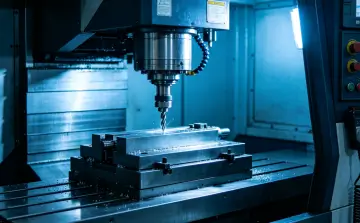
Step 1: Define Your Production Needs (The Most Critical Step)
Before you start comparing brands or prices, you need to clearly outline what you'll be using the CNC milling machine for. This step eliminates guesswork and narrows down your options. Ask yourself these practical questions:
What Parts Will You Machine?
- Simple parts (e.g., flat plates, basic holes, straight cuts): A standard 3-axis vertical CNC milling machine (VMC) will likely suffice. These machines are affordable, easy to operate, and ideal for small to medium-sized batches.
- Complex parts (e.g., 3D contours, curved surfaces, multi-sided components): You'll need a 4-axis or 5-axis machine. 4-axis machines add a rotary axis for cylindrical parts (e.g., flanges, shafts), while 5-axis machines offer full flexibility for aerospace, medical, or mold components.
- Heavy-duty parts (e.g., large mold bases, thick steel components): A horizontal CNC milling machine (HMC) or bed-type machine is better suited for heavy cutting and large workpieces, as they offer greater stability and rigidity.
What Materials Will You Work With?
The material you machine directly impacts the machine's required specs:
- Soft materials (aluminum, plastic, wood): Prioritize a machine with a high spindle speed (10,000 RPM or higher) for clean, fast cuts. You won't need as much spindle power.
- Hard materials (steel, stainless steel, titanium): Look for a machine with high spindle power (15 HP or more) and robust construction to handle heavy cutting loads. A lower spindle speed (5,000–8,000 RPM) is sufficient for these materials.
What's Your Production Volume?
- Low volume (prototypes, custom parts, small batches): A 3-axis VMC with a manual tool changer is cost-effective. You won't need advanced automation features.
- High volume (mass production): Opt for a machine with an automatic tool changer (ATC), pallet changer, or even a robotic loading system to minimize downtime. Horizontal machines or 5-axis machines are often better for high-volume production.
Step 2: Understand Key Machine Specs (What to Prioritize)
Once you've defined your needs, it's time to evaluate machine specs. Don't get overwhelmed by every technical detail—focus on these critical factors that directly impact performance and usability:
1. Axis Configuration
- 3-axis: X, Y, Z axes—best for beginners and simple parts. Most affordable and easy to program.
- 4-axis: 3 linear axes + 1 rotary axis (A-axis or B-axis)—ideal for cylindrical parts and parts that require multi-sided machining without re-clamping.
- 5-axis: 3 linear axes + 2 rotary axes—for complex, high-precision parts. More expensive but eliminates the need for multiple setups, saving time.
2. Spindle Specs
The spindle is the “heart” of the CNC milling machine—its power and speed determine what you can machine:
- Spindle power: Measured in HP (horsepower) or kW. For soft materials, 5–10 HP is enough; for hard materials, 15+ HP is recommended.
- Spindle speed: Measured in RPM (rotations per minute). Higher RPM is better for soft materials; lower RPM with more torque is better for hard materials.
- Spindle taper: Common types include BT30, BT40, and BT50. BT40 is the most versatile for small to medium machines; BT50 is for heavy-duty machines.
3. Worktable Size & Travel
Ensure the machine's worktable can accommodate your largest workpiece:
- Worktable size: Measure the length and width of your largest workpiece, then choose a table that's slightly larger (add 6–12 inches for clamping space).
- Axis travel: X, Y, Z travel distances determine how large a part you can machine. For example, a 3-axis VMC with 30” X, 16” Y, 20” Z travel can handle larger parts than one with 20” X, 12” Y, 16” Z travel.
- Maximum workpiece weight: Don't exceed the machine's weight capacity—this can damage the table, linear guides, and spindle.
4. CNC Controller
The controller is the “brain” of the machine—choose one that's reliable and easy to use:
- Popular, reliable brands: Fanuc, Mitsubishi, Syntec, and Haas are industry standards. These controllers have user-friendly interfaces, good technical support, and widespread compatibility with CAD/CAM software.
- Features to look for: USB connectivity (for easy program transfer), touchscreen interface, and built-in tool compensation. For beginners, a simple, intuitive controller is better than one with too many advanced features.
5. Automation Features (Optional but Useful)
Automation can save time and reduce labor costs, but it adds to the price. Consider these features based on your production volume:
- Automatic Tool Changer (ATC): Switches tools automatically, eliminating manual tool changes. Ideal for high-volume production or parts that require multiple tools.
- Pallet Changer: Allows you to load/unload workpieces while the machine is running, reducing downtime.
- Robotic Loading/Unloading: For mass production, robots can load workpieces into the machine and unload finished parts, minimizing human intervention.
Step 3: Set a Realistic Budget (Don't Overspend or Cut Corners)
CNC milling machines range in price from $10,000 (small 3-axis VMC for beginners) to $500,000+ (high-end 5-axis HMC for industrial use). Your budget should include more than just the machine's purchase price—factor in these hidden costs:
- Shipping and installation: Large machines require specialized shipping and professional installation, which can cost 10–15% of the machine's price.
- Tooling: Cutting tools, holders, and collets can add $1,000–$5,000+ to your initial investment.
- Software: CAD/CAM software (e.g., Mastercam, SolidWorks) is needed to create part designs and G-code. Subscription costs range from $500–$2,000 per year.
- Maintenance and repairs: Regular maintenance (lubrication, calibration) and unexpected repairs can add up. Budget 5–10% of the machine's price per year for maintenance.
- Training: If your team is new to CNC milling, you'll need training for operators and programmers. Training costs range from $500–$2,000 per person.
Pro tip: It's better to invest in a slightly more expensive machine that meets all your needs than to buy a cheaper machine that can't handle your production or requires frequent upgrades.
Step 4: Choose a Reliable Manufacturer & Supplier
The manufacturer and supplier you choose are just as important as the machine itself. A reliable supplier will provide quality equipment, technical support, and after-sales service—critical for minimizing downtime and maximizing your investment.
Look for these qualities in a manufacturer/supplier:
- Good reputation: Check online reviews, customer testimonials, and industry ratings. Avoid suppliers with a history of poor quality or slow customer service.
- Stable quality: Choose manufacturers with a proven track record of building durable, precise machines. Ask for references from customers in your industry.
- Spare parts availability: Ensure the supplier has a stock of spare parts (e.g., linear guides, ball screws, spindle components) to avoid long wait times for repairs.
- Technical support: Look for suppliers that offer 24/7 technical support, on-site service, and training. This is especially important if you're new to CNC milling.
- Warranty: A good warranty (1–3 years) covers defects in materials and workmanship. Avoid suppliers with no warranty or short warranty periods.
Step 5: Test the Machine (If Possible)
Before making a final purchase, ask the supplier to demonstrate the machine or let you test it with your own workpiece. This allows you to:
- Verify the machine's precision and accuracy (measure the finished part to ensure it meets your tolerances).
- Test the machine's speed and efficiency (see how long it takes to machine a part).
- Evaluate the controller's ease of use (ensure your team can learn to operate it quickly).
- Check for noise, vibration, or other signs of poor quality.
If testing in person isn't possible, ask for a video demonstration or sample parts machined by the machine.
Common Mistakes to Avoid When Buying a CNC Milling Machine
- Buying more machine than you need: Don't overspend on a 5-axis machine if you only need to machine simple 3-axis parts.
- Cutting corners on quality: A cheap, low-quality machine will cost more in the long run due to frequent breakdowns and poor performance.
- Ignoring after-sales service: A machine is only as good as the support behind it. Avoid suppliers with no technical support or spare parts.
- Forgetting hidden costs: Budget for shipping, installation, tooling, and training—these can add 20–30% to the machine's price.
- Not considering future growth: Choose a machine that can grow with your business. For example, if you plan to expand into complex parts, a 4-axis machine may be a better investment than a 3-axis machine.
Final Thoughts
Choosing the right CNC milling machine is a decision that will impact your business for years to come. By defining your production needs, prioritizing key specs, setting a realistic budget, and choosing a reliable supplier, you can select a machine that boosts efficiency, precision, and profitability.
Remember: There's no perfect machine—only the perfect machine for your needs. Take your time, do your research, and don't hesitate to ask questions. With the right approach, you'll invest in a CNC milling machine that delivers value for years to come.
 Email
Email sales1: +86 15312799623