



Slant-Bed CNC Lathe Maintenance for Medical Device Metal Parts
A practical maintenance program connects machine condition, cutting-fluid control, and post-repair checks with the requirements of the parts being produced. Good records help the shop identify affected batches, resolve issues, and return equipment to production confidently.
Why Maintenance Matters in Medical Device Machining
Slant-bed CNC lathes produce metal connectors, surgical instrument components, and parts associated with orthopedic implants. Maintenance affects more than machine uptime: it can also influence dimensional consistency, surface condition, and cleanliness.
A well-managed program helps the shop:
- Detect machine issues before they affect a production batch.
- Control cutting-fluid and lubricant contamination.
- Trace repairs to the equipment and parts involved.
- Confirm that the machine and product meet acceptance criteria after repair.
How Does the U.S. QMSR Apply to Component Suppliers?
The U.S. FDA’s Quality Management System Regulation (QMSR) took effect on February 2, 2026, incorporating relevant requirements from ISO 13485:2016 by reference. Source: FDA
The regulation generally does not directly apply to manufacturers of ordinary parts of finished devices. However, some components may be considered finished devices or accessories. Suppliers should also review the requirements in their customer contracts and quality agreements. Source: FDA 2026 inspection manual
Maintenance Records, Cutting Fluid, and Post-Repair Checks
Maintenance Priorities by Application
| Application | Main concerns | Maintenance focus |
|---|---|---|
| Surgical instrument components | Fit, surface condition, machining residue | Check workholding, cutting fluid, and affected dimensions after repair |
| Medical-device connectors and housings | Threads, fit, batch consistency | Link maintenance records to production batches and inspect affected features |
| Orthopedic implant-related components | Product-specific dimensions, surface and cleanliness | Confirm cleaning responsibilities and applicable acceptance requirements |
For each machine, use the manufacturer’s documentation and the part’s approved production requirements to establish maintenance and inspection criteria.
Choosing a Slant-Bed CNC Lathe
The MN CNC slant-bed CNC lathe range includes the MNT36A and MNT46A, which the supplier lists for applications involving precision medical parts or medical device components.
When assessing a model, request the delivered machine’s maintenance schedule, lubricant specifications, coolant-system details, parameter backup procedure, and equipment acceptance documentation. The suitability of the complete machining process should then be assessed against the part and customer requirements.
What Should Maintenance Records Include?
| Record | Information to capture |
|---|---|
| Equipment | Model, serial number, configuration, and location |
| Maintenance plan | Task, interval, trigger, and responsible person |
| Repair order | Fault, work performed, replacement parts, materials, personnel, and date |
| Production linkage | Work orders, batches, downtime, and last documented in-control state |
| Acceptance | Checks performed, measuring equipment, results, deviations, and approval |
| Changes | Relevant changes to parts, parameters, lubricants, or cutting fluid |
When a problem is discovered, use the last documented in-control state and the possible onset of the issue to assess which batches may be affected.
How Should Cutting Fluid and Cleanliness Be Managed?
Approved work instructions should address:
- Fluid selection: Identify the approved fluid, compatible materials, and substitution rules.
- Monitoring: Check concentration, level, appearance, and contamination according to the supplier’s and factory’s procedures.
- Maintenance: Record top-ups, tank cleaning, fluid changes, filtration, and corrective actions.
- Part cleaning: Define cleaning, sampling, and acceptance methods for the specific part and downstream process.
- Changes: Assess the effect of changing cutting fluid, lubricant, or cleaning method on the material and finished part.
Cutting-fluid concentration and part cleanliness are different checks. A concentration reading alone cannot verify residual oil, particles, or other contaminants on a part.
For orthopedic implants, assess whether ISO 19227:2018 applies. It covers cleanliness and cleaning validation for orthopedic implants. The supplier and customer should agree on the delivery condition, cleaning responsibilities, contaminants of concern, and acceptance criteria. ISO indicates that the standard is expected to be revised, so check its status when preparing the production plan.
What Checks Are Needed After a Repair?
The checks should reflect what was repaired and how the work could affect the product.
| Check | Purpose | Examples |
|---|---|---|
| Equipment function | Confirm that the repaired system operates correctly | Leak checks, coolant flow, safety-function checks |
| Product inspection | Check features that may have been affected | Dimensions, surface condition, or cleanliness |
| Process revalidation | Confirm a validated process where the impact assessment requires it | Testing defined by the change and quality procedure |
A practical release sequence is:
Record the repair → assess its impact → perform the required checks → resolve deviations → obtain authorized release.
Example: Returning a Lathe to Production After Coolant-Pump Repair
The following is a hypothetical example.
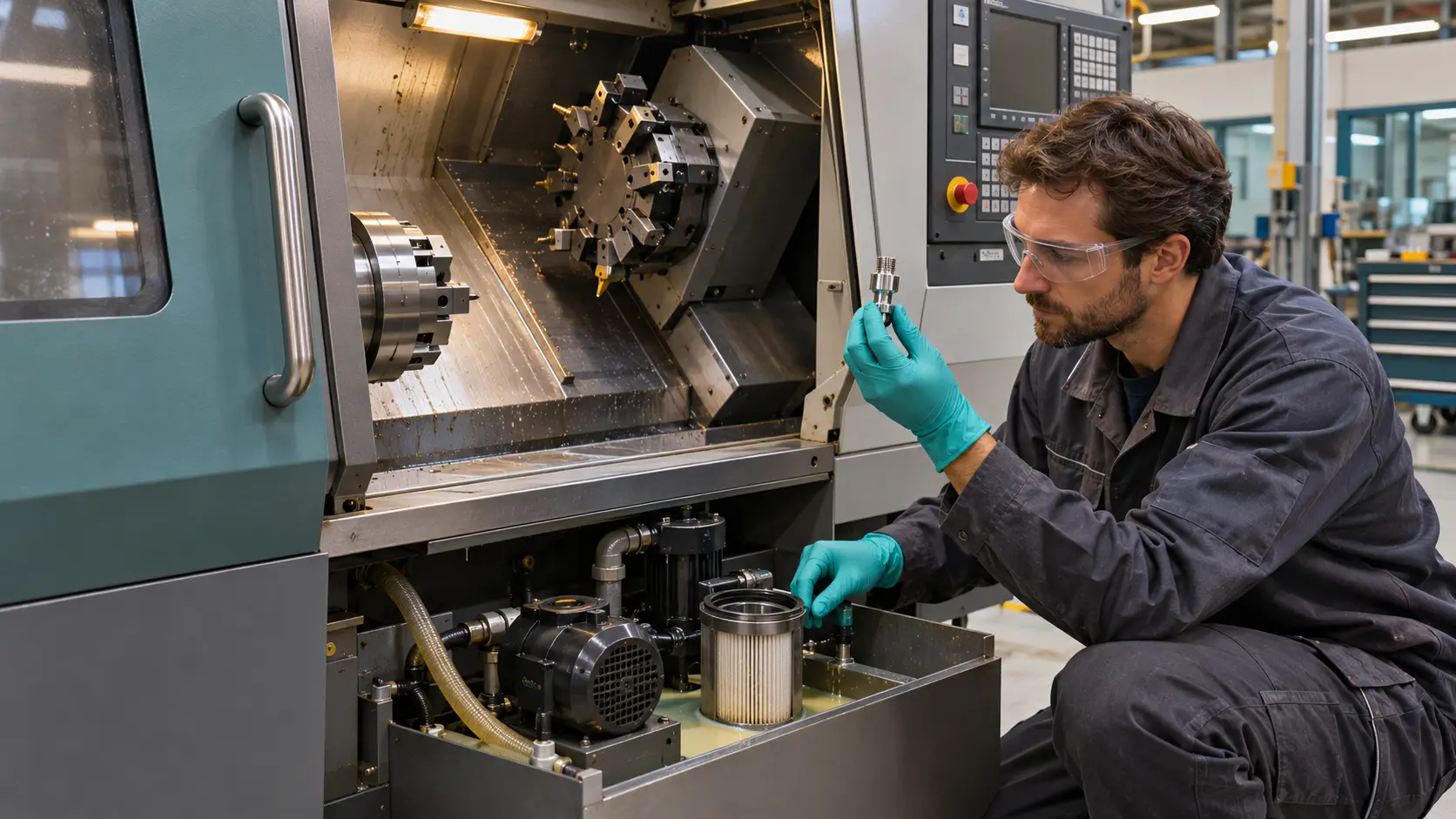
A shop machining metal connectors for a medical device stops a lathe after a coolant-pump failure. Maintenance replaces the pump and cleans the associated piping.
Before production resumes, the team:
- Identifies potentially affected work orders and batches.
- Records the pump part number, materials, and maintenance work.
- Checks coolant-system operation and assesses contamination risk.
- Inspects the relevant characteristics of a trial-cut part under the approved plan.
- Determines whether further validation is needed and obtains release approval.
The same records can later be used to review repair downtime and acceptance results.
Medical Device Machining Maintenance FAQ
Must a Component Supplier Be ISO 13485 Certified?
Not in every case. Review the applicable market requirements, the organization’s role, and customer contracts. ISO states that the standard itself does not require third-party certification, although a customer may require it. Source: ISO
Can Production Resume After the First Part Passes Inspection?
A first-part inspection may be one part of acceptance. Depending on the repair, the shop may also need equipment checks, cleanliness confirmation, or further validation.
Should a Same-Part Replacement Be Recorded?
Yes, record the repair and part used under the factory procedure. The need for additional approval depends on the work and its potential impact.
Does Correct Cutting-Fluid Concentration Mean a Part Is Clean?
No. Concentration monitoring does not measure all part residues or particles. Follow the part’s cleaning and inspection plan.
Is a Machine Alarm the Only Reason to Perform Post-Repair Checks?
No. Complete the checks specified for the repair even when the machine runs without an alarm.
Machine Selection and Maintenance Support
Factories evaluating a slant-bed CNC lathe for medical device metal parts can review the MN CNC slant-bed CNC lathe range and compare configurations against workpiece material, dimensions, volume, and downstream cleanliness requirements.
Before purchase, ask the supplier about maintenance documentation, coolant-system configuration, parameter backup, critical spare parts, and service support.
 Email
 sales1: +86 15312799623