



Gantry Machining Center Common Fault Diagnosis and Troubleshooting Methods | How to Fix Inaccuracy
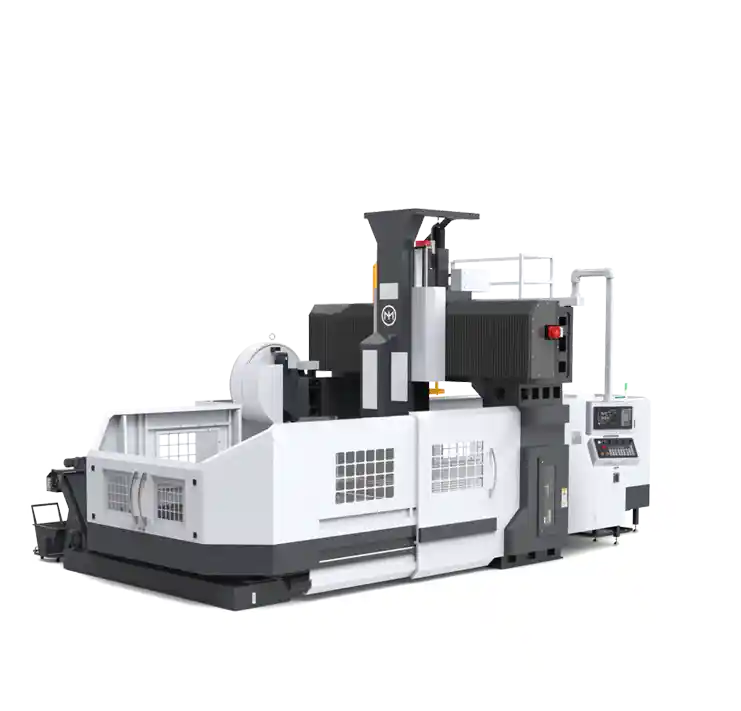
Gantry machining centers are the core equipment in modern precision manufacturing, playing an irreplaceable role in aerospace, automotive parts, and large-scale mold processing. However, during long-term high-load operation, faults such as gantry machining center alarms, precision deviations, and abnormal noises often occur, which seriously affect production efficiency and product quality. For technical personnel, mastering professional machining center fault maintenance skills and efficient troubleshooting ideas is crucial.
This article focuses on the most common faults of gantry machining centers, including precision inaccuracy, abnormal noise, overload alarms, etc., and provides step-by-step troubleshooting ideas and practical solutions. It helps you quickly locate problems, solve faults, and maximize the stable operation of equipment.
1. Precision Deviation: How to Fix Inaccuracy of Gantry Machining Center?
Precision is the core advantage of gantry machining centers. Once precision deviation occurs, it will directly lead to unqualified products. Many technical personnel often ask " What to do if the precision is inaccurate " when facing this problem. Let’s analyze the causes and troubleshooting methods in detail.
1.1 Common Causes of Precision Deviation
- Wear or looseness of guide rail and ball screw
- Inaccurate tool setting or excessive tool wear
- Unstable workpiece clamping or deformation
- Abnormal temperature rise of equipment, leading to thermal deformation
- Deviation of CNC system parameters
1.2 Step-by-Step Troubleshooting Ideas
1.2.1 Preliminary Inspection: First, confirm whether the precision deviation is universal or only occurs in specific processing procedures. Check the processing program to eliminate errors caused by programming. At the same time, verify the tool setting data to ensure that the tool length compensation and radius compensation values are correct.
1.2.2 Check Tool and Workpiece: Inspect the tool for wear, chipping, or deformation. Replace the tool if necessary and re-set the tool. Then check the workpiece clamping status: whether the fixture is loose, whether the clamping force is too large (causing workpiece deformation), and re-clamp the workpiece to ensure stability.
1.2.3 Inspect Guide Rail and Ball Screw: Stop the machine, cut off the power, and check the guide rail and ball screw for wear, scratches, or oil shortage. Use a dial indicator to detect the backlash of the ball screw. If the backlash exceeds the standard, adjust the preload of the nut; if there is serious wear, replace the ball screw or guide rail slider. At the same time, ensure that the lubrication system is working normally and add lubricating oil of the specified model.
1.2.4 Check Temperature and System Parameters: Measure the temperature of the spindle, guide rail, and motor. If the temperature rises abnormally, check the cooling system (cooling water pressure, flow rate, coolant quality) and ensure that the cooling system is unblocked. If the temperature is normal, enter the CNC system parameter interface to check whether the geometric compensation parameters (such as pitch compensation) are deviated. Restore the parameters to the standard value according to the equipment manual, or re-perform the precision calibration.
1.3 Solution Summary
For precision deviation faults, the troubleshooting should follow the principle of "from simple to complex". First, eliminate programming and tool setting errors, then check the clamping status of workpieces and tools, and finally inspect mechanical components and system parameters. Regular maintenance (such as lubrication, cleaning, and precision calibration) can effectively reduce the occurrence of precision deviation faults.
2. Overload Alarm: Common Causes and Troubleshooting of Gantry Machining Center Alarm
Overload alarm is one of the most frequent gantry machining center alarms. When the alarm occurs, the machine tool will stop running immediately, which seriously affects production progress. The overload alarm is usually related to excessive load of the spindle or feed axis, abnormal transmission, etc.
2.1 Common Causes of Overload Alarm
- Excessive cutting parameters (too high spindle speed, too large feed rate, too deep cutting depth)
- Jamming of transmission components (such as guide rail, ball screw, or spindle bearing)
- Abnormal motor operation (insufficient motor power, motor overheating)
- Fault of the overload protection device itself
2.2 Step-by-Step Troubleshooting Ideas
2.2.1 Check Alarm Information: First, view the specific content of the overload alarm on the CNC system interface, confirm whether it is spindle overload or feed axis overload, and record the alarm code (which can be queried in the equipment manual for preliminary positioning).
2.2.2 Adjust Cutting Parameters: If the alarm occurs at the beginning of processing, it is likely that the cutting parameters are unreasonable. Reduce the feed rate, lower the spindle speed, or reduce the cutting depth appropriately, and then test run. If the alarm is eliminated, it means the problem is caused by excessive cutting load.
2.2.3 Inspect Transmission Components: If adjusting parameters does not work, stop the machine and cut off the power. Check whether the guide rail, ball screw, and spindle bearing are jammed or stuck. For the feed axis, manually push the slide to check whether the movement is smooth; for the spindle, rotate the spindle by hand (ensure safety) to check for abnormal resistance. If jamming is found, clean the components, add lubricating oil, or replace worn parts (such as bearings).
2.2.4 Check Motor and Protection Device: Use a multimeter to check the motor circuit to ensure there is no short circuit or open circuit. Check the motor temperature: if the motor is overheated, it may be caused by a faulty motor or insufficient cooling. In addition, check the overload protection device (such as a thermal relay) to see if it is faulty or set incorrectly; adjust the protection parameters according to the equipment requirements or replace the faulty device.
3. Abnormal Noise: Troubleshooting and Solutions
Abnormal noise during the operation of the gantry machining center is often a precursor to mechanical faults. Timely troubleshooting can avoid more serious damage to the equipment. The abnormal noise mainly comes from the spindle, feed system, lubrication system, or cooling system.
3.1 Common Causes of Abnormal Noise
- Lack of lubrication in guide rail, ball screw, or spindle bearing
- Wear or damage of spindle bearing
- Looeness of mechanical connections (such as bolts, nuts)
- Abnormal operation of cooling fan or oil pump
3.2 Step-by-Step Troubleshooting Ideas
3.2.1 Locte the Noise Source: Start the machine tool and run it at no load first, then perform load processing, and judge the location of the abnormal noise (spindle, feed axis, electrical cabinet, etc.) by listening and observing. For example, noise from the spindle area may be related to spindle bearings; noise from the feed axis may be related to guide rails or ball screws.
3.2.2 Check Lubrication Status: Check the lubrication system of the equipment: whether the lubricating oil level is sufficient, whether the lubricating oil pump is working normally, and whether the lubricating oil pipeline is unblocked. If there is a lack of lubrication, add lubricating oil of the specified model immediately, and check whether the lubrication system is faulty (such as oil pump failure).
3.2.3 Inspect Mechanical Connections: Check all visible mechanical connection parts (such as bolts on the workbench, guide rail press plates, spindle end covers) for looseness. Use a torque wrench to re-tighten the loose bolts according to the specified torque to eliminate noise caused by vibration.
3.2.4 Check Spindle and Transmission Components: If the noise comes from the spindle, it is likely that the spindle bearing is worn or damaged. Disassemble the spindle for inspection, and replace the bearing if necessary. If the noise comes from the feed axis, check the ball screw and guide rail slider for wear; replace worn parts and adjust the preload.
3.2.5 Check Electrical and Auxiliary Components: Check the cooling fan in the electrical cabinet, the lubricating oil pump, and the cooling water pump for abnormal noise. If the fan or pump is faulty, replace it in time to avoid affecting the normal operation of the equipment.
4. Summary of Gantry Machining Center Fault Maintenance
The fault maintenance of gantry machining centers should adhere to the principles of "prevention first and timely troubleshooting". Regular maintenance (such as cleaning, lubrication, precision inspection, and parameter backup) can greatly reduce the occurrence of faults. When faults occur, technical personnel should first collect detailed fault information (such as alarm codes, noise location, and fault time), then follow the troubleshooting ideas from simple to complex, and avoid blind disassembly to prevent secondary damage to the equipment.
If you encounter more complex gantry machining center alarm or machining center fault maintenance problems (such as system crash, servo motor failure), it is recommended to contact professional after-sales technicians for processing. For more technical dry goods about gantry machining centers, please pay attention to our website.
 Email
Email sales1: +86 15312799623