



HEIDENHAIN vs FANUC for High-Speed Mold Machining: Accuracy, Surface Finish & Cycle Time
Choosing the right CNC controller can make a significant difference in high-speed mold machining. A well-optimized control system helps the machine follow complex tool paths smoothly, maintain consistent cutting conditions, and reduce unnecessary polishing.
HEIDENHAIN and FANUC are two established CNC brands used in precision machining. Both offer advanced technologies for high-speed milling, but they approach motion control, surface finishing, and machine integration differently.
HEIDENHAIN stands out for its milling-oriented programming environment, Advanced Dynamic Prediction (ADP), and Dynamic Precision functions. FANUC offers powerful contour processing through AI Contour Control, Fine Surface Technology, and advanced servo technologies.
For machine tool manufacturers, choosing between them comes down to three priorities: surface quality, contour accuracy, and machining productivity.
This comparison explores how both systems perform in mold manufacturing and which features matter most when developing high-speed CNC machining centers.
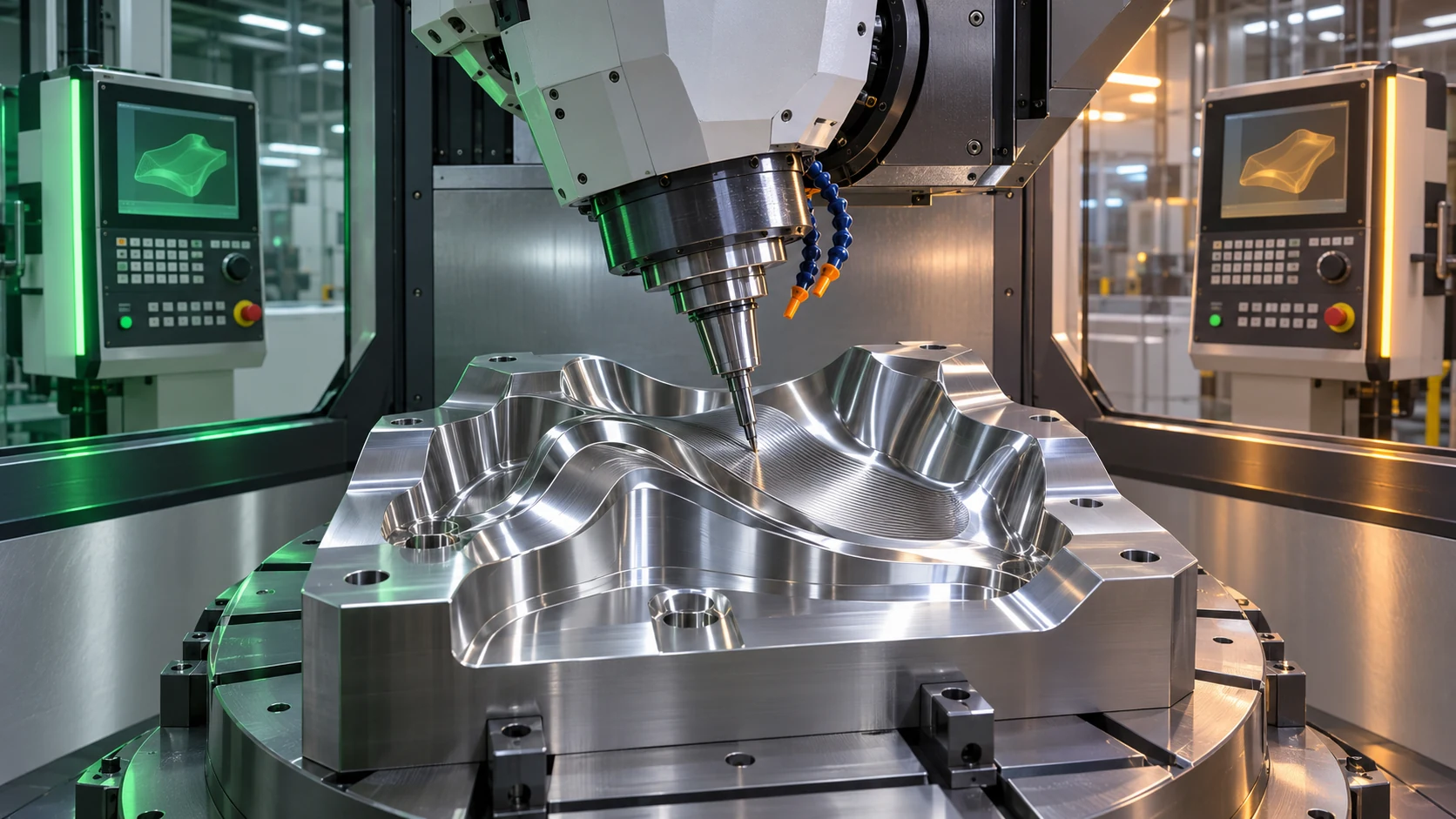
1. HEIDENHAIN vs FANUC: Which CNC Is Better for Mold Machining?
HEIDENHAIN TNC7 and TNC 640 are well suited to precision milling and complex surface machining. FANUC 30i-B Plus and 31i-B5 Plus are also capable platforms for high-performance machining centers.
Both systems provide advanced contour control, but their technologies and programming environments differ.
HEIDENHAIN TNC7 vs FANUC 31i-B5 Plus: Key Differences
| Feature | HEIDENHAIN | FANUC |
|---|---|---|
| Relevant CNC models | TNC7, TNC 640 | 30i-B Plus, 31i-B5 Plus |
| Motion planning | Advanced Dynamic Prediction (ADP) | AI Contour Control and Advanced Preview |
| Contour smoothing | Cycle 32 and ADP | Smooth Tolerance+ and Nano Smoothing |
| Dynamic performance | Dynamic Precision | Advanced servo control and compensation |
| Surface finishing | Smooth feed behavior and dynamic compensation | Fine Surface Technology |
| Five-axis machining | TCPM | TCP Control and Smooth TCP |
| Programming | Klartext and supported ISO programming | FANUC G-code |
| OEM integration | HEIDENHAIN control ecosystem | FANUC CNC, servo, spindle, and PMC ecosystem |
The technologies listed represent relevant product capabilities; exact features vary by CNC model and software package.
Which CNC Features Matter Most for Precision Mold Manufacturing?
A high-speed mold machining center must handle thousands of short tool-path movements without excessive changes in speed.
Three capabilities have the greatest influence on machining performance:
- Advanced motion planning: Maintains smooth axis movement through complex contours.
- Contour accuracy control: Balances machining speed with acceptable path deviations.
- Stable servo performance: Helps the machine follow programmed movements accurately.
HEIDENHAIN and FANUC both address these requirements through different control technologies.
The most suitable system depends on the mold application and the machine manufacturer's engineering priorities.
2. How CNC Motion Control Affects High-Speed Mold Machining
High-speed mold machining is more demanding than simply running the spindle at high RPM.
Complex mold cavities contain curved walls, narrow transitions, and freeform surfaces. CAM software converts these shapes into detailed machining paths.
The CNC must then transform those instructions into smooth axis movements.
Why Short CAM Tool Paths Cause Feed-Rate Fluctuations
During mold finishing, a CAM program may contain thousands or millions of short movement commands.
As the tool follows these segments, its direction changes continuously.
Without effective motion planning, the machine may repeatedly accelerate and decelerate.
This can lead to slower average feed rates and inconsistent cutting conditions.
For precision molds, these fluctuations may also contribute to visible tool marks.
Advanced CNC motion-control functions help reduce these interruptions and maintain smoother tool movement.
How Look-Ahead Control Improves Complex Contour Machining
Look-ahead control examines upcoming machining commands before they are executed.
Instead of reacting to each movement individually, the CNC plans how the machine should move through a sequence of contour segments.
This helps optimize:
- Feed-rate transitions.
- Axis acceleration and deceleration.
- Cornering behavior.
- Movement through complex curves.
- Overall machining efficiency.
HEIDENHAIN ADP and FANUC AI Contour Control are both relevant to this process.
Their goal is to improve contour execution while respecting the machine's dynamic limits.
Acceleration, Jerk, and Vibration in High-Speed Milling
Acceleration describes changes in axis velocity, while jerk describes changes in acceleration.
Sudden changes can excite machine vibrations, especially when the cutting tool changes direction rapidly.
A well-designed control strategy limits unnecessary motion disturbances without slowing the machine excessively.
This is particularly valuable during finishing, where vibration-related surface marks can increase polishing work.
3. HEIDENHAIN CNC Technologies for High-Speed Mold Finishing
HEIDENHAIN provides several advanced technologies for precision milling.
Among the most relevant for mold manufacturing are ADP, Cycle 32, and Dynamic Precision.
Together, these functions address motion planning, contour tolerance, and machine dynamics.
Advanced Dynamic Prediction (ADP): Smoother Motion for Complex Tool Paths
Advanced Dynamic Prediction improves how the CNC processes complex machining contours.
CAM-generated tool paths sometimes contain irregularly spaced points. This can cause variations in feed behavior as the machine follows the contour.
ADP anticipates upcoming movements and helps maintain smoother axis motion.
One useful application is bidirectional mold finishing.
When adjacent cutting passes contain different point distributions, ADP can help produce more consistent feed behavior and surface appearance.
For machine manufacturers specializing in precision molds, this technology is particularly relevant to complex freeform surfaces and detailed finishing operations.
Cycle 32 TOLERANCE: Balancing Contour Accuracy and Machining Speed
HEIDENHAIN Cycle 32 allows programmers to define a permitted contour tolerance.
The controller uses this value when calculating the machining path.
A tighter tolerance emphasizes geometric accuracy, while a more permissive tolerance gives the CNC greater freedom to smooth movements and maintain higher feed rates.
For example, roughing a mold cavity may allow more generous contour deviations than finishing a precision insert.
Cycle 32 gives programmers a practical way to adjust machining behavior according to the operation.
The programmed contour tolerance controls path processing; finished-part dimensions also depend on machine accuracy and cutting conditions.
Dynamic Precision: CTC, MVC, PAC, LAC, and MAC Explained
HEIDENHAIN Dynamic Precision includes technologies designed to improve machining performance by addressing different dynamic behaviors.
| Function | Main Purpose | Mold Machining Benefit |
|---|---|---|
| CTC — Cross Talk Compensation | Compensates acceleration-dependent position errors | Supports better contour accuracy |
| MVC — Machine Vibration Control | Reduces relevant machine oscillations | Helps reduce vibration-related surface marks |
| PAC — Position Adaptive Control | Adapts control behavior to axis position | Supports consistent machine performance |
| LAC — Load Adaptive Control | Responds to changing load conditions | Supports stable machine behavior |
| MAC — Motion Adaptive Control | Adapts control parameters to motion conditions | Improves applicable dynamic behavior |
These technologies are especially useful for machines that experience demanding acceleration patterns or changing dynamic conditions.
How AVD and FSC Help Control Machine Vibration
Within relevant Dynamic Precision implementations, MVC includes two vibration-control approaches.
AVD (Active Vibration Damping) helps suppress machine oscillations through active control.
FSC (Frequency Shaping Control) reduces excitation of certain vibration modes through frequency-shaped control signals.
These functions can improve movement stability and reduce some vibration-related marks on finished mold surfaces.
For OEMs developing high-speed machining centers, they offer additional ways to optimize machine behavior beyond conventional servo tuning.
4. FANUC CNC Technologies for High-Speed Mold Finishing
FANUC offers advanced contour-processing and servo-control functions for precision milling.
Its Fine Surface Technology combines technologies intended to improve the execution of complex machining paths and support high-quality surface finishing.
AI Contour Control and Advanced Preview for Complex Tool Paths
FANUC AI Contour Control is designed for high-speed, high-precision contour machining.
It processes upcoming movements and helps coordinate acceleration and deceleration through complex paths.
During mold finishing, this is useful when the CNC must execute numerous short CAM program blocks.
The technology supports smoother motion through curved surfaces and detailed contours.
For machine tool manufacturers, it is an important capability when designing machining centers for demanding milling applications.
Fine Surface Technology and Smooth Tolerance+ Control
FANUC Fine Surface Technology includes functions that improve contour processing and motion execution.
Smooth Tolerance+ Control is particularly relevant to mold finishing.
CAM programs often represent curved surfaces using small straight-line segments.
Smooth Tolerance+ can generate smoother paths from suitable segmented contours while respecting the permitted tolerance.
This helps reduce abrupt direction changes and improve the consistency of tool movement.
For complex mold cavities, smoother motion can contribute to more uniform surface texture and fewer visible transitions between tool-path segments.
Nano Smoothing vs Nano Interpolation: What Is the Difference?
Although their names are similar, Nano Smoothing and Nano Interpolation serve different purposes.
Nano Smoothing improves the smoothness of eligible programmed contours.
It is particularly useful when a CAM-generated path contains many small linear movements approximating a smooth surface.
Nano Interpolation provides high-resolution motion calculations within the CNC.
This helps the controller generate fine movement commands for the servo system.
For mold machining, Nano Smoothing addresses contour geometry, while Nano Interpolation concerns the precision of numerical motion calculations.
FANUC also offers Nano Smoothing II for applicable five-axis applications.
SERVO HRV+ Control and Its Role in Machining Stability
Servo performance determines how effectively machine axes follow commanded movements.
FANUC SERVO HRV+ Control provides advanced servo technologies intended to improve response and suppress relevant disturbances.
This can contribute to stable axis motion and consistent contour tracking.
For high-speed mold finishing, effective servo control complements the CNC's path-planning and smoothing functions.
The combination helps the machine execute complex programs more efficiently.
5. HEIDENHAIN vs FANUC: Which Delivers Better Surface Finish and Contour Accuracy?
Surface quality is often one of the most important requirements in mold manufacturing.
Injection molds, die-casting molds, and precision tooling may require smooth surfaces with minimal visible tool marks.
Both HEIDENHAIN and FANUC provide technologies that support these objectives.
How Tool-Path Smoothing Affects Mold Surface Quality
Tool-path smoothing reduces unnecessary changes in movement caused by segmented CAM geometry.
When the machine follows a smoother trajectory, axis motion becomes more consistent.
This can reduce certain types of surface marks and help maintain stable cutting conditions.
HEIDENHAIN uses technologies such as ADP and Cycle 32, while FANUC offers Smooth Tolerance+ and Nano Smoothing.
The resulting surface quality also depends on the tool path, cutting tool, machine rigidity, and machining parameters.
Ball-Nose Milling: How Stepover Influences Theoretical Cusp Height
Ball-nose end mills are widely used for finishing mold cavities.
One important factor in surface generation is the stepover between adjacent machining passes.
For ideal ball-nose finishing on a locally planar surface, theoretical cusp height can be calculated as:
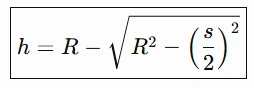
Where:
- (h) = theoretical cusp height.
- (R) = ball-nose tool radius.
- (s) = stepover distance.
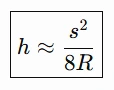
For small stepovers, the formula can be approximated by:
Example
A ball-nose end mill has a radius of 3 mm and a stepover of 0.20 mm.
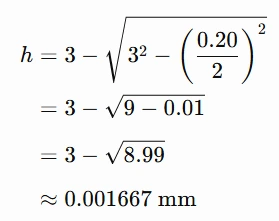
The theoretical cusp height is approximately 1.67 µm.
This value represents ideal geometric residual height, not measured surface roughness. Actual results are also influenced by tool contact geometry, runout, vibration, and cutting conditions.
The calculation illustrates why stepover selection matters even when using advanced CNC control systems.
CNC Motion Errors vs Machine Geometry and Tool Deflection
Several factors influence contour accuracy.
Motion errors occur when machine movements deviate from the intended trajectory.
Geometric errors result from machine-axis alignment, straightness, positioning, and rotary-axis geometry.
Tool deflection occurs when cutting forces bend the cutting tool.
Thermal errors arise when temperature changes affect the dimensions and alignment of machine components.
HEIDENHAIN Dynamic Precision addresses certain dynamic machine errors.
FANUC provides advanced servo and compensation technologies for controlling machine movement.
However, high contour accuracy also depends on suitable machine construction and calibration.
How to Measure Surface Roughness, Waviness, and Contour Accuracy
A professional mold machining evaluation should include several measurements.
| Measurement | What It Evaluates |
|---|---|
| Ra | Arithmetic mean surface roughness |
| Rz | Surface-profile height characteristics |
| Surface waviness | Longer-wavelength variations in surface geometry |
| Profile deviation | Differences between machined and nominal geometry |
| Servo following error | Axis tracking performance |
| Polishing time | Additional finishing effort |
A smooth surface is not necessarily a geometrically accurate surface.
For precision mold manufacturing, both surface quality and form accuracy should be evaluated.
6. HEIDENHAIN vs FANUC: Which Offers Faster Mold Machining Cycle Times?
Machining time directly influences the productivity of mold manufacturing.
However, the programmed feed rate does not always represent the actual cutting speed.
Why Programmed Feed Rate Differs from Actual Cutting Speed
A CAM program might specify a feed rate of 10,000 mm/min.
When the tool approaches a tight curve or a series of short segments, the machine may need to slow down.
Acceleration limits, contour tolerance, and machine dynamics influence how much of the programmed feed rate can be maintained.
Advanced look-ahead and smoothing functions help reduce unnecessary speed fluctuations.
This is one reason CNC motion-control technology can influence mold machining productivity.
How Contour Tolerance and Axis Dynamics Affect Cycle Time
Tighter contour tolerances generally restrict the amount of permissible path smoothing.
This may increase machining time in complex regions.
A more permissive tolerance can allow smoother motion and higher average feed rates.
Machine acceleration and servo performance also influence the result.
For a mold machining center, the best settings deliver the required contour quality without unnecessary cycle-time penalties.
Machining Time vs Polishing and Rework: Measuring Total Productivity
CNC cutting time is only part of the manufacturing process.
Molds may also require inspection, polishing, and additional finishing.
A simplified production-time model is:

A machining process that finishes faster but creates additional polishing work may not be the most efficient option.
For this reason, OEMs should evaluate both machining time and the quality of the finished surface.
7. HEIDENHAIN vs FANUC for 3-Axis and 5-Axis Mold Machining
Three-axis and five-axis machining centers have different motion-control requirements.
Both can be used for mold manufacturing, but the importance of specific CNC functions changes with the machine configuration.
CNC Requirements for High-Speed 3-Axis Mold Finishing
Three-axis mold finishing relies on coordinated X, Y, and Z movements.
The main control requirements include:
- Short-block program processing.
- Look-ahead control.
- Smooth contour interpolation.
- Stable feed-rate planning.
- Servo response.
- Dynamic vibration control.
HEIDENHAIN and FANUC both provide technologies suited to these requirements.
For three-axis mold machining centers, surface finish, contour accuracy, and actual cycle time are the most useful comparison criteria.
HEIDENHAIN TCPM vs FANUC TCP Control in 5-Axis Machining
Five-axis machining introduces rotary-axis movements and changes in tool orientation.
The CNC must coordinate these movements to maintain the intended cutting position.
HEIDENHAIN provides Tool Center Point Management (TCPM).
FANUC offers Tool Center Point Control (TCP) functions.
Both support coordinated five-axis movement using the machine's kinematic model.
These functions are particularly useful for complex mold surfaces where tool orientation changes during machining.
Correct axis configuration and kinematic calibration are essential for accurate five-axis motion.
How Rotary-Axis Motion Affects Surface Finish and Contour Accuracy
During simultaneous five-axis machining, rotary axes may accelerate or decelerate rapidly as tool orientation changes.
These movements can affect the machine's overall feed behavior.
Abrupt tool-orientation changes may contribute to motion irregularities or visible surface marks.
FANUC provides Smooth TCP-related functions for applicable five-axis configurations.
HEIDENHAIN uses TCPM together with its relevant motion-control technologies.
For machine manufacturers developing five-axis mold machining centers, smooth rotary-axis coordination is an important part of achieving consistent surface quality.
8. How to Benchmark HEIDENHAIN and FANUC CNC Performance
A meaningful CNC comparison should focus on measurable machining results.
For mold manufacturing, the most useful indicators are surface quality, dimensional accuracy, and production time.
Controller-Level Testing vs Complete Machine Tool Testing
Controller-level testing examines how the CNC processes motion commands.
Engineers can analyze feed-rate profiles, acceleration, contour smoothing, and servo tracking data.
Machine-level testing evaluates the complete machining center.
This includes the CNC, servo system, mechanical structure, spindle, cutting tool, and workpiece.
For OEM equipment selection, machine-level tests provide the most useful production evidence.
When comparing machines with different structures, test results should be interpreted as complete-machine performance rather than isolated controller performance.
ISO 230-4 and ISO 10791 Tests for Contour and Machining Accuracy
International standards provide established procedures for evaluating machine-tool performance.
| Standard | Main Application |
|---|---|
| ISO 230-4:2022 | Circular contouring performance |
| ISO 10791-6:2014 | Accuracy of speeds and interpolations |
| ISO 10791-7:2020 | Accuracy of finished machining test pieces |
| Application-specific mold test | Actual surface finish, geometry, and machining time |
ISO 10791-7:2020 includes a five-axis freeform test piece involving flank milling.
For mold-finishing applications, manufacturers can supplement standardized tests with representative mold cavities and freeform surfaces.
A Practical Mold Machining Benchmark for CNC OEMs
A useful benchmark should include several machining challenges:
- A concave mold cavity.
- A convex freeform surface.
- Steep wall transitions.
- Small curved features.
- A representative five-axis finishing region.
The test should use equivalent workpiece material, cutting-tool geometry, machining strategy, and quality requirements.
Both machines should be warmed up and checked before testing.
During machining, engineers should record actual cycle time and relevant operating conditions.
After cutting, the finished surfaces should be inspected for dimensional accuracy, surface roughness, waviness, and visible tool marks.
Repeated tests can help evaluate consistency.
CNC Performance Acceptance Criteria: Accuracy, Roughness, and Cycle Time
| Evaluation Item | Recommended Method |
|---|---|
| Dimensional accuracy | CMM or coordinate measurement |
| Surface roughness | Surface profilometer |
| Surface waviness | Profile or topography measurement |
| Cycle time | Actual machine runtime |
| Repeatability | Repeated machining trials |
| Tool marks | Visual and surface-topography inspection |
| Polishing effort | Recorded finishing time |
The acceptance limits should reflect the intended mold application.
This approach helps OEMs select control systems based on machining results rather than general brand claims.
9. Which CNC Should Machine Tool OEMs Choose: HEIDENHAIN or FANUC?
HEIDENHAIN and FANUC both have advantages for mold machining.
The preferred choice depends on how the manufacturer intends to use the machine and which control environment best supports the product.
When HEIDENHAIN May Be the Better Choice
HEIDENHAIN is particularly attractive for machine manufacturers prioritizing precision milling workflows and complex mold finishing.
Its relevant strengths include:
- Advanced Dynamic Prediction.
- Cycle 32 contour-tolerance management.
- Dynamic Precision technologies.
- Milling-oriented programming.
- Probing and kinematic calibration workflows.
These functions make HEIDENHAIN worth considering for specialized mold machining centers.
When FANUC May Be the Better Choice
FANUC is an attractive option for manufacturers seeking advanced contour control within an integrated CNC and drive environment.
Its relevant strengths include:
- AI Contour Control.
- Fine Surface Technology.
- Smooth Tolerance+ Control.
- Nano Smoothing.
- Advanced servo-control technology.
- FANUC PMC and drive-system integration.
For OEMs already familiar with FANUC engineering, these capabilities can support the development of standardized machining-center platforms.
OEM Selection Checklist: Software Options, Integration, and Lifecycle Costs
Before selecting either controller, machine manufacturers should evaluate:
| Selection Criterion | Key Consideration |
|---|---|
| Surface quality | Can the machine achieve the required finish? |
| Contour accuracy | Can it meet the specified geometric tolerances? |
| Machining productivity | How long does it take to produce an acceptable part? |
| Software functions | Are the required machining features included? |
| Servo integration | Does the control system fit the machine design? |
| Programming | Are suitable CAM postprocessors available? |
| Technical support | Can the OEM maintain and support the system? |
| Total ownership cost | What are the integration and long-term costs? |
For precision mold machining, surface quality and machining productivity should carry more weight than isolated controller specifications.
10. Frequently Asked Questions About HEIDENHAIN vs FANUC
Q:Which CNC Produces a Better Surface Finish?
A:Both can produce high-quality mold surfaces. The result depends on CNC settings, CAM strategy, cutting tools, machine rigidity, and cutting conditions.
Q:Is FANUC Suitable for High-Speed Mold Machining?
A:Yes. FANUC offers AI Contour Control, Fine Surface Technology, Nano Smoothing, and advanced servo functions for high-speed precision milling.
Q:What Is the Difference Between HEIDENHAIN ADP and FANUC AI Contour Control?
A:HEIDENHAIN ADP improves predictive path processing and feed behavior, while FANUC AI Contour Control provides advanced contour-motion control. Both support smoother execution of complex machining paths.
Q:Does FANUC Nano Smoothing Improve Surface Quality?
A:Nano Smoothing can improve motion along suitable segmented contours, helping produce smoother tool movement and more consistent surface finishes.
Q:What Does HEIDENHAIN Dynamic Precision Do?
A:Dynamic Precision includes functions that compensate for certain dynamic errors, suppress relevant vibrations, and adapt machine-control behavior to changing conditions.
Q:Which CNC Is Better for 5-Axis Mold Machining?
A:Both manufacturers offer advanced five-axis control. HEIDENHAIN provides TCPM, while FANUC offers TCP and Smooth TCP-related technologies. The preferred choice depends on the machine's kinematics and machining requirements.
Conclusion: Choosing the Right CNC for High-Speed Mold Manufacturing
HEIDENHAIN and FANUC are both strong choices for high-speed mold machining centers.
HEIDENHAIN brings advanced milling technologies such as ADP, Cycle 32, and Dynamic Precision, making it attractive for precision contour machining and demanding surface-finishing applications.
FANUC provides AI Contour Control, Fine Surface Technology, Nano Smoothing, and advanced servo technologies that support smooth motion and efficient machining.
For machine tool OEMs, the best CNC is the one that achieves the required mold accuracy and surface finish while maintaining competitive cycle times and manageable integration costs.
Rather than choosing solely by brand, manufacturers should evaluate actual machining performance, software capabilities, and long-term service requirements.
For manufacturers developing or sourcing CNC machining centers for mold production, MN CNC offers information on machining-center configurations and industrial machining applications. Combining suitable CNC technology with rigid machine construction and accurate calibration is essential for reliable mold manufacturing.
 Email
 sales1: +86 15312799623