



How to Choose a CNC EDM Drilling Machine for Automotive Tooling Production
Choosing a CNC EDM drilling machine for automotive tooling involves more than comparing drilling speed and purchase price. Hole diameter, drilling depth, positioning accuracy, workpiece capacity, electrode consumption, and automation all influence equipment selection. This guide explains how to evaluate these factors for stamping dies, hardened punches, tooling plates, and wire EDM starter-hole production.
Automotive tooling manufacturers regularly machine hardened steel dies, punches, mold inserts, and precision tooling components. These parts often require small holes that are difficult or inefficient to produce with conventional cutting tools.
Electrical discharge machining (EDM) drilling offers an effective solution for many of these applications.
However, equipment requirements vary considerably. A compact high-speed EDM drill may be suitable for occasional starter holes, while a CNC-controlled machine can simplify repeated hole-pattern machining.
Understanding these differences helps manufacturers select equipment that balances machining capability, production efficiency, and operating costs.
1. CNC EDM Drilling Applications in Automotive Tooling Manufacturing
CNC EDM drilling is widely applicable to small-hole machining in electrically conductive materials, particularly hardened tool steels and conductive carbide.
Unlike conventional drilling, EDM removes material through controlled electrical discharges rather than mechanical cutting forces.
A rotating tubular electrode commonly delivers dielectric fluid to the machining gap, helping remove debris and maintain stable machining conditions.
Where EDM Drilling Works Best: Stamping Dies, Punches, and Wire EDM Starter Holes
| Automotive Tooling Application | Machining Requirement | EDM Drilling Advantage |
|---|---|---|
| Automotive stamping dies | Starter holes for internal wire EDM profiles | Processes hardened conductive materials |
| Hardened punches and die inserts | Small holes after heat treatment | Avoids mechanical cutting-tool loading |
| Precision mold inserts | Selected vent holes and starter holes | Supports small-hole machining in hardened materials |
| Tooling plates | Repeated starter-hole patterns | CNC positioning simplifies repeated operations |
| Conductive carbide tooling | Small-diameter holes | Reduces dependence on conventional tool hardness |
One of the most common applications is preparing starter holes before wire EDM machining.
For example, an automotive stamping die may contain a closed internal profile. Before wire EDM can cut this profile, the operator needs a hole through which the wire electrode can pass.
EDM drilling can create the starter hole after heat treatment, eliminating the need to mechanically drill the hardened material.
For this application, wire-threading clearance and suitable hole positioning are often more important than achieving the surface finish of a final functional bore.
When Conventional CNC Drilling Is More Cost-Effective
EDM drilling is particularly valuable for hardened materials, small holes, and geometries that challenge mechanical drilling.
However, conventional CNC drilling is generally more economical for ordinary mounting holes in machinable steel.
The processes also have different material requirements. Conventional EDM drilling requires electrically conductive workpieces, while mechanical drilling can process a wider range of materials.
Because EDM uses thermal erosion, functional holes with demanding surface-integrity requirements may need additional finishing.
A practical approach is to use conventional drilling for standard machining operations and EDM drilling where material hardness or hole geometry makes it advantageous.
2. CNC EDM Drilling Machine Specifications and Model Selection
A suitable EDM drilling machine should match the workpiece dimensions, required hole geometry, and expected workload.
The most important specifications include electrode diameter, effective drilling depth, axis travel, worktable capacity, and control functions.
Match Electrode Size, Hole Depth, and Workpiece Capacity to Your Application
Different automotive tooling components place different demands on the drilling process.
| Parameter | Stamping Die Starter Holes | Hardened Punches and Inserts | Larger Tooling Plates |
|---|---|---|---|
| Example finished-hole diameter | Ø0.5–2.0 mm | Ø0.3–1.0 mm | Ø1.0–3.0 mm |
| Example hole depth | 20–100 mm | 5–50 mm | 30–150 mm |
| Workpiece material | Hardened tool steel | Tool steel or conductive carbide | Hardened steel |
| Main consideration | Repeated hole patterns | Hole geometry and stability | Workpiece capacity and depth |
| Automation priority | High for repeated operations | Depends on workload | Depends on production schedule |
| Inspection focus | Hole location and breakthrough | Diameter, taper, surface quality | Position, depth, and repeatability |
These ranges illustrate application requirements rather than the performance limits of a specific machine.
For small, shallow holes, electrode guidance and dimensional consistency may be the main priorities.
For deeper holes, effective flushing and electrode wear become increasingly important.
For larger stamping dies, worktable capacity and accessible machining travel can determine whether the entire hole pattern can be completed in one setup.
MINNUO DS703, DS703A, and DD703: Machine Configuration Examples
MINNUO offers different EDM drilling configurations for workshops with varying machining requirements.
The DS703 and DS703A represent high-speed EDM drilling configurations, while the DD703 provides three-axis CNC control for programmed hole-positioning operations.
MINNUO DS703 — Economic High-Speed EDM Drilling Machine
| Specification | Value |
|---|---|
| Worktable Size | 320 × 400 mm |
| X/Y Travel | 250 × 350 mm |
| Electrode Diameter | Ø0.3–3.0 mm |
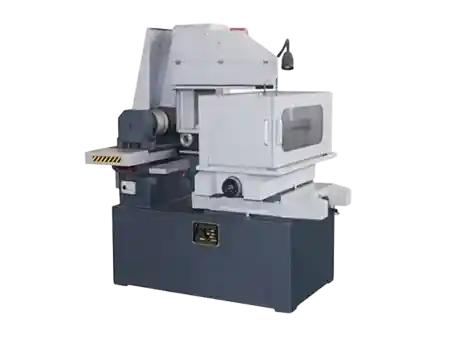
The DS703 is a practical option to evaluate for occasional starter-hole preparation, tooling maintenance, and small-hole machining.
Its compact configuration suits workshops that do not require extensive CNC hole-pattern programming.
MINNUO DS703A — High-Speed EDM Drilling Machine
| Specification | Value |
|---|---|
| Electrode Diameter | Ø0.3–3.0 mm |
| Maximum Working Current | 22 A |
| Servo Travel | 330 mm |
| Spindle Travel | 200 mm |
| Rated Input Power | 3.5 kW |
| Machine Weight | 600 kg |
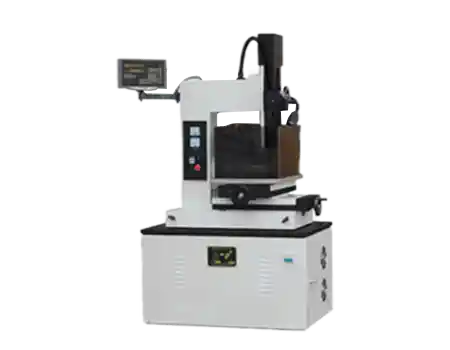
The DS703A provides another high-speed EDM drilling configuration.
Its mechanical and electrical specifications help workshops evaluate installation requirements and equipment configuration for small-hole machining operations.
MINNUO DD703 — Three-Axis CNC EDM Drilling Machine
| Specification | Value |
|---|---|
| Worktable Size | 1040 × 550 mm |
| X/Y Travel | 350 × 450 mm |
| Electrode Diameter | Ø0.3–3.0 mm |
| Maximum Worktable Load | 500 kg |
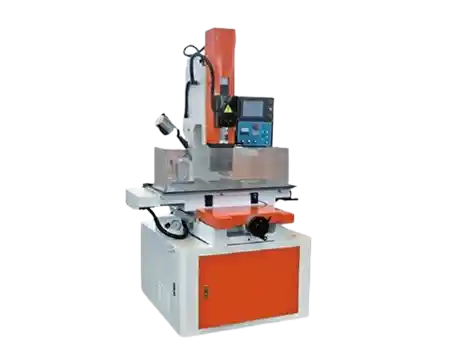
The DD703 combines three-axis CNC control with CAD-based hole-pattern programming.
This configuration is particularly relevant for repeated hole positioning in stamping dies, tooling plates, and hardened die inserts.
Its larger worktable and loading capacity also make it suitable for evaluating heavier tooling setups.
Which configuration should you choose?
For occasional starter holes and simpler tooling operations, an economic high-speed EDM drilling machine may be sufficient.
For repeated hole patterns, programmable positioning can reduce manual coordinate setting and simplify machining workflows.
The most suitable choice depends on the workpiece, production volume, required hole geometry, and available budget.
Explore the MINNUO EDM Drilling Machine range for more equipment information.
Worktable Size vs. Axis Travel: Understanding the Usable Machining Area
Worktable size and axis travel are often confused during machine selection.
Worktable size determines the physical support area for a workpiece and fixture, while axis travel determines how far the electrode can move relative to the workpiece.
For example, the DD703 has a 1040 × 550 mm worktable but 350 × 450 mm X/Y travel.
A long tooling plate may fit on the table even when its entire hole pattern cannot be reached in one setup.
For large stamping dies, reducing repositioning can improve machining efficiency and simplify alignment.
Equipment selection should therefore consider both physical workpiece capacity and the required machining envelope.
3. EDM Drilling Accuracy, Hole Diameter, and Depth-to-Diameter Ratio
Hole accuracy depends on more than the CNC controller.
Electrode dimensions, electrical discharge conditions, flushing, guide alignment, and workpiece positioning all influence the finished hole.
Electrode Diameter vs. Finished-Hole Diameter: Understanding Overcut
EDM drilling removes material around the electrode through electrical discharges.
As a result, the finished hole is generally larger than the electrode's outside diameter.
The simplified relationship is:
Finished-Hole Diameter
Dh≈ De+2g
Where:
- Dh = finished-hole diameter, mm
- De = electrode outside diameter, mm
- g = effective radial overcut, mm
For example, a Ø0.50 mm electrode with an effective radial overcut of 0.025 mm would produce an estimated Ø0.55 mm hole.
The actual overcut depends on electrode material, discharge energy, dielectric conditions, and workpiece properties.
This is why electrode diameter and finished-hole tolerance should be treated as separate specifications.
How Depth-to-Diameter Ratio Affects Deep-Hole Drilling
The depth-to-diameter ratio is an important indicator of small-hole drilling difficulty.
Depth-to-Diameter Ratio
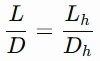
Where:
- Lh = hole depth, mm
- Dh = finished-hole diameter, mm
| Finished-Hole Diameter | Hole Depth | Depth-to-Diameter Ratio |
|---|---|---|
| 1.0 mm | 20 mm | 20:1 |
| 0.5 mm | 50 mm | 100:1 |
| 0.5 mm | 100 mm | 200:1 |
| 1.0 mm | 150 mm | 150:1 |
A higher ratio generally makes debris evacuation and stable machining more challenging.
As hole depth increases, electrode wear, inadequate flushing, and secondary discharges can influence drilling speed and hole taper.
For deep-hole applications, good flushing performance and appropriate electrode guidance become essential.
CNC Positioning Accuracy vs. Finished-Hole Accuracy
Machine positioning accuracy and finished-hole accuracy describe different aspects of the process.
| Measurement | Description | Inspection Method |
|---|---|---|
| Axis positioning accuracy | Deviation between commanded and actual axis positions | Machine-axis measurement |
| Positioning repeatability | Consistency of repeated positioning | Repeatability test |
| Hole true position | Hole-center location relative to drawing datums | CMM or optical inspection |
| Hole diameter tolerance | Deviation from nominal diameter | Dimensional measurement |
| Hole taper | Diameter variation along hole depth | Entry/exit measurement or sectioning |
ISO 230-2:2014 provides methods for evaluating CNC machine-tool axis positioning accuracy and repeatability.
Finished-hole geometry additionally depends on electrode behavior, the machining process, and workholding conditions.
For automotive tooling, the relevant inspection criteria should reflect the actual component drawing.
4. EDM Drilling Quality: Flushing, Electrode Wear, and Surface Integrity
Stable drilling requires effective debris removal, controlled electrode consumption, and consistent discharge conditions.
These factors influence machining speed, hole geometry, surface quality, and operating costs.
How Dielectric Flushing Affects Drilling Stability
Many small-hole EDM drilling machines use hollow electrodes to deliver dielectric fluid directly to the discharge area.
The fluid removes eroded particles and helps maintain stable electrical discharges.
Poor flushing may cause short circuits, reduced penetration rates, greater electrode wear, and increased hole taper.
| Process Parameter | Unit | Main Function |
|---|---|---|
| Operating flushing pressure | MPa | Supports fluid delivery |
| Dielectric flow rate | L/min | Removes machining debris |
| Electrode internal diameter | mm | Influences fluid flow |
| Dielectric condition | Fluid-dependent | Affects discharge stability |
| Filtration | Filter specification | Controls contamination |
For deep holes, flushing performance becomes increasingly important because debris must travel through a long, narrow passage.
How to Measure Electrode Wear and Consumable Costs
Electrode wear affects machining stability and the frequency of electrode replacement.
For example, if an electrode loses 10 mm of length while drilling a 50 mm hole, its length loss equals 20% of the drilled depth.
For production planning, workshops can track total electrode consumption per 100 accepted holes.
This approach makes it easier to compare consumable costs between machines or machining settings.
Electrode guides, dielectric filtration, and routine maintenance should also be included when evaluating operating expenses.
Hole Taper, Recast Layers, and Surface Quality Requirements
EDM is a thermal material-removal process.
The machined surface may contain a recast layer, heat-affected material, residual stresses, or microscopic surface defects.
Hole taper and surface quality depend on machining conditions, electrode wear, and debris removal.
For wire EDM starter holes, some affected material may be removed during subsequent contour cutting.
For finished functional holes, surface roughness, recast-layer thickness, and other integrity requirements may need closer attention.
The inspection method should reflect how the hole will be used in the finished tooling component.
5. CNC EDM Automation and Production Throughput
CNC automation is most valuable when a workshop frequently processes repeated hole patterns.
Programming, positioning, electrode handling, and process monitoring can all influence production efficiency.
CNC Hole-Pattern Programming and Electrode Automation
| Automation Feature | Production Benefit | Key Consideration |
|---|---|---|
| CNC hole-pattern programming | Reduces manual positioning | Program compatibility |
| CAD-based coordinate input | Simplifies complex hole layouts | Supported formats |
| Automatic electrode feeding | Reduces manual electrode replacement | Equipment configuration |
| Automatic electrode changing | Supports longer machining sequences | Tool-change functions |
| Electrode wear compensation | Helps maintain process consistency | Compensation method |
| Through-hole detection | Identifies drilling breakthrough | Detection reliability |
| Alarm recovery | Reduces interruptions | Restart process |
| Production monitoring | Supports cycle-time tracking | Available data |
The MINNUO DD703's three-axis CNC control and CAD-based programming are useful features for repeated hole-pattern machining.
For larger tooling programs, automated coordinate positioning can reduce manual operations and make machining sequences easier to reproduce.
Buyers should distinguish between programming automation, electrode feeding, and fully unattended operation when comparing machine configurations.
Drilling Speed vs. Total Cycle Time
Drilling speed is only one part of machining productivity.
An actual production cycle includes setup, positioning, discharge machining, electrode handling, and inspection.
Consider two hypothetical processes:
| Production Indicator | Process A | Process B |
|---|---|---|
| Average complete cycle per hole attempt | 95 s | 70 s |
| Theoretical attempts per hour at that average rate | 37.9 | 51.4 |
| Actual accepted output | Depends on rejection rate | Depends on rejection rate |
Even when two machines achieve similar drilling speeds, their complete production times can differ because of positioning and manual intervention.
For repeated automotive tooling operations, cycle-time analysis should focus on complete machining sequences.
Calculating Accepted-Hole Throughput
Accepted-hole throughput measures how many usable holes a machine produces during scheduled production time.
For example, a machine producing 360 accepted holes during an eight-hour shift achieves 45 accepted holes per scheduled hour.
Tracking this indicator helps workshops identify the effects of rejected holes, interruptions, and manual handling.
For expensive stamping dies, it is also useful to measure accepted tooling components rather than hole counts alone.
6. CNC EDM Drilling Machine Factory Acceptance Testing
Factory acceptance testing (FAT) connects machine specifications with actual machining requirements.
A well-designed FAT helps buyers evaluate hole quality, cycle time, electrode consumption, and CNC functionality before equipment delivery.
Essential FAT Measurements and Inspection Documents
| Test Item | Verification Method | Required Evidence |
|---|---|---|
| Material compatibility | Drill specified workpiece material | Material certificate |
| Finished-hole diameter | Measure drilled holes | Dimensional inspection report |
| Hole position | Compare with drawing datums | CMM or optical inspection |
| Hole taper | Measure entry and exit geometry | Inspection record |
| Complete cycle time | Record representative machining cycles | Machine log |
| Electrode consumption | Record batch consumption | Consumable record |
| Flushing stability | Monitor operating conditions | Pressure and flow records |
| CNC programming | Execute a coordinate program | Program record |
| Continuous operation | Run a representative batch | Alarm and intervention log |
| Axis positioning | Conduct agreed machine tests | Machine inspection report |
For automotive tooling, the acceptance test should use representative material, hole dimensions, and machining conditions.
Example: 100-Hole Acceptance Test for Automotive Stamping Dies
The following example illustrates how a buyer might structure a machining acceptance test. It is a proposed test specification, not a recorded MINNUO machine result.
| Test Parameter | Example Requirement |
|---|---|
| Workpiece | Hardened tool steel, specified grade and hardness |
| Number of holes | 100 |
| Nominal finished-hole diameter | Ø0.80 mm |
| Hole depth | 40 mm |
| Diameter tolerance | ±0.03 mm |
| Hole-position tolerance | Ø0.05 mm relative to specified datums |
| Dimensional inspection | Entry/exit diameter and agreed position checks |
| Productivity | Meet agreed production time |
| Electrode consumption | Record total use |
| Automation | Record alarms and operator interventions |
The acceptance report should include workpiece material, machine configuration, electrode dimensions, machining settings, measurement methods, cycle time, and inspection results.
Where surface integrity is critical, additional inspections may be appropriate.
An agreed FAT also provides a useful reference for installation acceptance and future production troubleshooting.
7. CNC EDM Drilling Machine Cost, Productivity, and ROI
Purchase price is only one part of an EDM drilling machine's total cost.
Operating expenses include electrodes, guides, dielectric treatment, electricity, labor, maintenance, and rejected components.
Production efficiency should therefore be evaluated together with equipment investment.
Example: 12-Month Production Capacity Comparison
Consider a hypothetical automotive tooling workshop that needs to produce 8,000 accepted EDM starter holes per month.
The following model compares two production approaches using assumed cycle times and rejection rates.
| Parameter | Existing Process | Proposed CNC Process |
|---|---|---|
| Required accepted holes/month | 8,000 | 8,000 |
| Average cycle per attempt | 95 s | 70 s |
| Assumed rejection rate | 2.0% | 0.8% |
| Expected attempts required | 8,164 | 8,065 |
| Estimated machine time/month | 215.4 h | 156.8 h |
| Estimated machine time/year | 2,585.3 h | 1,881.8 h |
The proposed CNC process would reduce occupied machine time by approximately 58.6 hours per month, or 703 hours annually.
That represents a 27.2% reduction in machine time for the same expected accepted-hole output under the modeled conditions.
These savings can create additional production capacity, reduce overtime, or help a workshop avoid outsourcing.
Their financial value depends on how effectively the released capacity is used.
Calculating Cost per Accepted Hole
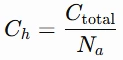
Cost per accepted hole provides a practical way to compare production economics.
Cost per Accepted Hole
Where:
- Ch = cost per accepted hole
- Ctotal = total allocated production cost
- Na = accepted holes
Total allocated costs include relevant machine ownership, consumables, electricity, labor, maintenance, rework, and scrap.
For example, if a workshop spends $4,000 per month to produce 8,000 accepted holes, the average cost is $0.50 per accepted hole.
For high-value stamping dies, cost per accepted finished component can provide an even more useful measure.
When Does CNC Automation Deliver a Positive Return?
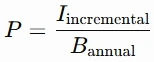
A simple payback calculation helps compare the additional investment in automation with its expected annual cash benefits.
Simple Payback Period
Where:
- P = payback period, years
- Iincremental = additional equipment investment
- Bannual = annual net cash benefit
For example, an automated configuration that costs an additional $30,000 and generates $12,000 in annual net cash benefits has a simple payback period of 2.5 years.
This method is useful for initial screening. Larger investments may also require net present value or discounted cash-flow analysis.
Automation generally delivers the greatest economic benefit when it eliminates production bottlenecks, reduces rework, avoids outsourcing, or enables profitable additional orders.
8. CNC EDM Drilling Machine FAQs for Automotive Tooling Buyers
Q:Which EDM Drilling Machine Is Best Suited to Automotive Stamping Dies?
A: A CNC EDM drilling machine with programmable positioning and stable flushing is a good option for repeated wire EDM starter-hole production. The MINNUO DD703 offers three-axis CNC control and CAD-based hole-pattern programming, making it relevant to this application.
Q:Can EDM Drilling Machines Produce Deep Holes in Hardened Tool Steel?
A: Yes. EDM drilling can produce deep holes in electrically conductive hardened steel. Machining capability depends on hole diameter, depth-to-diameter ratio, flushing, electrode wear, and machine configuration.
Q:Is CNC EDM Drilling More Accurate Than Conventional Drilling?
A: Not necessarily. EDM drilling is particularly useful for selected holes in hardened conductive materials, while conventional drilling may offer higher productivity for readily machinable materials. Actual accuracy depends on the machine, workpiece, and machining process.
Q:How Can Manufacturers Reduce EDM Drilling Cost per Hole?
A: Improve accepted-hole throughput, reduce electrode consumption, minimize manual intervention, and control rework. Complete cycle-time and consumable-cost records help identify the most effective improvements.
Q:What Should Overseas Buyers Check Before Ordering an EDM Drilling Machine?
A: Review the workpiece capacity, electrode diameter range, axis travel, CNC functions, electrical requirements, machining performance, spare-parts availability, warranty, and after-sales support. Include representative factory acceptance testing in the procurement process.
Conclusion: Selecting the Right CNC EDM Drilling Machine for Your Application
The best CNC EDM drilling machine is not necessarily the largest, fastest, or most automated model. It is the machine that matches the workshop's materials, hole requirements, production volume, and operating budget.
For occasional starter holes, an economic high-speed EDM drilling machine may provide sufficient capability.
For repeated hole patterns and more complex tooling programs, CNC positioning and programming can improve workflow efficiency.
Manufacturers should prioritize usable machining capacity, finished-hole quality, reliable production cycles, and cost per accepted component when comparing equipment.
MINNUO offers EDM drilling machine configurations including the DS703, DS703A, and three-axis CNC DD703 for different manufacturing needs.
Explore the MINNUO EDM Drilling Machine range to compare equipment configurations and discuss your automotive tooling requirements.
 Email
 sales1: +86 15312799623