



Repair or Replace an Automatic Tool Changer? Downtime Risks and Costs Compared
Consider repairing an automatic tool changer (ATC) when the fault is identifiable, replacement parts are available, and the repaired system can meet production requirements. Compare replacement or a machine upgrade when failures recur, critical parts are obsolete, or the existing system cannot support new processes. The decision should account for downtime, compatibility, and future maintenance costs.
ATC Repair, Replacement, or Machine Upgrade: What Is the Difference?
A tool-change fault does not necessarily mean the entire magazine needs replacement. The cause may lie in a sensor, pneumatic component, drive, pocket positioning system, or mechanical damage.
| Factor | Repair the Existing ATC | Replace the ATC | Replace the Machining Center |
|---|---|---|---|
| Best suited to | A defined fault where the main mechanism and interfaces remain serviceable | A severely worn magazine or changed tool-capacity requirements | A machine whose spindle, accuracy, control, or capacity also falls short |
| Initial expenditure | Parts, labor, alignment, and retesting | New mechanism, installation, and control integration | Machine purchase, installation, and production-line integration |
| Main downtime activities | Diagnosis, waiting for parts, repair, and recovery | Removal, mechanical fitting, commissioning, and acceptance | Removing the old machine, installing the new one, and validating the process |
| Compatibility checks | Spare-part versions, control parameters, and alignment | Space, toolholders, spindle, CNC/PLC signals, and safety interlocks | Fixtures, programs, automation interfaces, and facility requirements |
| Future considerations | Other aging components and spare-part availability | Integration quality and support for the new system | Training, production ramp-up, and machine maintenance |
The National Institute of Standards and Technology recommends considering installation, use, maintenance, downtime, and disposal over the equipment lifecycle. It also notes that modular repair can introduce compatibility issues. NIST equipment pre-purchase guide

Which Automatic Tool Changer Faults Are Worth Repairing First?
Repair is worth quoting first when the fault is isolated and suitable parts and technical support are available. Examples include:
- A failed sensor or actuator while the rest of the mechanism remains sound.
- An air-supply issue causing unstable tool-change motion.
- A tool-change position affected by a collision or disassembly that requires model-specific inspection and recovery.
Haas lists axis zero-position and post-collision alignment changes among possible causes of tool-change problems. Haas DC-Series troubleshooting guide
When Should You Consider Replacing the Automatic Tool Changer?
Request repair and replacement quotations when:
- The same fault recurs and intervals between repairs are short.
- Critical mechanical parts, drives, or controls are obsolete or have unacceptable lead times.
- Pocket layout or tool weight and length limits no longer support the process.
- The spindle, control system, or machine accuracy also requires substantial investment.
- Repair cannot restore the required guarding, safety interlocks, or verifiable operating condition.
How Do You Compare ATC Repair and Replacement Costs?
How Should ATC Faults and Downtime Be Recorded?
Review the past 12 months where records are available. If they are not, use maintenance reports and alarm logs to establish a baseline:
- ATC fault count, alarm codes, and the point in the tool-change sequence at which each fault occurred.
- Time spent diagnosing, waiting for parts, repairing, and returning to production.
- Parts replaced, repair costs, and repeat failures.
- Whether the machine is a production bottleneck and whether another machine can recover output.
- Current tool inventory, including holder, pull stud, weight, length, diameter, and special pocket requirements.
For internal comparison, average repair duration can be calculated as total repair time divided by the number of failures. Record parts waiting time, hands-on repair time, and production recovery time separately so the comparison remains meaningful.
How Do You Calculate the Total Cost of Each Option?
Use the same evaluation period for every option:
Total option cost = initial investment + planned maintenance and spares + expected failure and downtime costs + integration and validation costs − residual value.
Use the same start date and evaluation period for all options. Identify whether quotations already include installation, commissioning, downtime, or validation to avoid double counting. If a new system has a long lead time, include the cost of keeping the old machine operating or outsourcing work during the wait.
Estimate downtime according to its actual production impact. If work can be recovered on a non-bottleneck machine, multiplying every stopped hour by machine output value may overstate the loss. Include incremental overtime, outsourcing, or delivery-delay costs where relevant.
| Cost Item | Repair the Existing ATC | Replace the ATC | Replace the Machine |
|---|---|---|---|
| Initial expenditure | Parts, labor, alignment | Magazine, installation, controls integration | Machine, transport, installation |
| Return to production | Retesting, trial cutting, first-part approval | Commissioning, trial cutting, safety and functional acceptance | Program, fixture, automation, and first-part validation |
| Ongoing expenditure | Remaining aging parts and spare inventory | New-system maintenance, spares, and training | Machine maintenance, training, and supporting equipment |
| Downtime exposure | Diagnosis and parts lead time | Delivery, installation, and integration | Delivery and production-line changeover |
If the options materially change capacity, show achievable good-part output and associated benefits separately.
Which Interfaces Must Be Checked Before Replacing an ATC?
Physical space for a new magazine is only the starting point. The technical agreement should cover:
- Mechanical: mounting space and datums, tool-change position, motion envelope, and tool interference.
- Tooling: holder interface, pull stud, maximum tool weight, length, diameter, and adjacent empty-pocket requirements.
- Controls: CNC/PLC signals, pocket management, sequence, alarms, and recovery logic.
- Utilities: electrical, pneumatic or hydraulic requirements, and protection from chips and coolant.
- Safety and acceptance: guards, interlocks, power-loss recovery, functional tests, and operator training.
For example, the Haas DC-Series operator’s manual lists 21 pockets for the 30-taper version and 20 pockets for the 40-taper version. Confirm interfaces and capacity against the machine serial number and actual configuration before a retrofit.
Safety and Acceptance Requirements After ATC Repair or Retrofit
Before entering the tool-change mechanism, clearing a jam, or removing components, authorized personnel should follow the machine-specific procedure to control electrical, pneumatic, hydraulic, and potential mechanical stored energy and verify isolation. An emergency-stop button or a control-panel stop is not an energy-isolating device.
Where applicable in the United States, OSHA’s hazardous-energy control requirements must be followed. Elsewhere, use local regulations and the equipment manufacturer’s procedures. OSHA 29 CFR 1910.147
If testing requires temporary re-energization, use an approved procedure and reapply energy controls before continuing service work. OSHA guidance on temporary re-energization
Acceptance should cover representative tools, pockets, and programs agreed in advance. Record the test count, failures, and recovery results; validate safety functions against applicable requirements.
A useful acceptance record includes:
- Machine model, serial number, scope of work, and interface confirmation.
- Tool weight, length, diameter, and pocket layout.
- Agreed consecutive tool-change count, permitted failures, and pass criteria.
- Results of alarm, power-loss, and interrupted-cycle recovery tests.
- Actual program cycle time, trial-cut results, and first-part inspection.
Is ATC Repair or Replacement More Cost-Effective? A 12-Month Example
The following is a hypothetical calculation, not a customer case.
A machining center’s existing ATC requires a major repair. The plant receives repair and replacement quotations and estimates costs over the same 12-month period:
| Item | Repair Existing ATC | Replace ATC |
|---|---|---|
| Initial repair or purchase and installation | CNY 30,000 | CNY 70,000 |
| Subsequent maintenance and spares | CNY 8,000 | CNY 3,000 |
| Expected downtime and production recovery | CNY 25,000 | CNY 8,000 |
| Estimated 12-month total | CNY 63,000 | CNY 81,000 |
Under these assumptions, repair costs CNY 18,000 less. All else being equal, the options break even if repair-related downtime and recovery cost CNY 18,000 more than forecast; above that increase, replacement has the lower estimated total.
The decision therefore depends on the quality of the failure-risk, spare-parts lead-time, and downtime estimates. Where historical records are limited, calculate optimistic, baseline, and adverse scenarios.
When Should You Consider a Machine Upgrade? MINNUO TC1365 Example
For a plant adding multi-operation or automated work, a machine upgrade may be worth comparing if the existing machine also falls short on spindle capability or production cycle time.
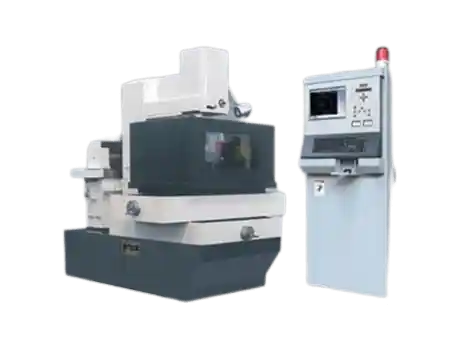
The MINNUO TC1365 drilling and tapping center is listed with a 21-tool magazine, BT30 spindle interface, 20,000 rpm spindle speed, and 1.3-second tool-to-tool change time. It is an option to assess for drilling, tapping, and light milling work.
The 21 pockets provide space for multi-operation tooling; whether they reduce manual tool loading depends on the actual tool list and pocket layout. The 1.3-second figure is the product page’s tool-to-tool value, so the complete part cycle should be measured using the intended program.
Also check fixtures and loading interfaces. If the machine is otherwise sound and the problem is confined to the ATC, repair or a standalone retrofit may be more economical.
Automatic Tool Changer Repair and Replacement FAQs
Q: Does frequent ATC alarming mean the whole system must be replaced?
A: Not necessarily. Review the point in the sequence where each alarm occurs and distinguish sensor, air-supply, drive, positioning, and mechanical causes. Then compare recurrence and spare-part availability.
Q: How can you tell whether an existing machining center can accept a new magazine?
A: Have the machine and magazine suppliers jointly confirm mounting space, holder and pull stud, tool-change position, CNC/PLC signals, utilities, and safety interlocks. Assign commissioning and acceptance responsibilities in the contract.
Q: Should machining accuracy be revalidated after an ATC replacement?
A: Arrange trial cutting and first-part inspection according to the scope of the retrofit and quality requirements. Select checks and tolerances from the part drawing and the company’s quality plan.
Q: If ATC spare parts are still available, should you always repair?
A: No. Compare lead time, risks from other aging components, expected downtime cost, and the machine’s remaining service life. Replacement may be preferable if the system cannot support the new process.
Q: How should a machine upgrade be compared with repairing the old machine?
A: Over the same evaluation period, compare repair or purchase, installation, integration, spares, expected downtime, process introduction, and residual value. Confirm that each option meets safety and production requirements.
 Email
 sales1: +86 15312799623