



Selection and application of precision lathes: How to choose the right equipment?
Precision lathes, as crucial equipment in modern manufacturing, are widely used in various industries such as automotive, aerospace, medical devices, and electronics. With the ever-increasing demands for high precision and efficiency in manufacturing, the role of precision lathes has become increasingly prominent. However, faced with a wide variety of precision lathes on the market, how do you choose the right machine? This article will analyze in detail the selection criteria and application areas of precision lathes to help you make a more informed purchasing decision.
1. Introduction to Precision Lathes
A precision lathe is a machine tool that rotates a workpiece and cuts with a cutting tool, enabling the production of parts with extremely high precision and complex shapes. Unlike traditional lathes, precision lathes typically employ numerical control (CNC) technology, which enables automated machining, reduces human error, and ensures high precision in the machining process.
Precision lathes have a wide range of applications, especially in industries with high precision requirements, such as automotive, aerospace, and medical devices. They can process a variety of materials, including aluminum alloys, stainless steel, and titanium alloys, to produce complex parts and ensure that dimensions, shape, and surface quality meet stringent standards.
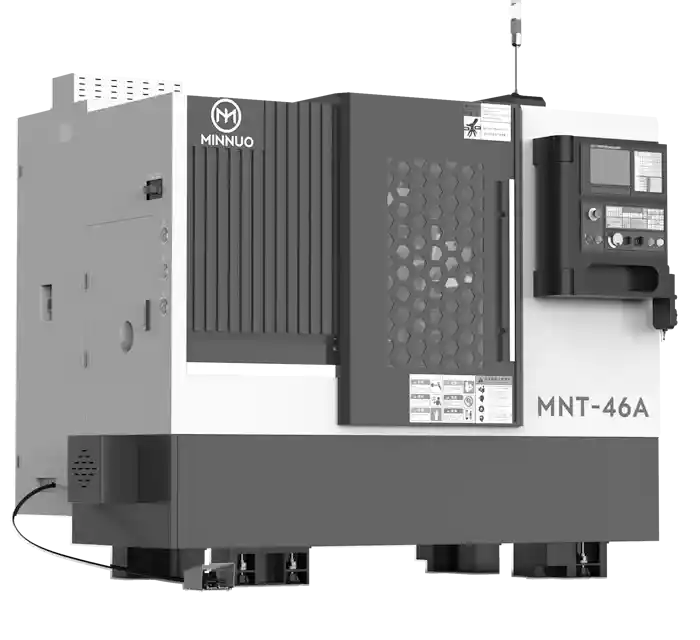
2. How to choose a suitable precision lathe
Several factors need to be considered when selecting a precision lathe. Here are some key aspects to focus on when choosing the right equipment:
(1) Machining accuracy requirements
Machining accuracy is one of the most critical factors when selecting a precision lathe. Precision lathes typically achieve machining accuracy at the micron level. Depending on specific machining requirements, different accuracy ranges can be selected. If your production demands extremely high precision, such as machining aerospace or medical device parts, choosing a lathe with even higher precision is essential.
For example, in the aerospace field, components such as engine parts and turbine blades require extremely high precision, necessitating machining at the micrometer level. In this case, a precision lathe capable of providing sub-micrometer level precision becomes particularly important.
(2) Lathe types: vertical lathes and horizontal lathes
Precision lathes are divided into two types: vertical and horizontal. The choice depends on the shape and size of the parts being machined.
Vertical lathes: Vertical lathes are suitable for machining tall or long workpieces. They have a large space between the worktable and the cutting tool, enabling them to handle more complex workpieces, such as long shaft parts and highly precision components.
Horizontal lathes: Horizontal lathes are suitable for machining heavier or larger diameter workpieces, especially in applications requiring greater load-bearing capacity. Horizontal lathes better ensure that the workpiece does not shift during machining, thus improving machining accuracy.
When choosing a lathe type, it is necessary to make a reasonable choice based on your production needs and the characteristics of the parts. If the parts to be machined are large and heavy, a horizontal lathe is more suitable; if the parts are long or tall, a vertical lathe will be more efficient.
(3) Spindle speed and power
Spindle speed and power have a direct impact on the machining efficiency and accuracy of precision lathes. Higher spindle speeds allow for faster cutting speeds, making them suitable for machining small-diameter parts; while higher power is beneficial for machining materials with higher hardness.
For example, in high-precision machining, using high-speed precision lathes (with speeds up to 1500 rpm or higher) can improve production efficiency and result in a finer surface finish for small parts. The appropriate spindle speed and power must be determined based on the material and size of the part.
(4) CNC system and software support
The numerical control system (CNC) of a precision lathe is the core of its automated control. Common CNC systems include FANUC, Siemens, and Heidenhain, and their performance directly determines the lathe's operating accuracy and efficiency.
An advanced CNC system not only simplifies operation but also supports more complex machining programs and adapts to diverse machining needs. If your production requires frequent adjustments to machining parameters or the use of multiple machining modes, choosing a feature-rich and easy-to-use CNC system is crucial.
Furthermore, the upgradeability of the CNC system is also very important. With technological advancements, choosing a CNC system that supports software upgrades and expansion capabilities can ensure that the lathe maintains high-efficiency production capacity in the long term.
(5) Compatibility of processing materials
Different precision lathes have varying degrees of adaptability to different materials. When choosing a lathe, ensure it can machine the materials you intend to use. For example, some lathes are designed with high-hardness materials (such as titanium alloys and tool steels) in mind, while others are better suited for softer materials like aluminum alloys and plastics.
(6) Stability and rigidity of lathes
The stability and rigidity of a precision lathe are key factors determining machining accuracy. Lathes lacking rigidity are prone to vibration during machining, which in turn affects machining accuracy. Therefore, when selecting a lathe, it is essential to ensure that its structural design and materials have sufficient rigidity to reduce vibration during machining.
3. Practical Applications of Precision Lathes
Precision lathes are widely used in various industries. Here are some typical application areas:
(1) Automotive industry
In automobile manufacturing, precision lathes are used to machine critical components such as engine parts, transmission assemblies, and wheel hubs. These parts not only require high precision but also high strength and durability. Through efficient machining processes, precision lathes ensure that the dimensions and quality of automotive parts meet stringent standards.
For example, engine components such as crankshafts and cylinder blocks typically require precision machining to ensure their reliability when operating under high temperature and high pressure conditions.
(2) Aerospace
Aerospace components require extremely high machining precision; even the slightest dimensional deviation can affect the performance and safety of the parts. Precision lathes are widely used in this field, especially in machining high-precision parts such as turbine blades, engine components, and airframe structural parts.
For example, the production process of turbine blades requires precision lathes to machine complex geometries and ensure extremely high surface quality in order to ensure their stability under high-speed rotation and extreme environments.
(3) Medical devices
Precision lathes play a vital role in the medical device industry, especially in the production of small, complex components. For example, implants, surgical instruments, and sensors all require precision lathe machining to ensure high accuracy and sterile surfaces.
These medical components typically involve complex geometries and extremely high surface finish requirements, which precision lathes can meet to ensure product reliability and safety.
(4) Mold manufacturing
The role of precision lathes in mold making is equally important. Many complex plastic and metal molds require precision lathes for machining. These molds not only need extremely high machining accuracy, but also must ensure durability during long-term use.
4. How to ensure the long-term stable operation of a precision lathe?
After purchasing a precision lathe, maintaining its long-term stable operation is crucial. Here are some practical maintenance and upkeep tips:
Regular cleaning and lubrication: The operating table, CNC system, and transmission system of the precision lathe should be kept clean to prevent dust and metal shavings from affecting equipment operation. At the same time, the lubrication system should be checked regularly to maintain the cleanliness of the lubricating oil and avoid mechanical wear caused by insufficient lubrication.
Regular calibration and testing: To ensure machining accuracy, precision lathes should be calibrated regularly. The lathe's operating status is checked using specialized tools, and adjustments are made as needed.
Check tool condition: The sharpness of precision lathe tools directly affects machining accuracy. Regularly check tool wear and replace damaged tools promptly to ensure smooth machining.
5. Conclusion
Choosing the right precision lathe is crucial for ensuring production efficiency and machining accuracy. By considering factors such as machining accuracy, lathe type, CNC system, and compatibility with the materials being machined, you can select a machine that best meets your needs. At the same time, proper maintenance and upkeep are also essential for ensuring the long-term stable operation of the equipment.
Precision lathes have become an indispensable part of modern manufacturing, playing a crucial role in improving product quality, shortening production cycles, and reducing costs. Understanding the selection and application of precision lathes is essential.
 Email
Email sales1: +86 15312799623