



Siemens CNC Alternatives: FANUC, Mitsubishi, HEIDENHAIN and PC-Based CNC Compared
There is no single best replacement for Siemens SINUMERIK. Evaluate FANUC for multi-axis, multi-path and volume production; Mitsubishi M800V/M80V when your factory already uses Mitsubishi automation; HEIDENHAIN TNC7 for precision five-axis milling; and PC-based CNC for special processes and extensive software integration. The final decision should be based on an identical workpiece trial, a complete software license list and five-year total cost of ownership.
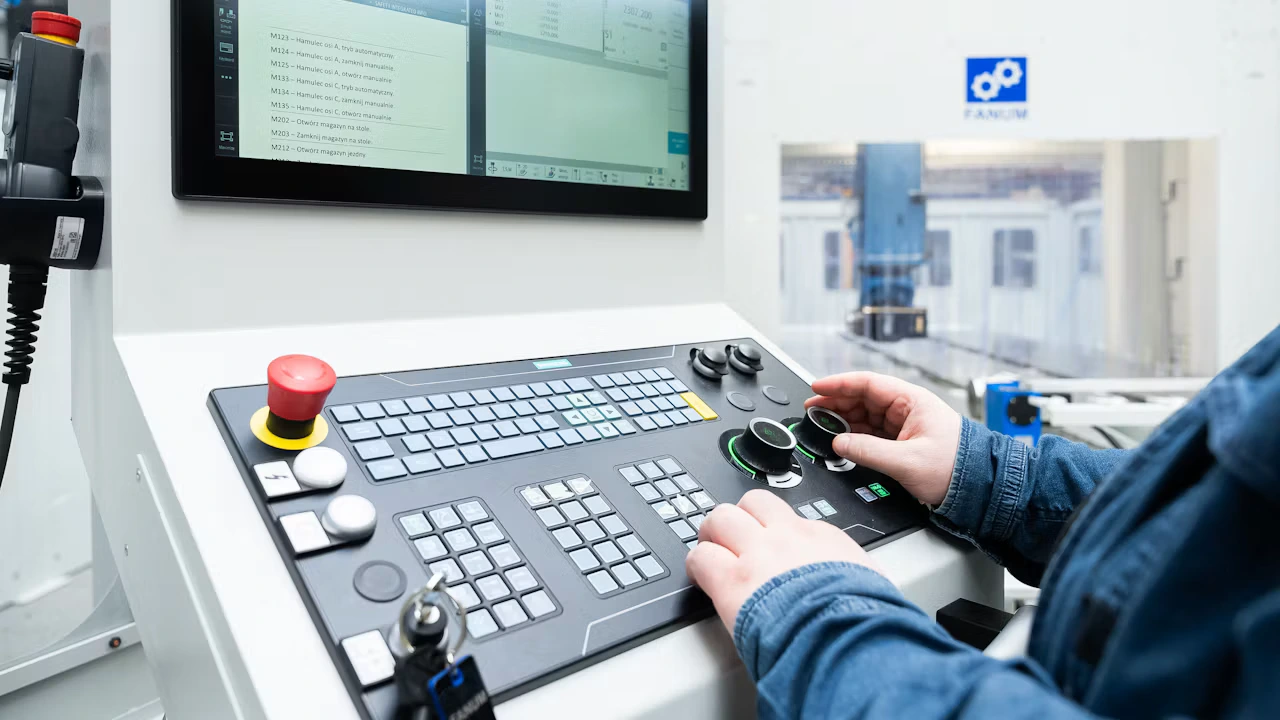
Calculate These Three Hidden Costs Before Replacing SINUMERIK
The controller price is only one part of a CNC migration. Software redevelopment, machine revalidation and lifecycle support can have a greater financial impact.
The first issue is software migration. SINUMERIK cycles, R parameters, FRAME functions, TRAORI, synchronized actions, PLC programs, alarm texts and custom HMI pages generally cannot be transferred directly to another CNC. The more extensively a machine uses Siemens-specific functions, the more postprocessor, PLC and interface redevelopment it will require.
The second issue is machine-level accuracy. CNC input resolution and minimum programmable increments do not equal machine positioning accuracy. Ballscrews, linear scales, machine stiffness, assembly error, thermal compensation and servo tuning collectively determine the measured result.
The third issue is lifecycle dependency. The CNC, drives, motors, encoders, functional safety, commissioning software and engineering skills form one ecosystem. A platform change can also create new training, spare-parts, certification, program-validation and production-ramp costs.
If an existing machine platform already depends heavily on TIA Portal, SINAMICS, SINUMERIK technology cycles or Run MyVirtual Machine, remaining with SINUMERIK ONE may cost less than migrating. Siemens identifies SINUMERIK ONE as the successor to the 840D sl. New 840D sl systems are no longer offered for new machine designs, although Siemens continues to support existing installations with service and spare parts. Siemens SINUMERIK ONE
Four Siemens CNC Alternatives Compared
Controller Capacity: Axes, Paths and Interpolation Performance
Axis and path counts can eliminate unsuitable platforms, but they do not directly predict machining speed, surface finish or machine accuracy.
Manufacturers do not always define axes, spindles, control loops and paths in the same way. The following figures are published platform limits as of October 26, 2026. Actual capacity depends on the hardware version, software licenses, export restrictions and real-time computing load.
| CNC platform | Representative published capacity | Main strengths | Important limitations | Best-fit applications |
|---|---|---|---|---|
| Siemens SINUMERIK ONE | NCU 1740: up to 12 NC axes/spindles; NCU 1750/1760: up to 31 NC axes/spindles and 10 channels | Integration with TIA Portal, SINAMICS, digital twins and complex machining technologies | Complex option structure; limited reuse when moving outside the Siemens ecosystem | Automotive lines, multitasking machines and existing Siemens platforms |
| FANUC 30i-B Plus | One configuration supports up to 15 paths, 72 axes and 10 spindles; another supports up to 10 paths, 96 axes and 24 spindles; up to 24 controlled axes per path | Multi-axis and multi-path control, volume production and a mature drive ecosystem | The published maximum values are not necessarily available together in one configuration | Multi-spindle lathes, mill-turn machines, transfer machines and standardized export models |
| Mitsubishi M800V | Machining-center configurations support up to 32 axes and 6 spindles, depending on the VS/VW model and software options | Close integration of CNC, drives, servos and MELSEC automation | Local engineering resources and third-party support vary by market | Machining centers, lathes and factories already using Mitsubishi automation |
| HEIDENHAIN TNC7 | Up to 24 control loops, including as many as 4 spindles; 4-axis interpolation as standard and up to 6 axes with an option | Precision five-axis machining, probing cycles, shop-floor programming and process monitoring | Not primarily positioned for very large multi-path turning systems | Five-axis machining centers, molds, aerospace parts and low-volume complex work |
| Beckhoff TwinCAT CNC | Up to 128 axes, 32 independent channels and 32 interpolating axes per channel; configurable interpolation cycle of 0.5–20 ms | EtherCAT, industrial PC control, accessible interfaces and software integration | Proprietary licensed software; the OEM must validate real-time computing capacity | Laser processing, grinding, additive manufacturing, cutting and special-purpose machinery |
Sources: Siemens NC 63, January 2026, FANUC 30i-B Plus specifications, FANUC multi-path configurations, Mitsubishi M800V/M80V manuals, HEIDENHAIN TNC7 specifications, Beckhoff TwinCAT CNC system parameters
Selection Inputs: Machine Design, Accuracy, Throughput and Service
Define the machine and production requirements before requesting quotations. Every supplier should respond to the same operating conditions and acceptance criteria.
The following table is a requirements template. The units standardize supplier responses; they are not universal recommended values.
| Requirement category | Information the buyer should provide | Effect on CNC selection |
|---|---|---|
| Machine structure | X/Y/Z travel in mm, rotary-axis range in degrees and table load in kg | Determines the axis count, kinematic model and drive capacity |
| Cutting capability | Spindle speed in rpm, continuous/peak power in kW and torque in N·m | Determines the spindle drive, motor and machining functions |
| Accuracy targets | Positioning accuracy in μm, repeatability in μm, multi-axis contour error in μm and surface finish Ra in μm | Determines the feedback system, compensation functions and acceptance tests |
| Auxiliary systems | Hydraulic pressure in MPa, coolant flow in m³/h and filtration rating in μm | Affects heavy cutting, through-tool coolant, chip evacuation and tool life |
| Automation | Robots, bar feeders, pallet systems, probes and MES interfaces | Determines PLC, I/O, fieldbus and path requirements |
| Production targets | Cycle time in seconds or minutes, annual volume, changeover frequency and operating hours per year | Determines performance requirements and total ownership cost |
| Service conditions | Installation country, response-time target, spare-parts lead time and export restrictions | Determines maintainability and supply risk |
FANUC 30i-B Plus: Best Suited to Multi-Path Volume Production
FANUC is a strong candidate for machines that require multiple spindles, turrets or synchronized machining paths.
Typical applications include twin-spindle mill-turn machines, multi-station transfer machines, automotive component lines and standardized machine models sold across several countries.
The published limits of 96 axes, 24 spindle axes and 15 paths must not be interpreted as one simultaneous configuration. FANUC separately documents configurations including 15 paths with 72 axes and 10 spindles, and 10 paths with 96 axes and 24 spindles.
Before ordering, confirm:
- The number of paths, synchronized spindles and PMC resources included in the quotation
- Whether tool-center-point control, tilted working planes and interference checking require additional options
- How SINUMERIK cycles and synchronized actions will be converted
- Whether qualified commissioning and spare-parts support are available in each target market
Mitsubishi M800V: Best Suited to Existing Mitsubishi Automation
M800V/M80V deserves priority when the machine builder already uses MELSEC PLCs, Mitsubishi servos and CC-Link IE.
Reusing engineering tools, automation expertise and spare-parts infrastructure may reduce integration work. This is an engineering inference based on ecosystem reuse, not proof that Mitsubishi has the lowest cost in every project.
The M800V machining-center system supports configurations of up to 32 axes and 6 spindles, depending on the M800VS or M800VW model and licensed options.
Mitsubishi also reports that its OMR-CC contour-control function produced machining approximately 11% faster than the preceding M800/M80 generation under Mitsubishi's test conditions. That result should not be extrapolated to machines with different structures, materials, tools or programs. M800V/M80V functions
Before deploying the platform internationally, verify the availability of local commissioning engineers, training and replacement parts.
HEIDENHAIN TNC7: Best Suited to Precision Five-Axis Milling
TNC7 is particularly relevant to moldmaking, aerospace structures, complex surfaces and low-volume five-axis production.
Published TNC7 specifications include:
- Up to 24 control loops, including as many as 4 spindles
- A block-processing time of 0.5 ms
- Four-axis interpolation as standard and up to six axes with Advanced Function Set 2
- Linear-axis input and display steps down to 0.01 μm
- Spindle speeds up to 60,000 rpm, or 120,000 rpm with the Double Speed Axes option
The 0.01 μm value is a numerical input and display step. It is not a machine positioning-accuracy claim. Machine performance must still be verified through laser interferometry, circular testing, thermal testing and machined test pieces.
TNC7 also offers Klartext programming, probing cycles, workpiece alignment, kinematic configuration and process monitoring. For very large multi-path turning systems, FANUC, Mitsubishi or SINUMERIK may be more appropriate candidates.
PC-Based CNC: Best Suited to Special Processes and Software Integration
PC-based CNC is most relevant when the machine requires EtherCAT, unusual process control or extensive custom software.
Beckhoff TwinCAT CNC is an example of an industrial PC-based architecture. It supports accessible integration interfaces, but it is proprietary licensed software rather than an open-source CNC.
Typical applications include:
- Combining CNC, PLC, robots, machine vision and distributed I/O over EtherCAT
- Developing a custom HMI, process database, MES interface or remote-service application
- Controlling laser cutting, grinding, additive manufacturing, winding or other specialized processes
- Running real-time motion control and edge applications on the same industrial PC
TwinCAT CNC publishes capacities of 128 axes, 32 independent channels, up to 32 interpolating axes per channel and a configurable interpolation cycle of 0.5–20 ms. Practical capacity depends on the industrial PC, CPU-core allocation, EtherCAT cycle and NC-program complexity. The OEM must validate the proposed configuration under full real-time load.
MINNUO Machine Configuration: Comparing Several CNC Systems on One Platform
Buyers that do not want to integrate the controller, drives and machine structure themselves can compare several CNC brands on a configurable machine platform.
MINNUO product information lists FANUC, Siemens, Mitsubishi, GSK, KND and SYNTEC as available control-system choices on selected five-axis machining centers, slant-bed lathes and mill-turn machines. Spindles, tool magazines, probes, feeding systems and robot integration can also be configured for the application. MINNUO five-axis machining centers, MINNUO slant-bed CNC lathes
Each quotation should separately identify the CNC, drives, motors, software licenses, automation interfaces and acceptance results. MINNUO is presented here as a configurable machine supplier, not as another CNC control platform.
Five-Year TCO: Determining Whether an Alternative Is Actually Cheaper
A controller cannot be considered less expensive until the complete bill of materials, software licenses, engineering hours and downtime costs are included.
A practical five-year calculation is:

Where:
- Hc: CNC, operator panel and industrial PC
- Hd: Drives, motors, encoders and braking components
- Hs: I/O, functional-safety and network hardware
- L: Five-axis, collision-checking, OPC UA and other software licenses
- EhRh: Engineering hours multiplied by the engineering labor rate
- T: Operator, maintenance and programming training
- S: Five years of service and spare parts
- D: Trial-production, downtime and production-ramp losses
- Ru: Value of reusable software, hardware and workforce expertise
A quotation without a complete BOM, option list and engineering estimate cannot support a credible TCO conclusion.
Machine Accuracy and Reliability Acceptance Testing
An acceptance contract must define the test method, operating conditions, error definition and pass limit. CNC resolution must never be used as a substitute for machine-level measurements.
The axis counts, channel counts, cycle times and numerical resolutions cited above describe control-platform capacity. They do not prove that a finished machine has achieved a particular accuracy.
This article does not have third-party laser-interferometer records, ballbar results or machined-part reports for a specific project. It therefore makes no unsupported machine-accuracy claim.
| Acceptance item | Recommended test reference | Information required in the report |
|---|---|---|
| Linear and rotary-axis positioning | ISO 230-2 | Travel, target positions, test cycles, temperature, compensation state and measurement uncertainty |
| Thermal displacement | ISO 230-3:2020 | Warm-up program, spindle speed, ambient temperature, test duration and displacement curve |
| Circular and coordinated-axis error | ISO 230-4:2022 | Circle diameter, feed rate, measurement plane, direction and error definition |
| Machining-center speed and interpolation | ISO 10791-6:2014 | Participating axes, speed, path, load and measured error |
| Three- to five-axis test pieces | ISO 10791-7:2020 | Material, tools, cutting parameters, measuring equipment and full dimensional results |
| Program compatibility | Buyer-approved reference programs | Tool offsets, coordinate transformations, cycles, synchronized actions and alarm recovery |
| Continuous operation | Buyer-supplier test protocol | Alarms, resets, downtime, failure attribution and recovery process |
ISO 230-4:2022 covers constant-radius trajectory tests involving coordinated linear and rotary axes. ISO 10791-7:2020 provides test-piece methods for assessing three- to five-axis machining centers.
A continuous-operation test should not use an undefined requirement such as “CNC downtime below 0.05%.” The agreement should first distinguish CNC, PLC, drive, mechanical, tooling and process failures, then define the permitted downtime and number of critical failures.
Application Evidence and a 12-Month ROI Model
Supplier case studies can identify potential benefits, but only buyer-specific trials and long-term operating records can prove the return on investment.
FANUC reports that Norm Tooling, a supplier to the automotive, appliance and electronics sectors, increased productivity by 7%, reduced processing time by 10% and lowered error rates by 5% after introducing ROBODRILL and ROBOCUT machines.
These figures describe a complete machine and automation project. They cannot be attributed solely to the CNC controller, and the public case study does not disclose a complete 12-month measurement period. FANUC Norm Tooling case study
MINNUO publishes an MN500L application example using a FANUC control, bar feeder and 12-station turret to machine a carbon-steel automotive connector shell measuring Ø48 × 60 mm. The page reports concentricity within ±0.005 mm and a turned-face surface finish of Ra ≤1.0 μm. MINNUO MN500L application example
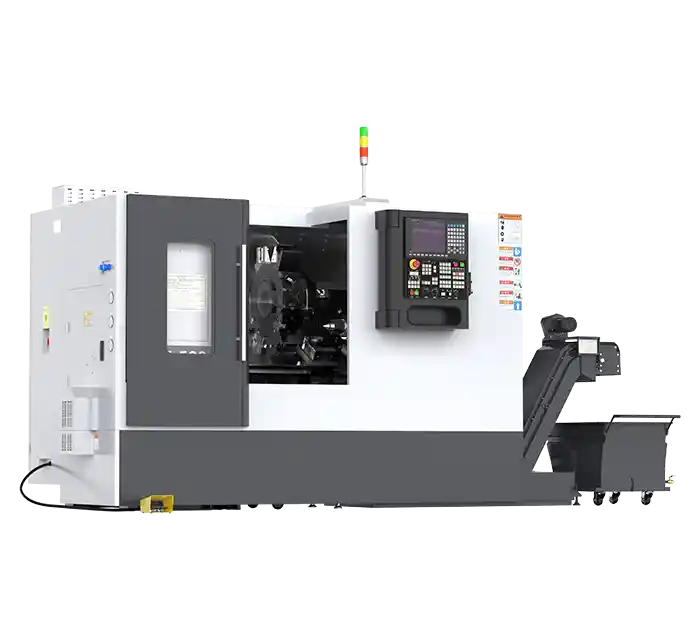
The MINNUO figures are a first-party supplier case, not an independent test. A buyer should request a report identifying the machine serial number, measuring equipment, environmental conditions, sample size and test date, then repeat the test using the buyer's own workpiece.
For a 12-month financial model, assume:
- Planned operating time: 4,000 h/year
- Effective production-time ratio after planned stops, failures and changeovers: 70%
- Unchanged good-part rate
- Original cycle time: 10 min
- Verified new cycle time: 9.2 min
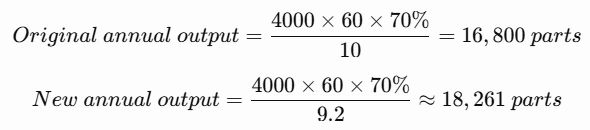
The theoretical increase is approximately 1,461 parts per year, or 8.7%. At a contribution margin of CNY 120 per part, the annual contribution increase would be approximately CNY 175,320.
This is a calculation model, not a customer result. Tooling, energy, maintenance, finance, training and production-ramp costs must still be deducted.
Siemens CNC Alternative FAQ
Q: Can the same Siemens G-code run without modification?
A: Basic ISO commands may be similar, but Siemens cycles, R parameters, FRAME, TRAORI, synchronized actions and custom M functions normally require redevelopment. The migration process should include syntax mapping, postprocessor modification, offline simulation, dry runs and first-part inspection.
Q: Can existing SINAMICS drives and motors be retained?
A: Do not assume that they can. Verify the fieldbus, drive interface, encoder protocol, functional-safety communication and motor data. Even where a gateway is technically possible, retuning and safety validation may cost more than the reused hardware is worth.
Q: How should a machine builder choose between them?
A: Evaluate HEIDENHAIN first for molds, low-volume complex work and shop-floor programming. Evaluate FANUC first for standardized volume production, multi-path machines and international replication. The decision should be based on the same test piece, cycle time, coordinated-axis error, surface finish and thermal drift.
Q: Do accessible interfaces automatically reduce costs?
A: No. Include real-time configuration, HMI development, cybersecurity, version management and long-term software maintenance. PC-based CNC is more likely to reduce TCO when custom software can be reused across several machine models.
Q: What should be sent to a configurable machine supplier such as MINNUO?
A: Provide the workpiece drawing, material, annual volume, target cycle, tolerances, required Ra, tooling plan, automation interfaces and installation country. Require separate identification of the CNC, drives, motors, software licenses, local service and acceptance results for the same workpiece.

 Email
 sales1: +86 15312799623