Email: engineer@mncnc.com

CNC Industry Insights

In the fast-evolving advanced manufacturing landscape, we track global CNC industry frontiers – from smart factory trends to material processing breakthroughs. Each analysis combines engineering expertise with business acumen, alongside data-driven machine selection strategies refined through thousands of real-world applications. Here, news transforms into actionable intelligence for smarter investments.

CNC Industry Insights
news

Application of Linear Scales in Gantry Machining Center

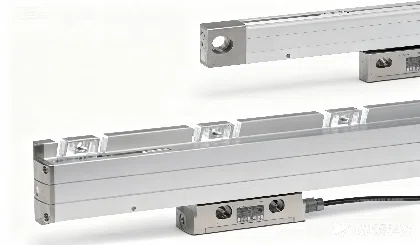
As a manufacturer of gantry machining centers, we have been continuously exploring ways to enhance the machining accuracy and stability of our machines. The linear scale, as a core component for high-precision measurement, serves as the technical foundation for achieving these goals.

  • November 17, 2025
news

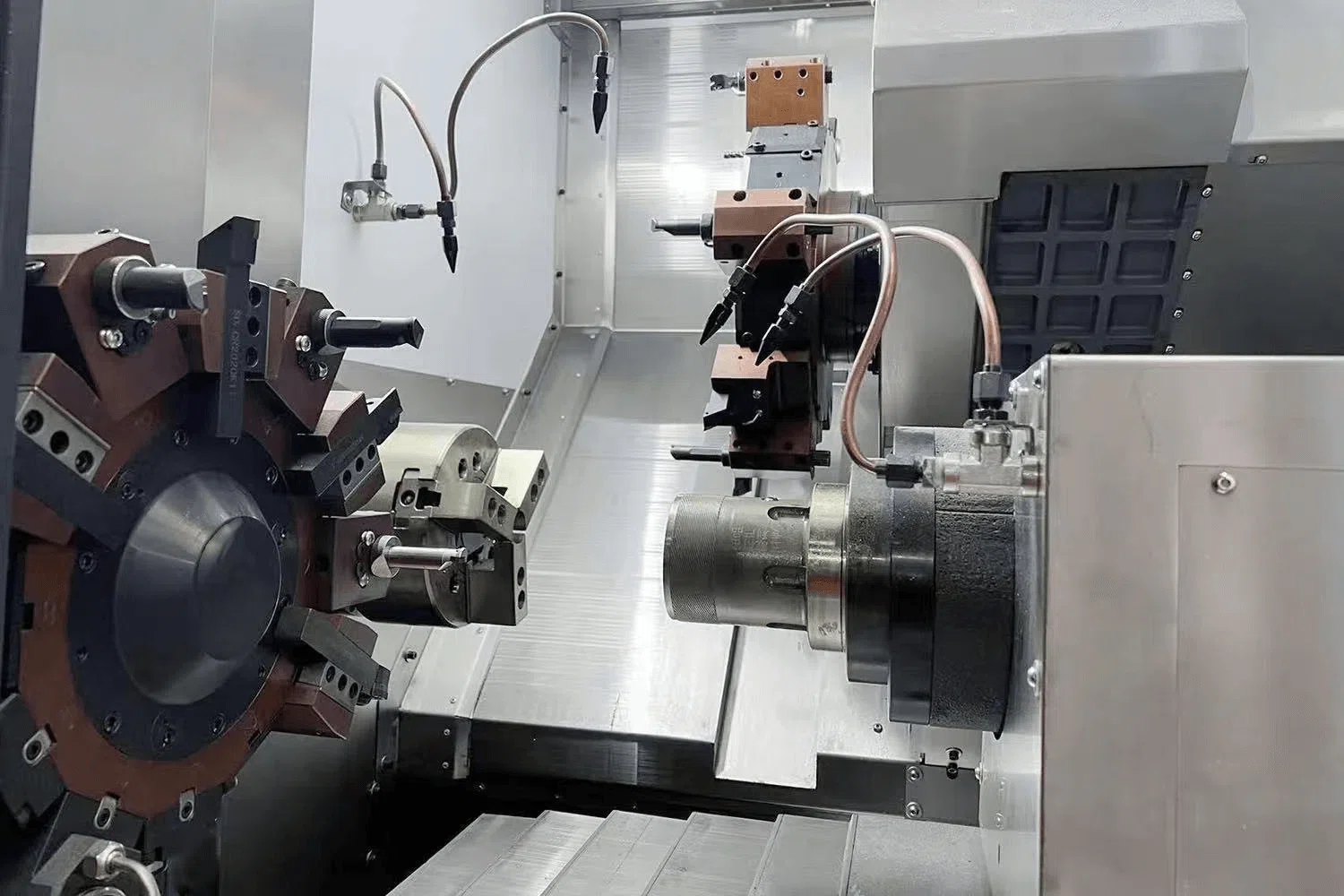
Double-spindle lathe linkage processing technique: Alignment processing method for symmetrical parts without tool marks

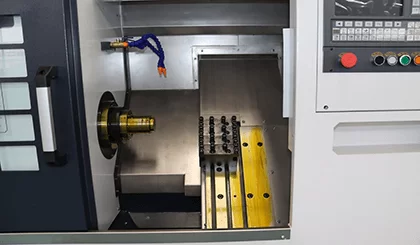
The core of the double-spindle lathe linkage processing technique lies in enabling the two spindles to work synchronously and collaboratively by means of the alignment processing method. Through precise synchronous control parameter Settings, the tools driven by the left and right spindles can simultaneously process symmetrical parts. With a single clamping, the processing operations at both ends of the part can be completed. This fundamentally avoids the problem of tool marks caused by secondary clamping in traditional single-spindle processing, ensuring that there are no tool marks on the surface of symmetrical parts and meeting the requirements of high-precision processing.

  • November 12, 2025
news

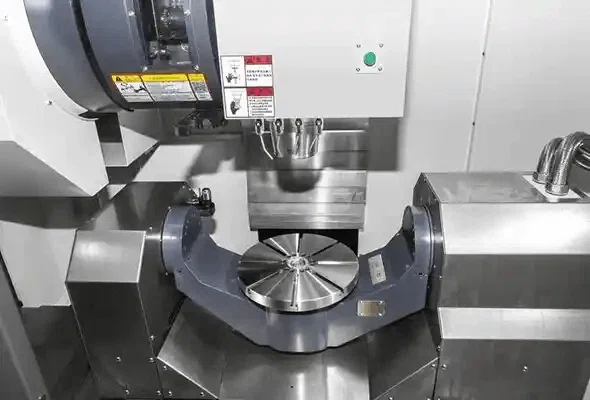
Common faults in 5-Axis Machining Center processing: Fast tool wear, rough surface? Product Adaptation and Process Adjustment Guidelines

To address the core issue of "common faults in 5-Axis Machining Center processing: rapid tool wear and rough surface", it is necessary to first clarify the essence of the fault - 90% of such problems do not stem from equipment performance defects, but are the result of the combined effect of "product mismatch" and "inappropriate process parameters". A mismatch between the hardness of the cutting tool material and that of the workpiece can lead to insufficient red hardness of the cutting tool, reducing its service life by 70% sharply. Substandard precision of auxiliary tools can cause fluctuations in cutting force and accelerate local wear at the tool tip. However, process issues such as excessively high feed rates and lack of cooling and lubrication will directly lead to coarsening of the cutting marks and the appearance of "tool biting marks" on the surface, causing the roughness to exceed the standard.


  • November 11, 2025
news

Is Your Vertical Machining Center Underperforming? 5 Practical Tips (Including G-Code Optimization and Tool Change Process Improvements) to Boost Productivity by 40%

Are you struggling with low productivity caused by excessively long idle time (accounting for 30%-40% of total machining time), time-consuming tool changes (8-12 seconds per change), and “conservative or mismatched” cutting parameters? This article provides solutions to each challenge—from reducing unnecessary movements through G-code optimization to achieving “second-level tool changes” by refining tool change procedures, and optimizing cutting parameters for different materials. All methods include specific parameter tables and real-world case studies, enabling direct application to solve efficiency issues.

  • November 07, 2025
news

The difference and cooperation between boring machine and milling machine: an article to understand the selection and collaborative application of processing equipment

While boring machines and milling machines are both essential in machining, they serve distinct roles: milling machines excel in surface and contour machining with high efficiency, ideal for batch production of small to medium parts; boring machines specialize in precise hole system machining, especially for large workpieces requiring deep or coaxial holes. Rather than being substitutes, they complement each other—through coordinated workflows like "milling for roughing, boring for finishing" or "boring reference holes before milling complex structures," manufacturers can achieve both high precision and productivity in complex part manufacturing.

  • November 06, 2025
Our Factory View
We Have Been Giving Techology Support To 50+ countries
Operating with 200+ skilled engineers and advanced automation
Our Service
On-Time Delivery:
Ensuring timely delivery to support your production.
Expert Support:
Offering professional consultation and service throughout.
Cooperate with us
We will provide customized designs for your machine tool solutions to obtain cost-effective working machines.
MINNUO
Europe & North America
USA Office Address:
8 The Green Ste A Dover Kent 19901
WhatsApp(Tel) :+1(213) 865-6075
Asia-Pacific Region
China Office:
Lishi Exploit Park,Xinqiao Industrial Park, Jingjiang City
WhatsApp(Tel) :+86 13295238763